 Get app
How well do you know the microscopic silicon brains that power our entire modern world? Test your knowledge on the history, science, and scale of the integrated circuit.
Circuit Curious 0–4 · Silicon Explorer 5–8 · Master of Micro 9–10

Tap the right answer
Jack Kilby built the very first working integrated circuit in September 1958 while working at Texas Instruments. He used a tiny strip of germanium for his prototype. Because of this groundbreaking invention, Kilby was awarded the Nobel Prize in Physics in 2000.
Photo: James R. Biard, Wikimedia Commons, CC BY-SA 4.0.
Tap the right answer
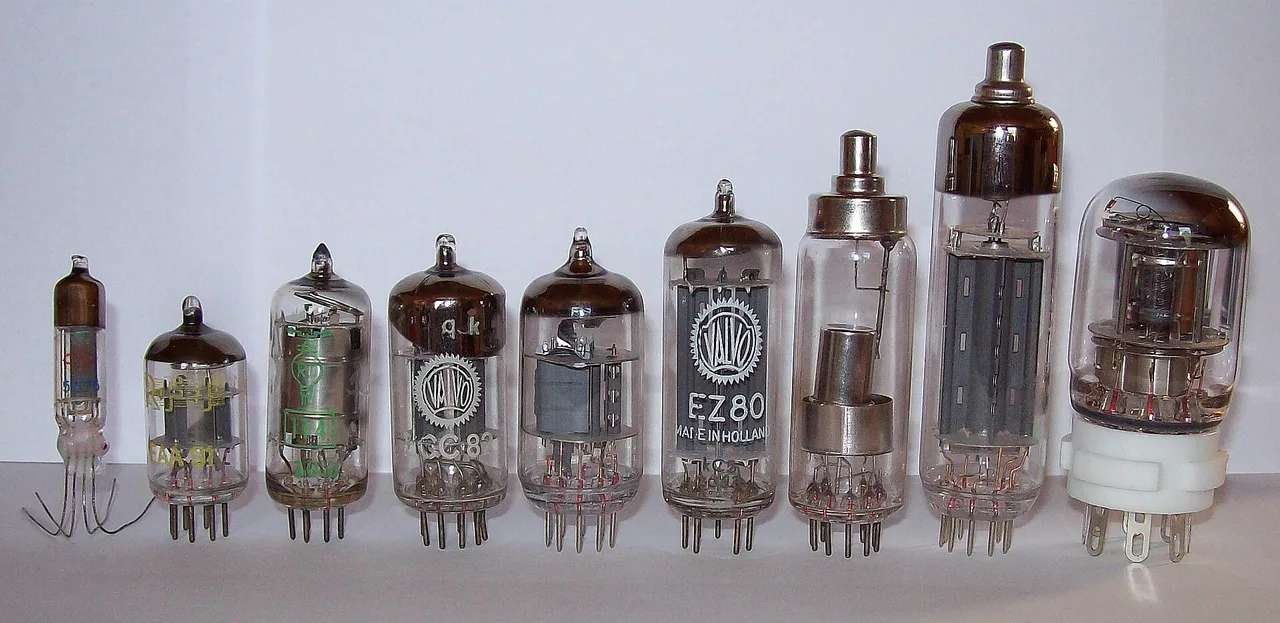
Early computers relied on vacuum tubes to control electricity, but they were bulky, consumed massive amounts of power, and burned out frequently like light bulbs. The transition to solid-state microchips made computers thousands of times smaller, faster, and far more reliable.
Photo: Stefan Riepl (Quark48), Wikimedia Commons, CC BY-SA 2.0 de.
Tap the right answer
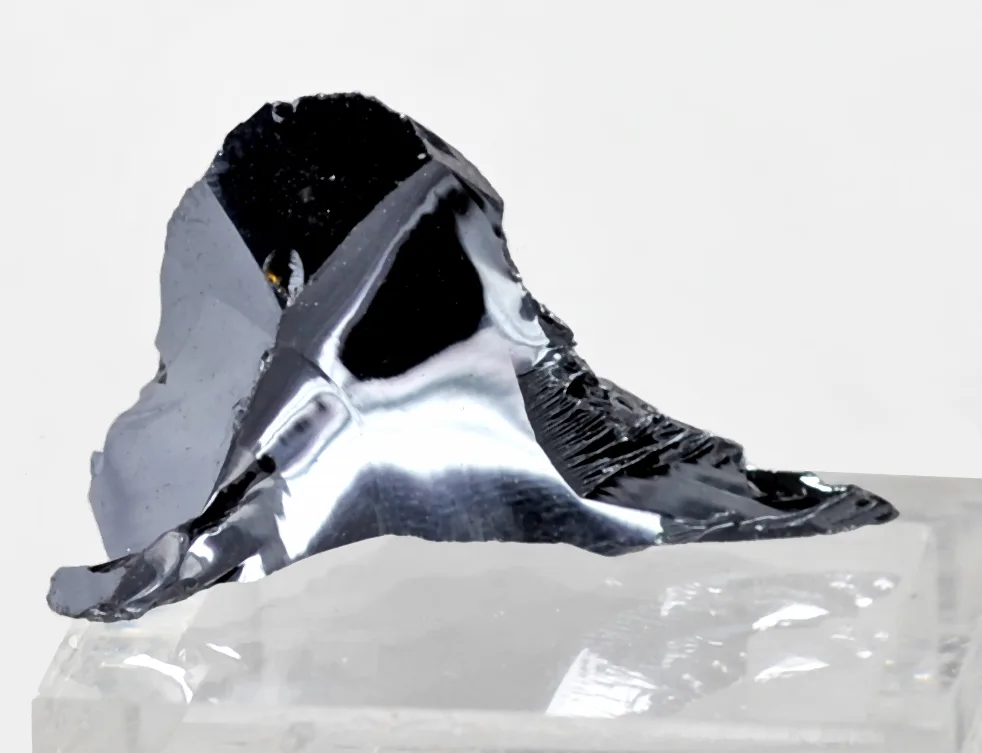
Silicon is the bedrock of modern microchips because of its excellent semiconducting properties and abundance—it is the second most common element in Earth's crust, found in ordinary sand! It replaced germanium because it performs much better at higher temperatures.
Photo: Rasiel Suarez on behalf of Luciteria LLC, Wikimedia Commons, CC BY-SA 4.0.
Tap the right answer
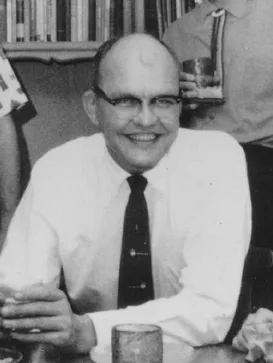
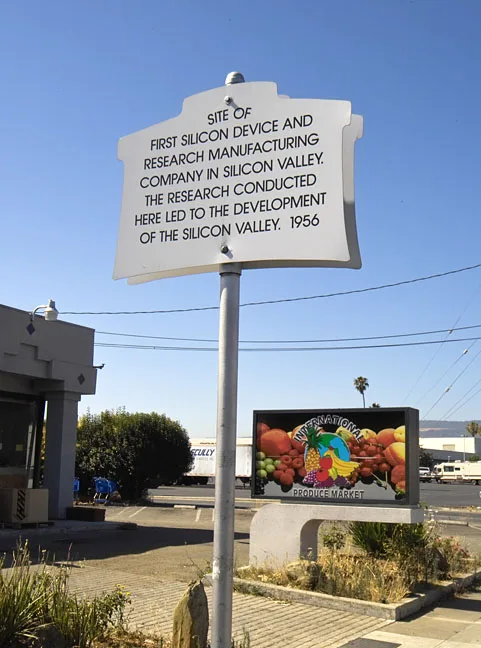
William Shockley co-invented the transistor and set up his laboratory in Mountain View, California, to commercialize it. However, his difficult management style led eight brilliant engineers to resign and start Fairchild Semiconductor, effectively birthing what we now call Silicon Valley.
Photo: Dicklyon at English Wikipedia, Wikimedia Commons, Public domain.
Tap the right answer
Photolithography is the key technique used to transfer microscopic circuit designs onto silicon. It works similarly to old-school film photography, using ultraviolet light to expose a light-sensitive chemical coating on the wafer, which is then etched away to form the transistors.
Photo: Rob Bulmahn, Wikimedia Commons, CC BY 2.0.
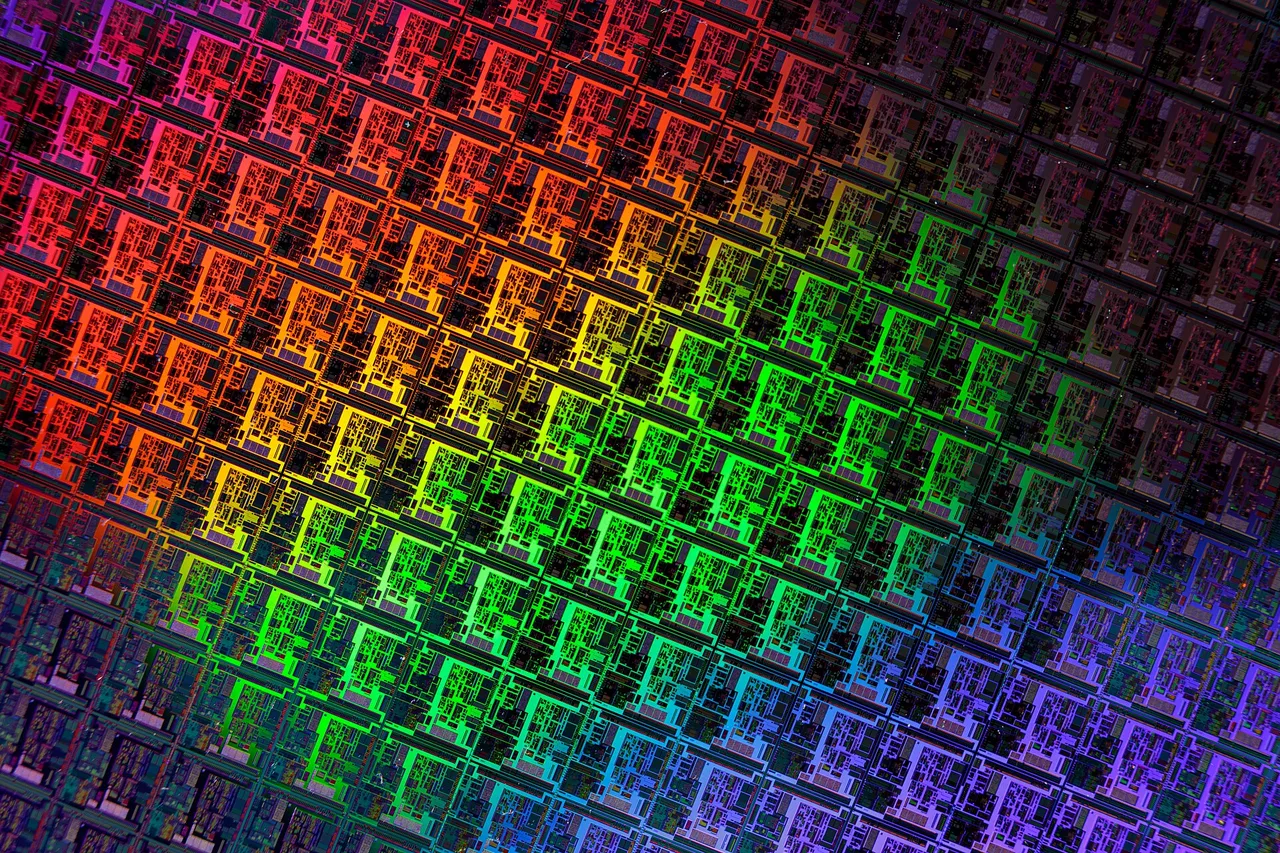
Tap the right answer
The Intel 4004 was a 4-bit central processing unit delivered on a single chip. Originally designed for a Japanese calculator company called Busicom, this tiny chip packed 2,300 transistors and had the same computing power as the massive ENIAC computer built in 1946.
Photo: Thomas Nguyen, Wikimedia Commons, CC BY-SA 4.0.

Tap the right answer
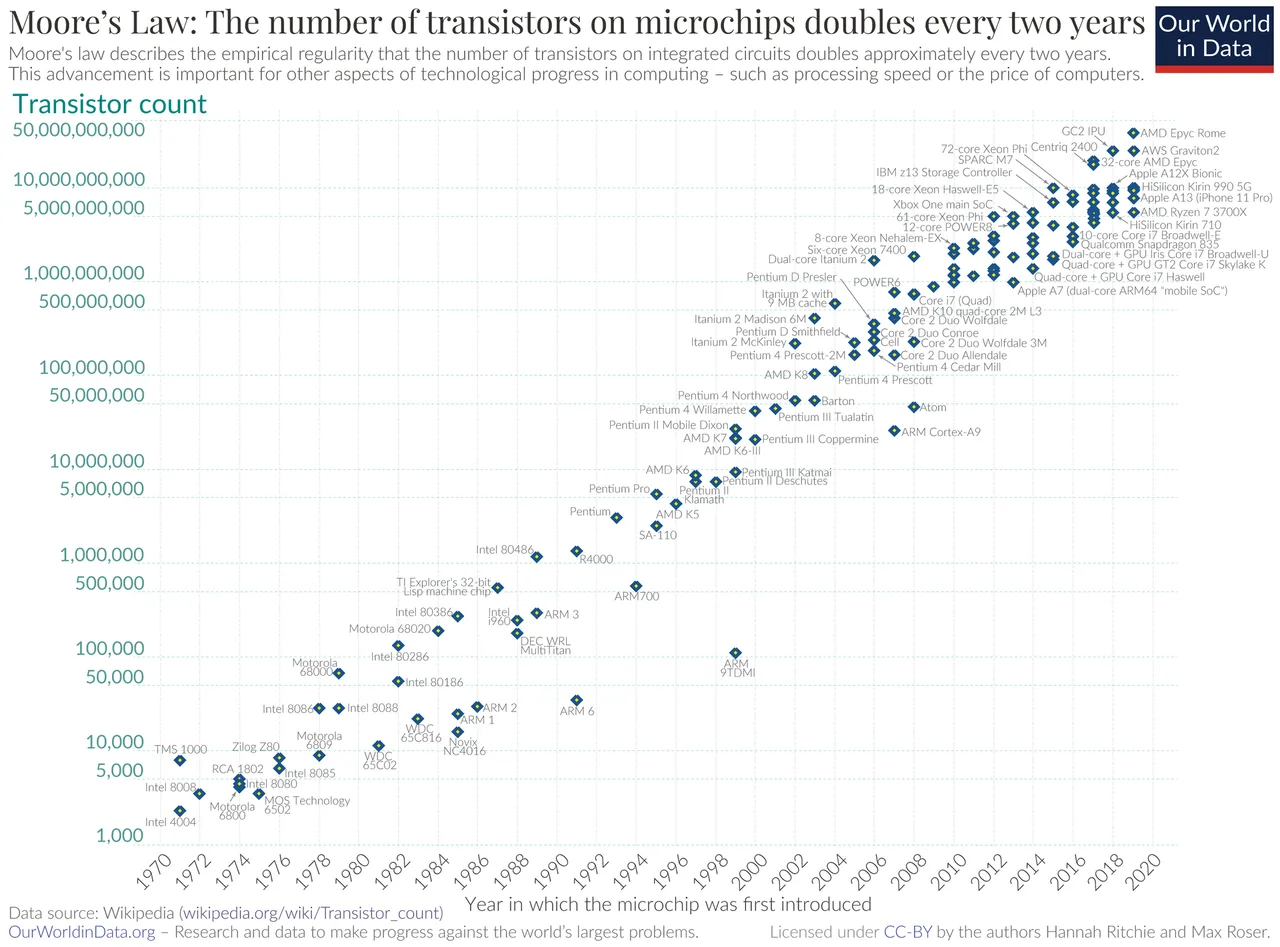
Formulated by Intel co-founder Gordon Moore in 1965, Moore's law has guided the tech industry's rapid pace of innovation for decades. While not a physical law of nature, it served as a target for manufacturers to continuously shrink transistors to atomic scales.
Photo: Max Roser, Hannah Ritchie, Wikimedia Commons, CC BY 4.0.
Tap the right answer
Microchip fabrication plants utilize advanced cleanrooms where the air is filtered to be thousands of times cleaner than a hospital operating room. A single speck of dust is much larger than modern transistors and can completely ruin an entire silicon wafer.
Photo: Stan Zurek, Wikimedia Commons, CC BY-SA 3.0.

Tap the right answer
Radio-frequency identification (RFID) uses electromagnetic fields to identify and track tags. Tap-to-pay cards use Near Field Communication (NFC), a fine-tuned subset of RFID. Passive tags don't need a battery; they are powered wirelessly by the reader's electromagnetic field.
Photo: Nicolas Eynaud, Wikimedia Commons, CC BY 4.0.
Tap the right answer
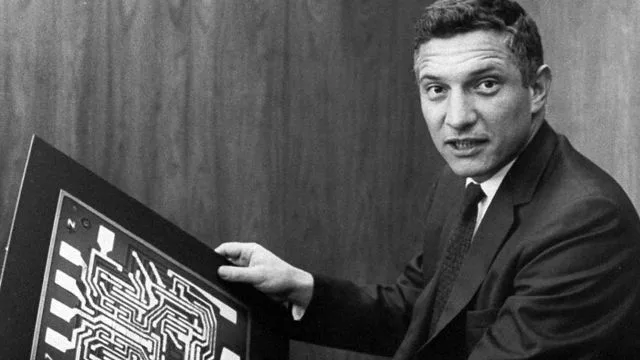
While Jack Kilby made the first working prototype out of germanium, Robert Noyce independently invented the silicon integrated circuit a few months later. Noyce's design solved the practical problem of connecting components on a single chip, making mass production possible.
Photo: Intel Free Press, Wikimedia Commons, CC BY-SA 2.0.


Want to make a quiz like this yourself? Do it on Votur, it's free.
Paste the code into your page. The player fits itself in, and every vote counts in Votur.
On WordPress, Ghost or Squarespace? Just paste the link of this page into your post.
This is how it looks
Also fun
How well do you know Europe's musicians? · 8 →How well do you know the internet? · 10 →How well do you know penicillin? · 10 →How well do you know vaccines? · 10 →How well do you know the light bulb? · 10 →How well do you know the telephone? · 10 →How well do you know photography? · 10 →How well do you know the steam engine? · 10 →How well do you know the bicycle? · 10 →How well do you know the printing press? · 10 →How well do you know baklava? · 10 →How well do you know poutine? · 10 →How well do you know paella? · 9 →How well do you know goulash? · 10 →How well do you know phở? · 2 →How well do you know ceviche? · 10 →How well do you know the tagine? · 10 →How well do you know stamppot? · 10 →How well do you know sushi? · 10 →How well do you know pizza? · 10 →How well do you know Baku? · 10 →How well do you know Azerbaijan? · 10 →How well do you know Yerevan? · 10 →How well do you know Armenia? · 10 →How well do you know Tbilisi? · 10 →How well do you know Georgia? · 10 →How well do you know Moscow? · 10 →How well do you know Russia? · 10 →How well do you know Minsk? · 10 →How well do you know Belarus? · 10 →How well do you know Kyiv? · 10 →How well do you know Ukraine? · 10 →How well do you know Monaco? · 10 →How well do you know Chișinău? · 10 →How well do you know Moldova? · 10 →How well do you know Sofia? · 10 →How well do you know Bulgaria? · 10 →How well do you know Bucharest? · 10 →How well do you know Romania? · 10 →How well do you know Nicosia? · 10 →How well do you know Cyprus? · 10 →How well do you know Podgorica? · 10 →How well do you know Montenegro? · 10 →How well do you know Skopje? · 10 →How well do you know North Macedonia? · 10 →How well do you know Tirana? · 10 →How well do you know Albania? · 10 →How well do you know Sarajevo? · 10 →How well do you know Bosnia and Herzegovina? · 10 →How well do you know Belgrade? · 10 →How well do you know Serbia? · 10 →How well do you know Zagreb? · 10 →How well do you know Croatia? · 10 →How well do you know Valletta? · 10 →How well do you know Malta? · 10 →How well do you know Ljubljana? · 10 →How well do you know Slovenia? · 10 →How well do you know Saturn? · 10 →How well do you know Jupiter? · 10 →How well do you know Mars? · 10 →How well do you know the Solar System? · 10 →How well do you know the Sun? · 10 →How well do you know the Moon? · 10 →How well do you know Budapest? · 10 →How well do you know Hungary? · 10 →How well do you know Bratislava? · 10 →How well do you know Slovakia? · 10 →How well do you know Prague? · 10 →How well do you know Czechia? · 10 →How well do you know Warsaw? · 10 →How well do you know Poland? · 10 →How well do you know Luxembourg City? · 10 →How well do you know Luxembourg? · 10 →How well do you know Dublin? · 10 →How well do you know Ireland? · 10 →How well do you know Vilnius? · 10 →How well do you know Lithuania? · 10 →How well do you know Riga? · 10 →How well do you know Latvia? · 10 →How well do you know Reykjavík? · 10 →How well do you know Iceland? · 10 →How well do you know Helsinki? · 10 →How well do you know Finland? · 10 →How well do you know Oslo? · 10 →How well do you know Norway? · 10 →How well do you know Stockholm? · 10 →How well do you know Sweden? · 10 →How well do you know Madrid? · 10 →How well do you know Spain? · 10 →How well do you know Rome? · 10 →How well do you know Italy? · 10 →How well do you know Bern? · 10 →How well do you know Switzerland? · 10 →How well do you know Vienna? · 10 →How well do you know Austria? · 10 →How well do you know Berlin? · 10 →How well do you know London? · 10 →How well do you know the United Kingdom? · 10 →How well do you know Paris? · 10 →How well do you know France? · 10 →How well do you know Brussels? · 10 →How well do you know Amsterdam? · 10 →How well do you know the Netherlands? · 10 →How well do you know Copenhagen? · 10 →How well do you know Denmark? · 10 →How well do you know Athens? · 10 →How well do you know Greece? · 10 →How well do you know Lisbon? · 10 →How well do you know Portugal? · 10 →How well do you know Tallinn? · 10 →How well do you know Estonia? · 10 →Belgium · 8 →Universe · 10 →Which Greek hero are you? · 8 →Gulpen · 5 →How well do you know Dutch weather? · 10 →How well do you know Germany? · 10 →Who owns the Netherlands? · 10 →The little church village of Klimmen · 10 →Do you know Neutral Moresnet? · 10 →