Get app
 Photo: 齐健 from Peking, People's Republic of China, Wikimedia Commons, CC BY 2.0.
Test your knowledge on the fascinating history, science, and cultural impact of the bicycle. From wooden running machines to urban planning revolutions, see how much you know about this two-wheeled wonder!
Pedal Beginner 0–4 · Gear Enthusiast 5–8 · Master Cyclist 9–10
Pick one

The Wright brothers ran a highly successful bicycle shop in Dayton, Ohio, where they even manufactured their own brand of bikes. The mechanical skills they developed, alongside their understanding of balance and wind resistance from cycling, directly helped them design their historic 1903 airplane.
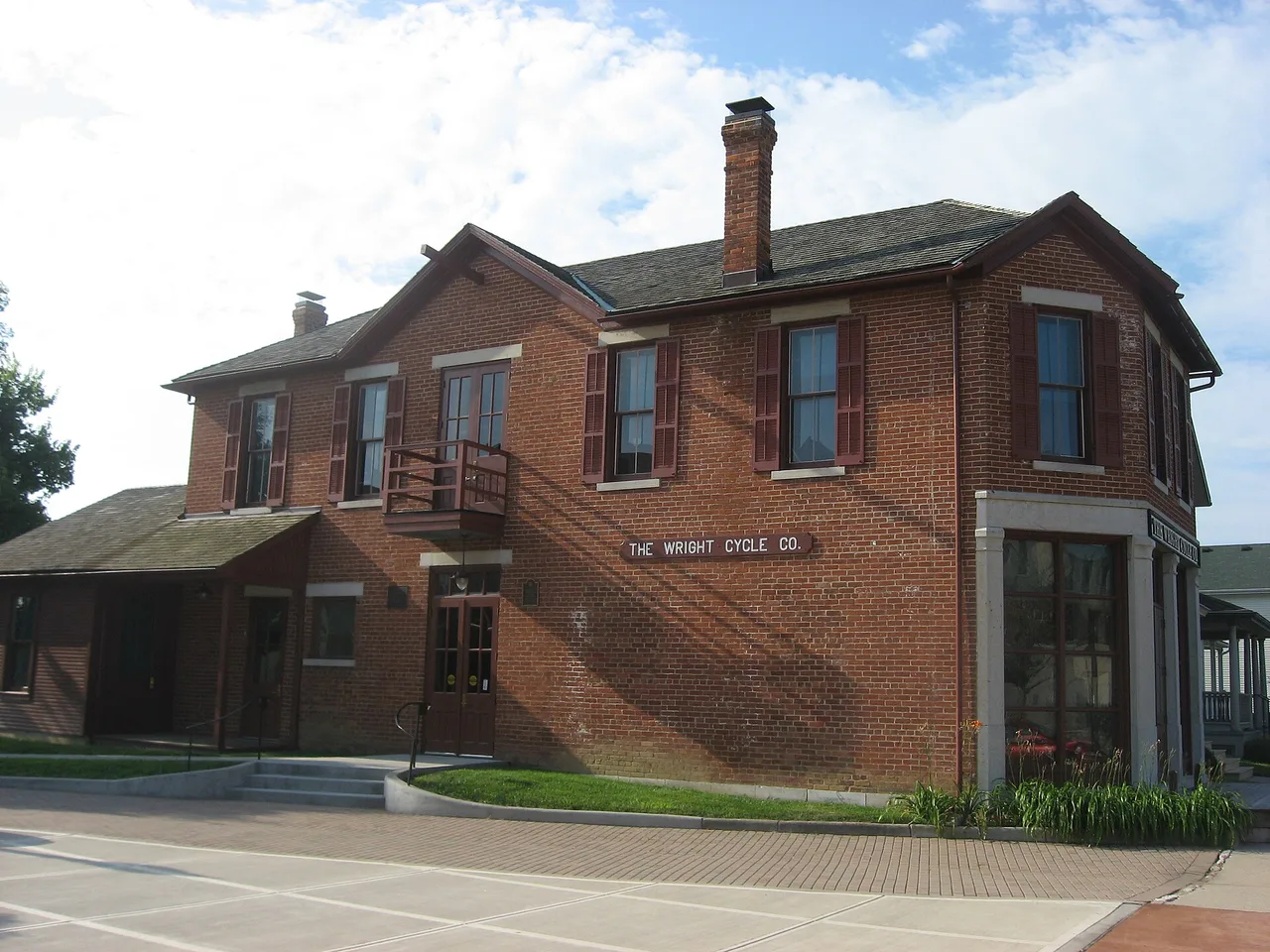
Photo: Nyttend, Wikimedia Commons, Public domain.
Pick one
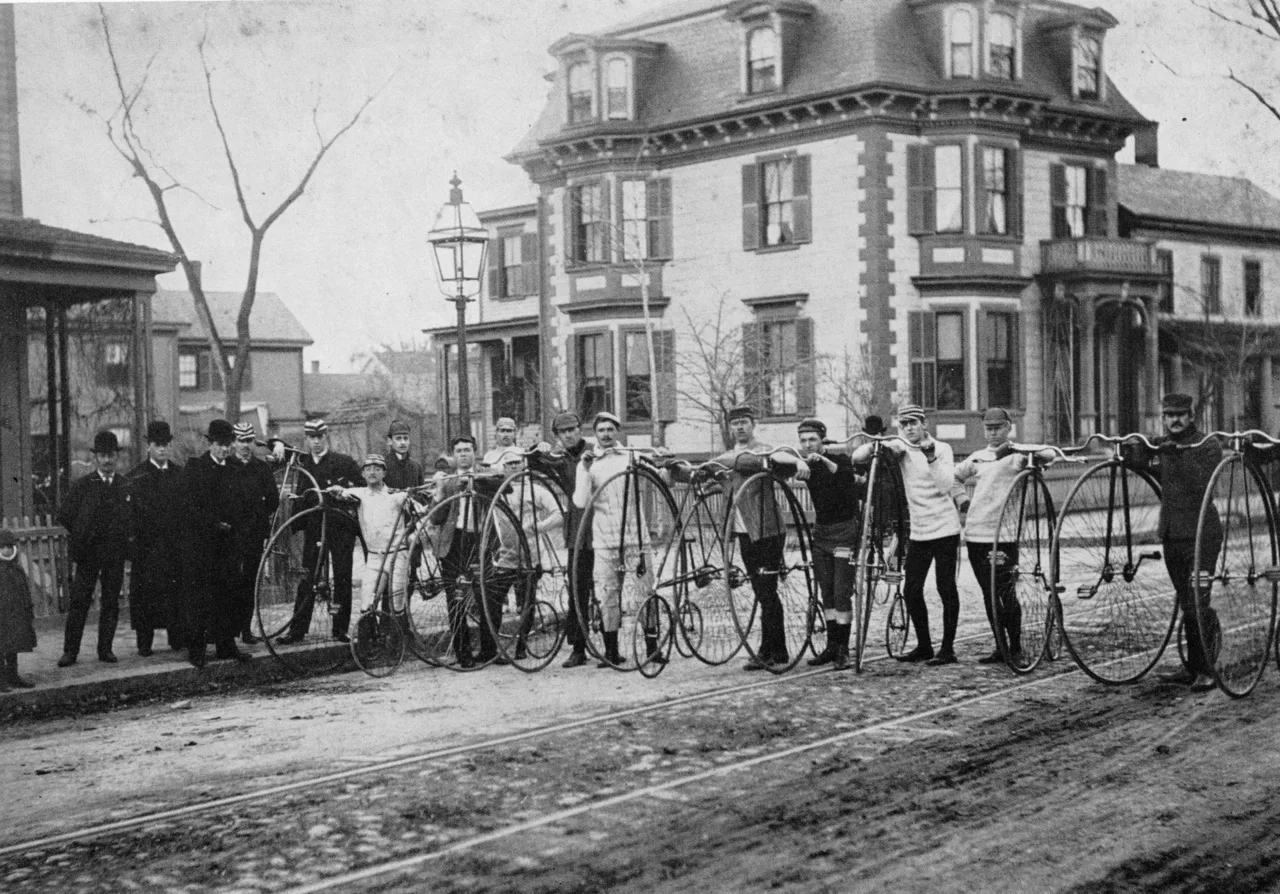
Because the pedals of a penny-farthing were directly attached to the front axle without any gears, a larger wheel was the only way to cover more distance with a single leg movement. This allowed riders to travel much faster, though it made mounting and dismounting incredibly dangerous.
Photo: Unknown authorUnknown author, Wikimedia Commons, Public domain.
Pick one
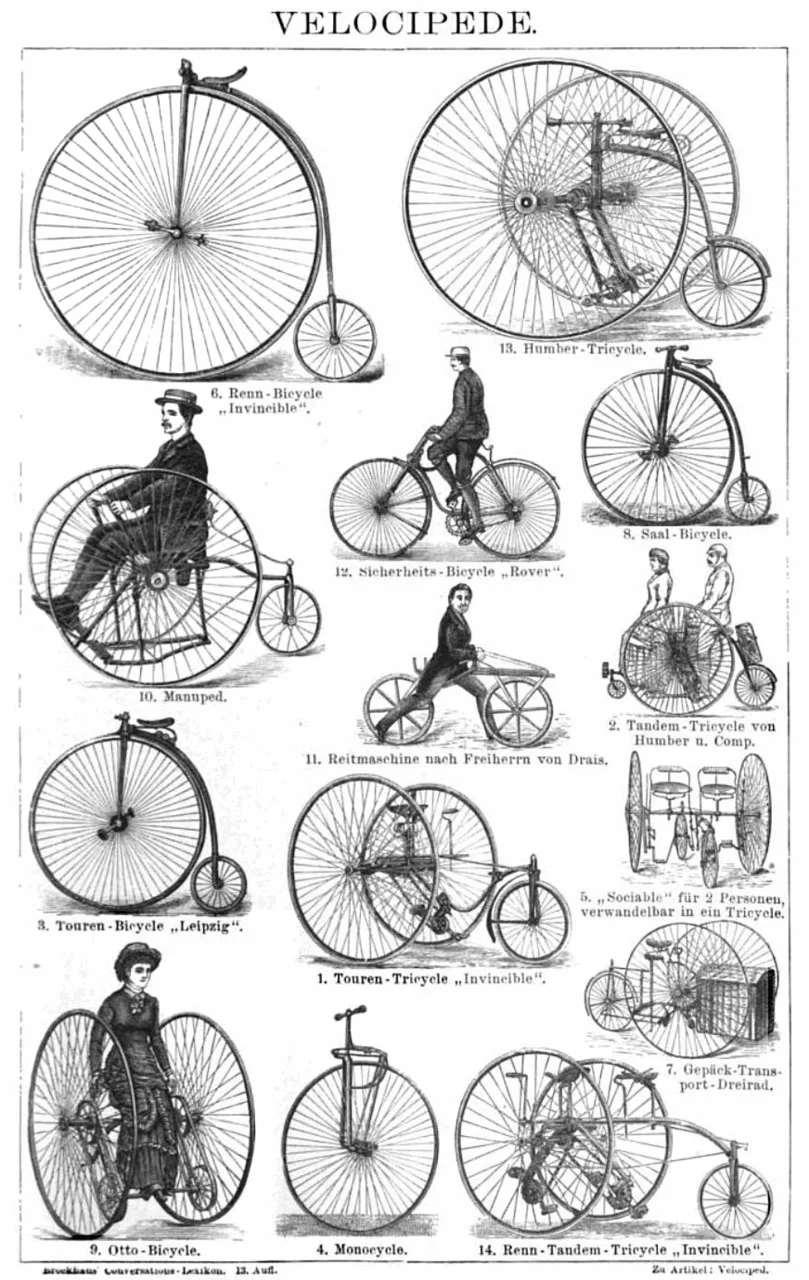
The velocipedes of the 1860s, made by Pierre Michaux and others, had a stiff wrought-iron frame and wooden wheels with iron tyres, so riders soon called them 'boneshakers'. Rattling over cobblestones was so uncomfortable that it helped push inventors towards rubber and, later, air-filled tyres.
Photo: F. A. Brockhaus, Wikimedia Commons, Public domain.
Pick one
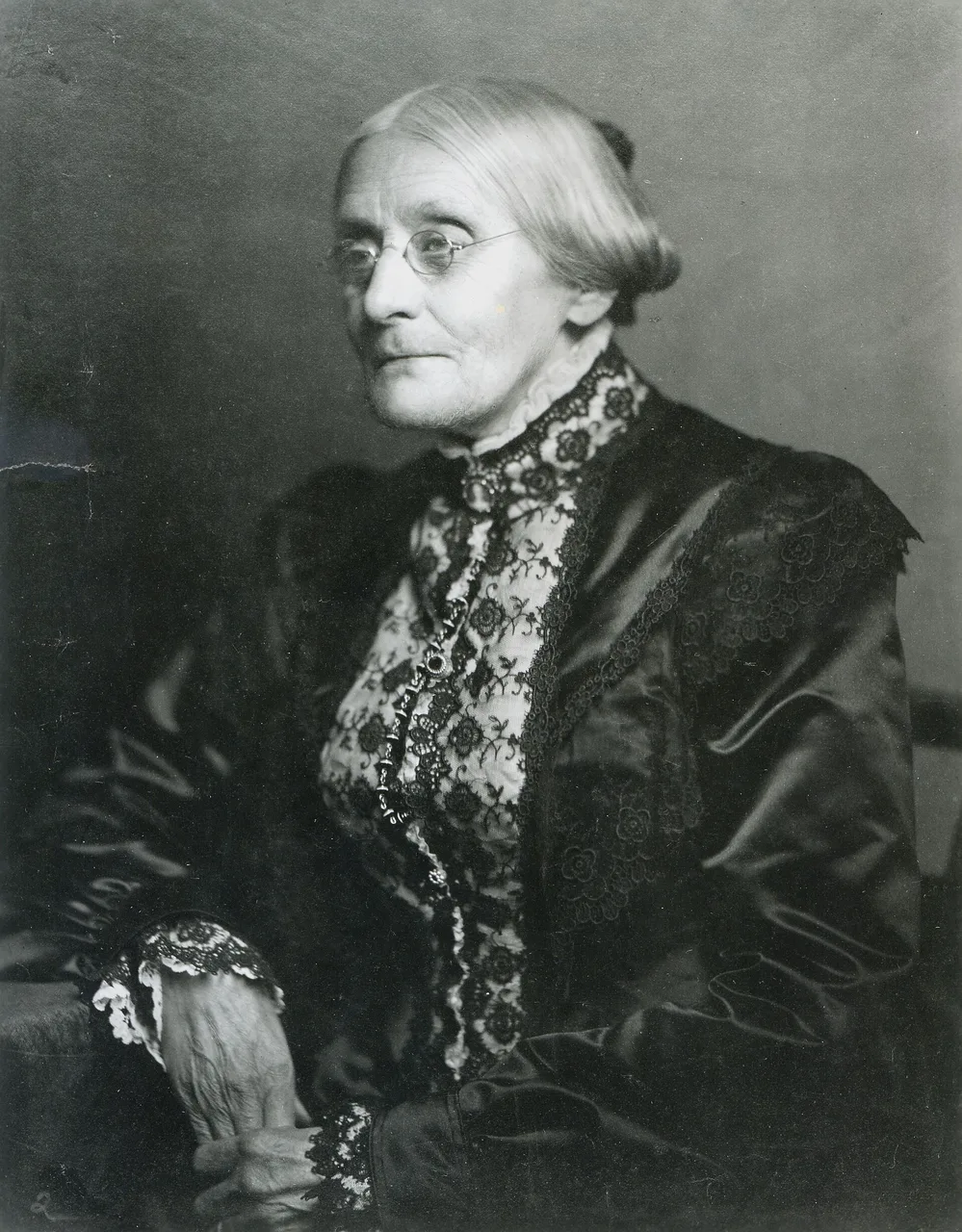
Susan B. Anthony praised the bicycle in 1896 for giving women a brand-new feeling of freedom and self-reliance. The bicycle allowed women to travel unescorted, and it even revolutionized fashion by encouraging the adoption of bloomers instead of heavy, restrictive Victorian skirts.
Photo: Unknown authorUnknown author, Wikimedia Commons, Public domain.
Pick one
The race usually called the first was held on 31 May 1868 in the Parc de Saint-Cloud, just outside Paris. It was won by Englishman James Moore on a wooden bicycle with solid rubber tyres, over a course of just 1,200 metres. His bicycle can still be seen in a museum in Ely, England.
Pick one
'Copenhagenization' is a term coined by urban designers for redesigning cities around bicycles, with safe, dedicated bike lanes. Copenhagen is famous for its huge network of cycle paths, and around half of all trips to work or school in the city are made by bike.
Pick one
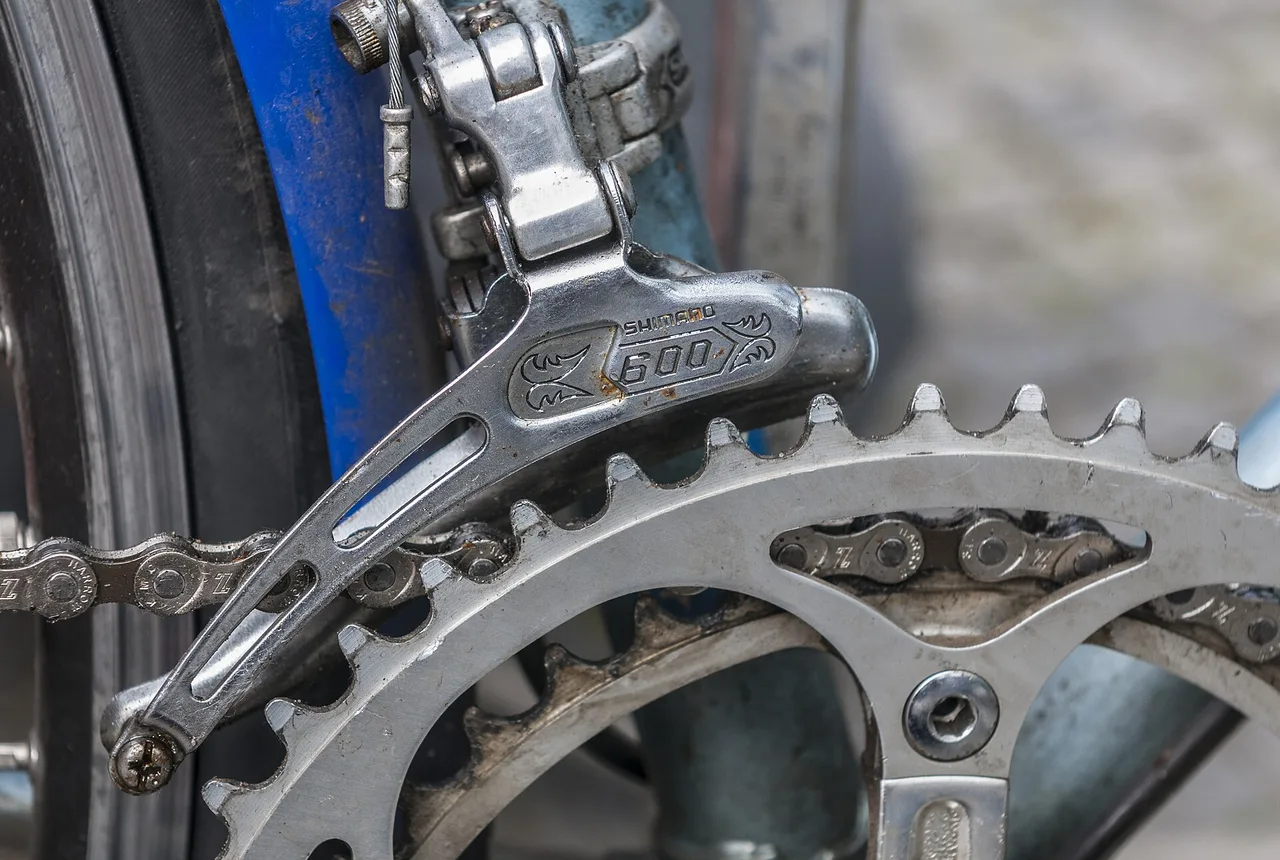
Although derailleur systems were invented much earlier, Tour de France organizer Henri Desgrange resisted them for years, believing they made the race too easy. When they were finally allowed in 1937, all riders used them, forever changing how cyclists tackle steep mountain passes.
Photo: Ralf Roletschek, Wikimedia Commons, GFDL 1.2.
Pick one
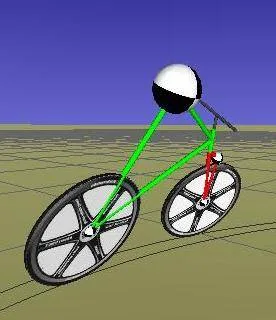
For a long time, people believed the gyroscopic effect of the spinning wheels kept a bicycle upright. However, modern physics shows that steering geometry—specifically how the front wheel automatically steers into a fall to restore balance—is the real reason a rider stays upright.
Photo: AndrewDressel at English Wikipedia, Wikimedia Commons, Public domain.
Pick one
Karl Drais crafted his revolutionary two-wheeler, the Laufmaschine, almost entirely out of wood to keep it lightweight. It lacked pedals, meaning riders had to push themselves along with their feet. Interestingly, Drais invented it partly because a volcanic eruption caused crop failures, leading to a shortage of horses.
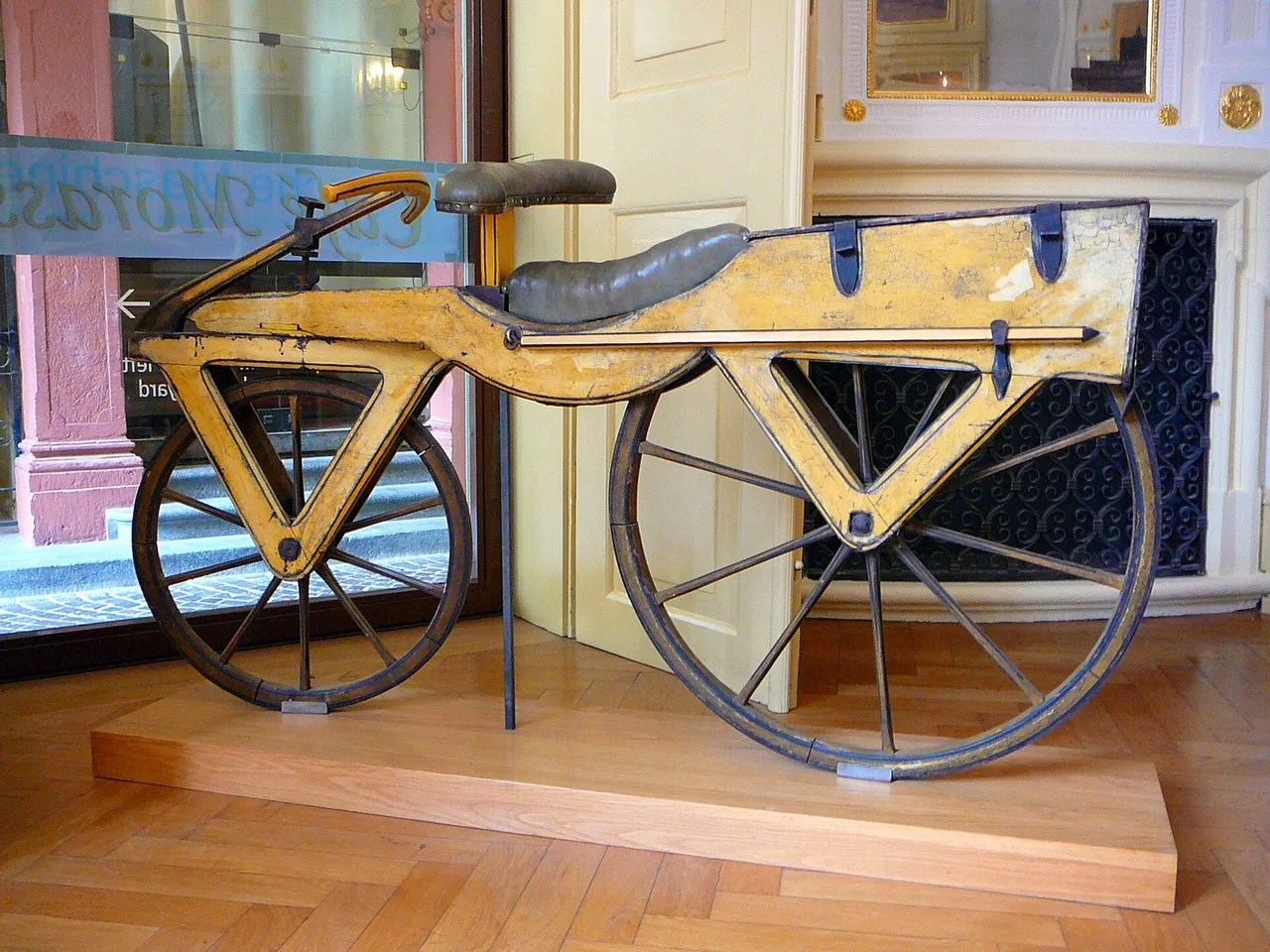
Photo: Gun Powder Ma, Wikimedia Commons, CC BY-SA 3.0.
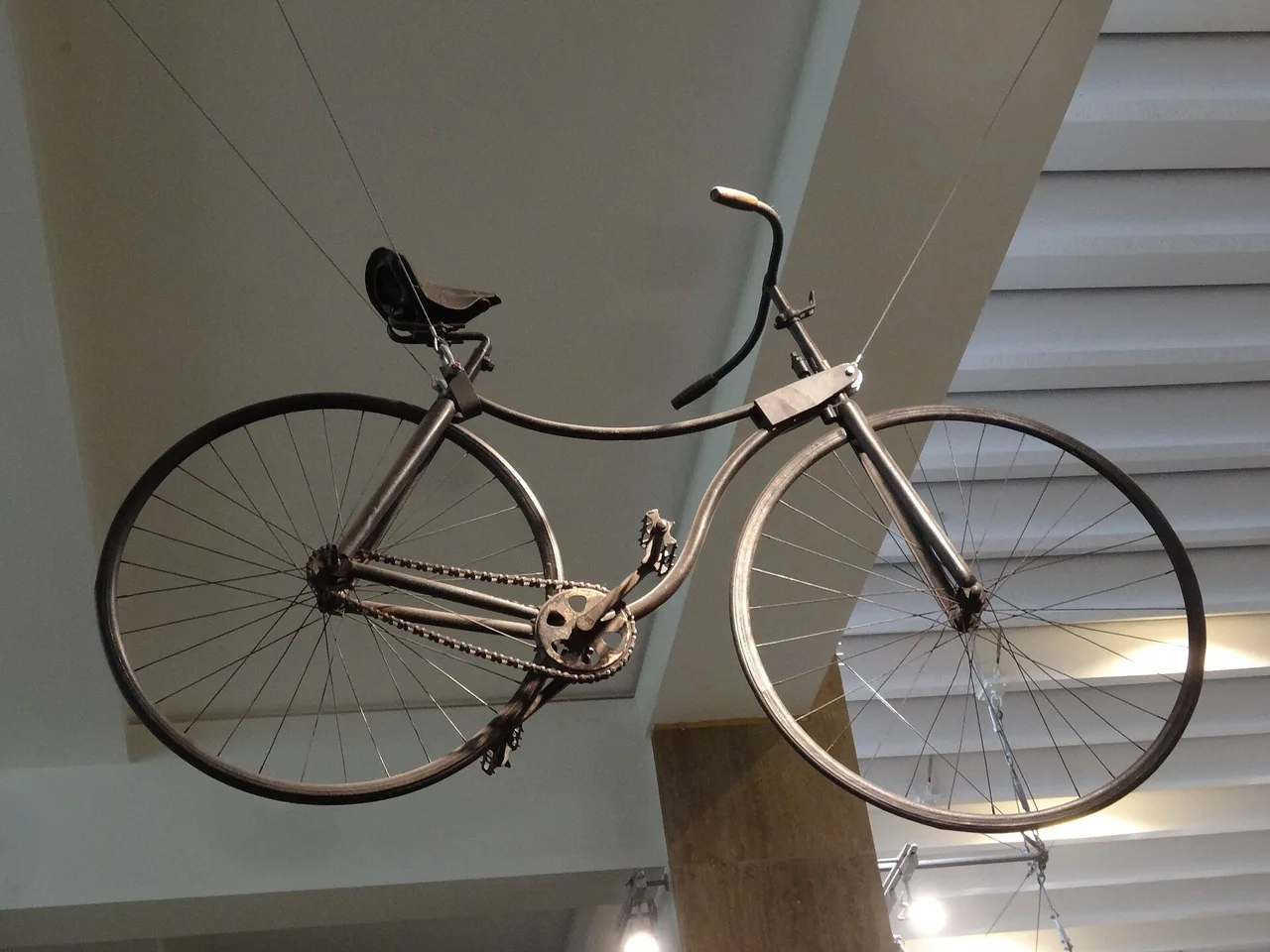
Pick one
While early safety bicycles used solid rubber tires that rattled the rider's bones, John Boyd Dunlop's reinvention of the pneumatic tire in 1887 changed everything. It absorbed road shocks beautifully, making cycling a smooth and highly popular leisure activity for the general public.
Photo: Jonathan Cardy, Wikimedia Commons, CC BY-SA 3.0.


Paste the code into your page. The player fits itself in, and every vote counts in Votur.
On WordPress, Ghost or Squarespace? Just paste the link of this page into your post.
This is how it looks
Also fun