 Get app
Our star, the Sun, powers life on Earth and has shaped cultures for millennia. How much do you truly know about this celestial giant?
Sun Seeker 0–4 · Solar Explorer 5–8 · Heliosphere Guru 9–10

Tap the right answer
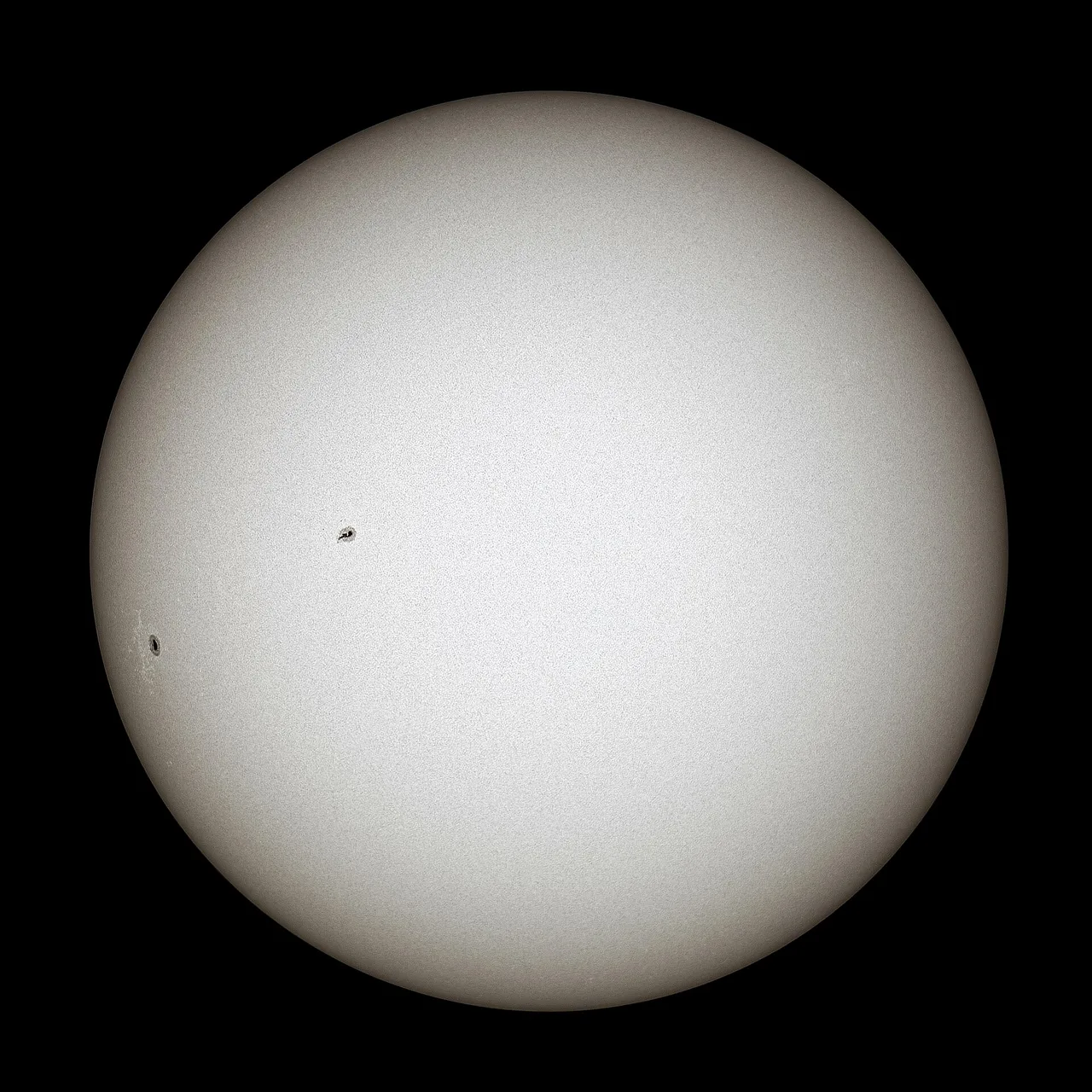
The Sun is primarily composed of hydrogen, making up about 75% of its mass. This hydrogen undergoes nuclear fusion in the Sun's core, converting into helium and releasing immense energy. While helium is the second most abundant element, hydrogen is the fuel that keeps our star shining brightly.
Photo: Matúš Motlo, Wikimedia Commons, CC BY-SA 4.0.
Tap the right answer
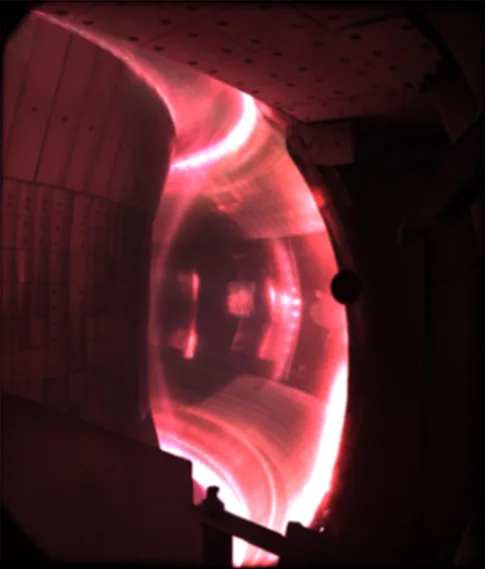
The Sun's energy comes from nuclear fusion, where hydrogen atoms combine to form helium in its core, releasing vast amounts of energy in the process. This is the same process that powers hydrogen bombs, but on a cosmic scale, providing the heat and light essential for life on Earth.
Photo: Xiang Gao, Yao Yang, Tao Zhang, Haiqing Liu, Guoqiang Li, Tingfeng Ming, Zixi Li, Wikimedia Commons, CC BY 3.0.
Tap the right answer
From space, the Sun would appear white because it emits light across the entire visible spectrum almost evenly. Earth's atmosphere scatters blue light more efficiently, making the sky blue and causing the Sun to appear yellowish to us on the surface. This atmospheric effect is also why sunsets are often red or orange.
Tap the right answer
The solar wind is a flow of plasma, consisting mainly of electrons and protons, ejected from the Sun's upper atmosphere. It travels throughout the solar system, influencing planetary magnetospheres and causing phenomena like the aurora borealis and australis. This constant outflow is a fundamental aspect of how the Sun interacts with its environment.
Photo: NASA's Conceptual Image Laboratory, Wikimedia Commons, Public domain.
Tap the right answer
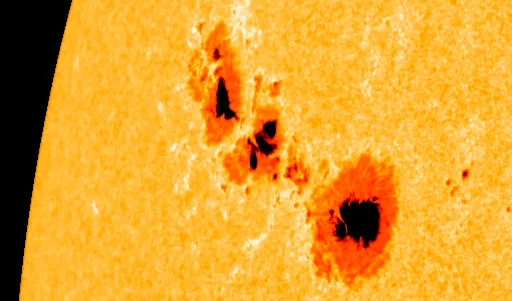
Sunspots are temporary phenomena on the Sun's photosphere that appear darker than surrounding areas due to concentrated magnetic flux inhibiting convection, leading to reduced surface temperature. Their number varies in an approximately 11-year cycle, directly impacting space weather and Earth's technological systems.
Photo: NASA, Wikimedia Commons, Public domain.
Tap the right answer
Sol was the ancient Roman god and personification of the Sun, often depicted driving a chariot across the sky. While Helios was his Greek counterpart, Sol played a significant role in Roman religious practices, with a major temple dedicated to Sol Invictus, the 'unconquered Sun,' whose festival later influenced the date of Christmas.
Tap the right answer
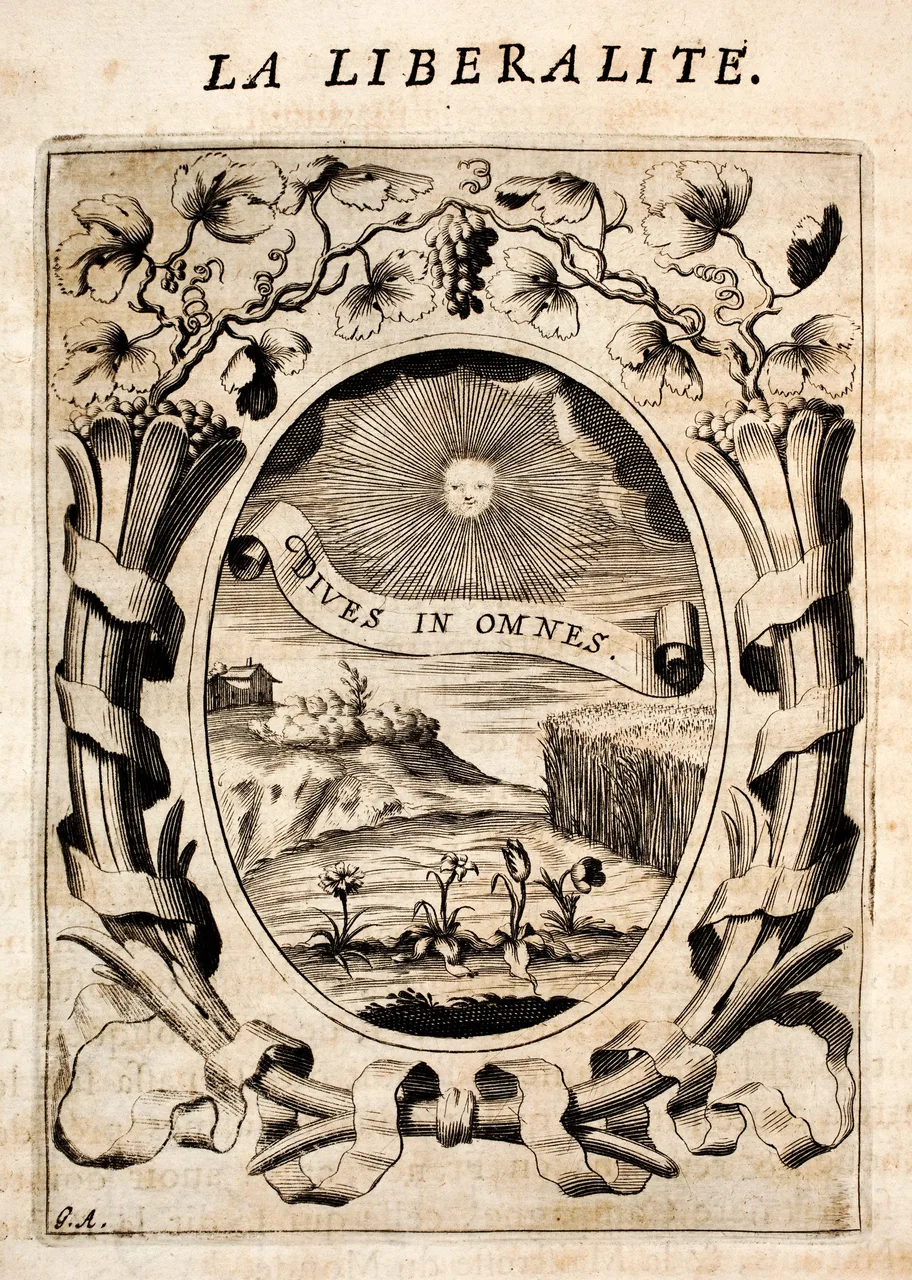
The English word "Sunday" derives from Old English "Sunnandæg," meaning "day of the Sun." This naming convention reflects ancient Germanic and Roman traditions, where each day of the week was dedicated to a specific celestial body or deity. This practice highlights the Sun's enduring significance across various cultures and languages.
Photo: Gérard Audran, Wikimedia Commons, Public domain.
Tap the right answer
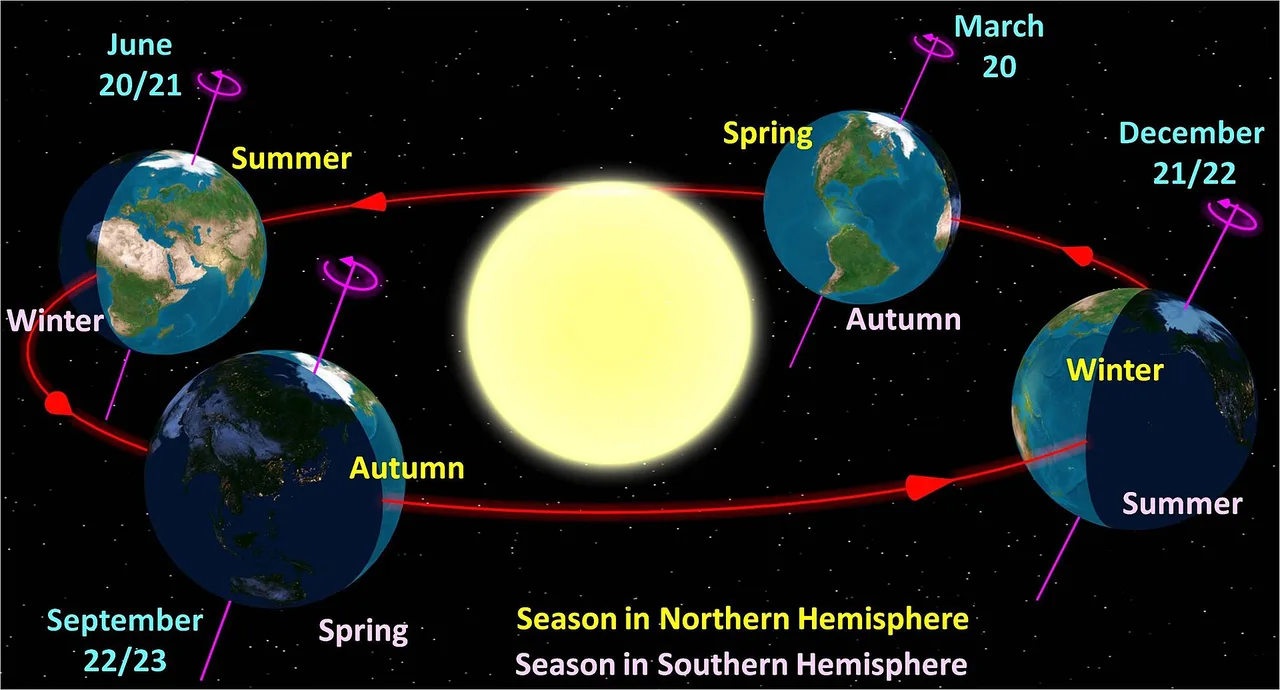
Earth orbits the Sun in an elliptical path, not a perfect circle. This means its distance from the Sun varies throughout the year, being closest at perihelion (around January) and furthest at aphelion (around July). This elliptical orbit, combined with the Earth's axial tilt, is crucial for our planet's seasons.
Photo: Tauʻolunga, Wikimedia Commons, CC0.
Tap the right answer
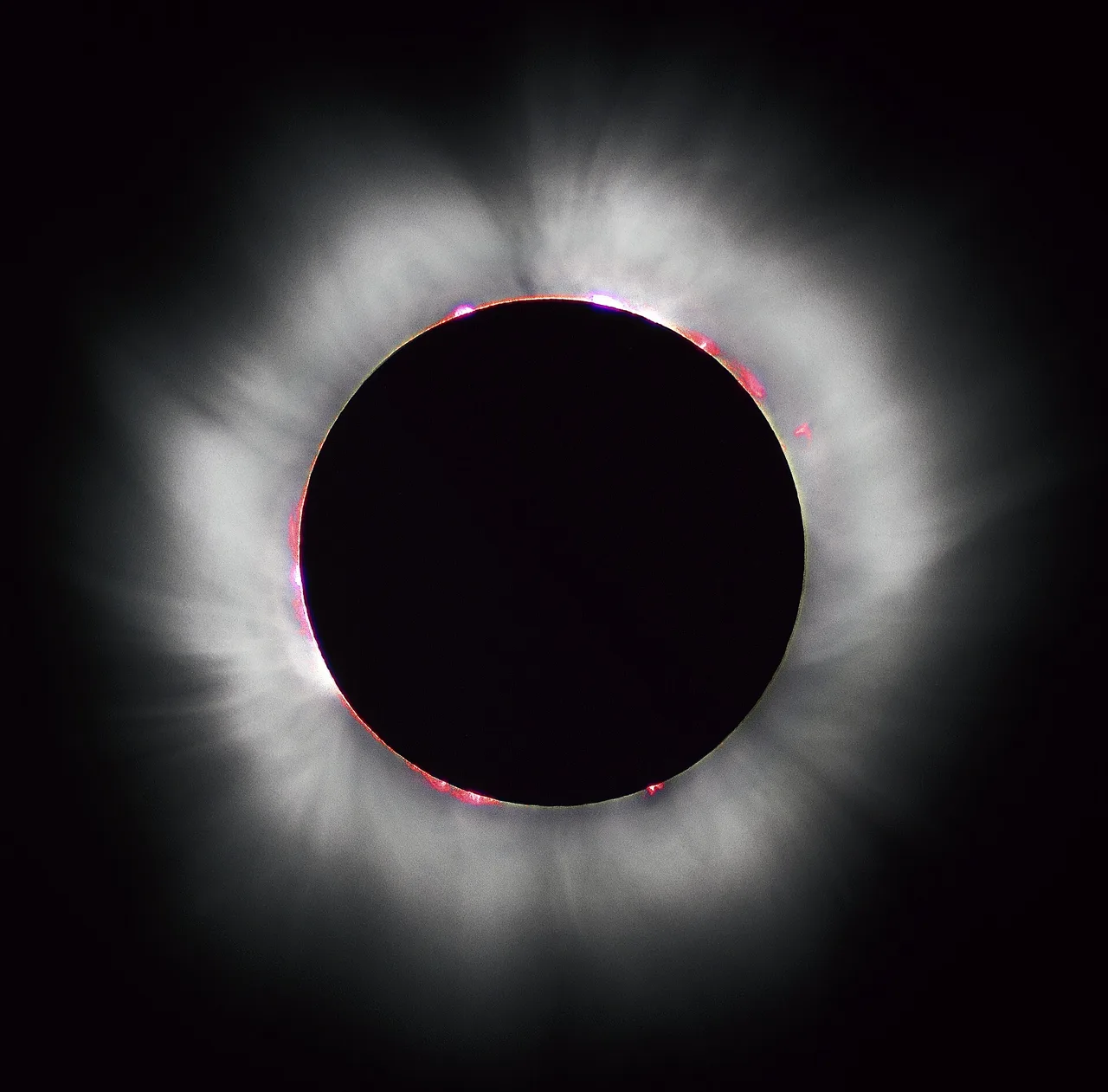
A solar eclipse happens when the Moon's shadow falls on Earth, temporarily blocking the Sun's light. This rare and spectacular event can be total, partial, or annular, depending on the alignment and distance of the Moon. Observing a total solar eclipse reveals the Sun's faint corona, which is usually hidden by its bright disk.
Photo: Luc Viatour, Wikimedia Commons, CC BY-SA 3.0.
Tap the right answer
The corona is the Sun's ethereal outer atmosphere, extending millions of kilometers into space. It is incredibly hot, reaching temperatures of over a million degrees Celsius, yet it is much less dense than the layers below. Its beautiful, shimmering appearance during an eclipse has captivated observers for centuries.


Want to make a quiz like this yourself? Do it on Votur, it's free.
Paste the code into your page. The player fits itself in, and every vote counts in Votur.
On WordPress, Ghost or Squarespace? Just paste the link of this page into your post.
This is how it looks
Also fun
How well do you know Saturn? · 10 →How well do you know Jupiter? · 10 →How well do you know Mars? · 10 →How well do you know the Solar System? · 10 →How well do you know the Moon? · 10 →How well do you know Budapest? · 10 →How well do you know Hungary? · 10 →How well do you know Bratislava? · 10 →How well do you know Slovakia? · 10 →How well do you know Prague? · 10 →How well do you know Czechia? · 10 →How well do you know Warsaw? · 10 →How well do you know Poland? · 10 →How well do you know Luxembourg City? · 10 →How well do you know Luxembourg? · 10 →How well do you know Dublin? · 10 →How well do you know Ireland? · 10 →How well do you know Vilnius? · 10 →How well do you know Lithuania? · 10 →How well do you know Riga? · 10 →How well do you know Latvia? · 10 →How well do you know Reykjavík? · 10 →How well do you know Iceland? · 10 →How well do you know Helsinki? · 10 →How well do you know Finland? · 10 →How well do you know Oslo? · 10 →How well do you know Norway? · 10 →How well do you know Stockholm? · 10 →How well do you know Sweden? · 10 →How well do you know Madrid? · 10 →How well do you know Spain? · 10 →How well do you know Rome? · 10 →How well do you know Italy? · 10 →How well do you know Bern? · 10 →How well do you know Switzerland? · 10 →How well do you know Vienna? · 10 →How well do you know Austria? · 10 →How well do you know Berlin? · 10 →How well do you know London? · 10 →How well do you know the United Kingdom? · 10 →How well do you know Paris? · 10 →How well do you know France? · 10 →How well do you know Brussels? · 10 →How well do you know Amsterdam? · 10 →How well do you know the Netherlands? · 10 →How well do you know Copenhagen? · 10 →How well do you know Denmark? · 10 →How well do you know Athens? · 10 →How well do you know Greece? · 10 →How well do you know Lisbon? · 10 →How well do you know Portugal? · 10 →How well do you know Tallinn? · 10 →How well do you know Estonia? · 10 →Belgium · 8 →Universe · 10 →Which Greek hero are you? · 8 →Gulpen · 5 →How well do you know Dutch weather? · 10 →How well do you know Germany? · 10 →Who owns the Netherlands? · 10 →The little church village of Klimmen · 10 →Do you know Neutral Moresnet? · 10 →