Get app
For over a hundred years a country almost nobody remembers lay next to Vaals. Ten questions about the four-country point, the zinc mine and the Esperanto dream Amikejo.
Tourist 0–4 · Border expert 5–8 · Honorary citizen of Amikejo 9–10
Pick one

7 votes so far
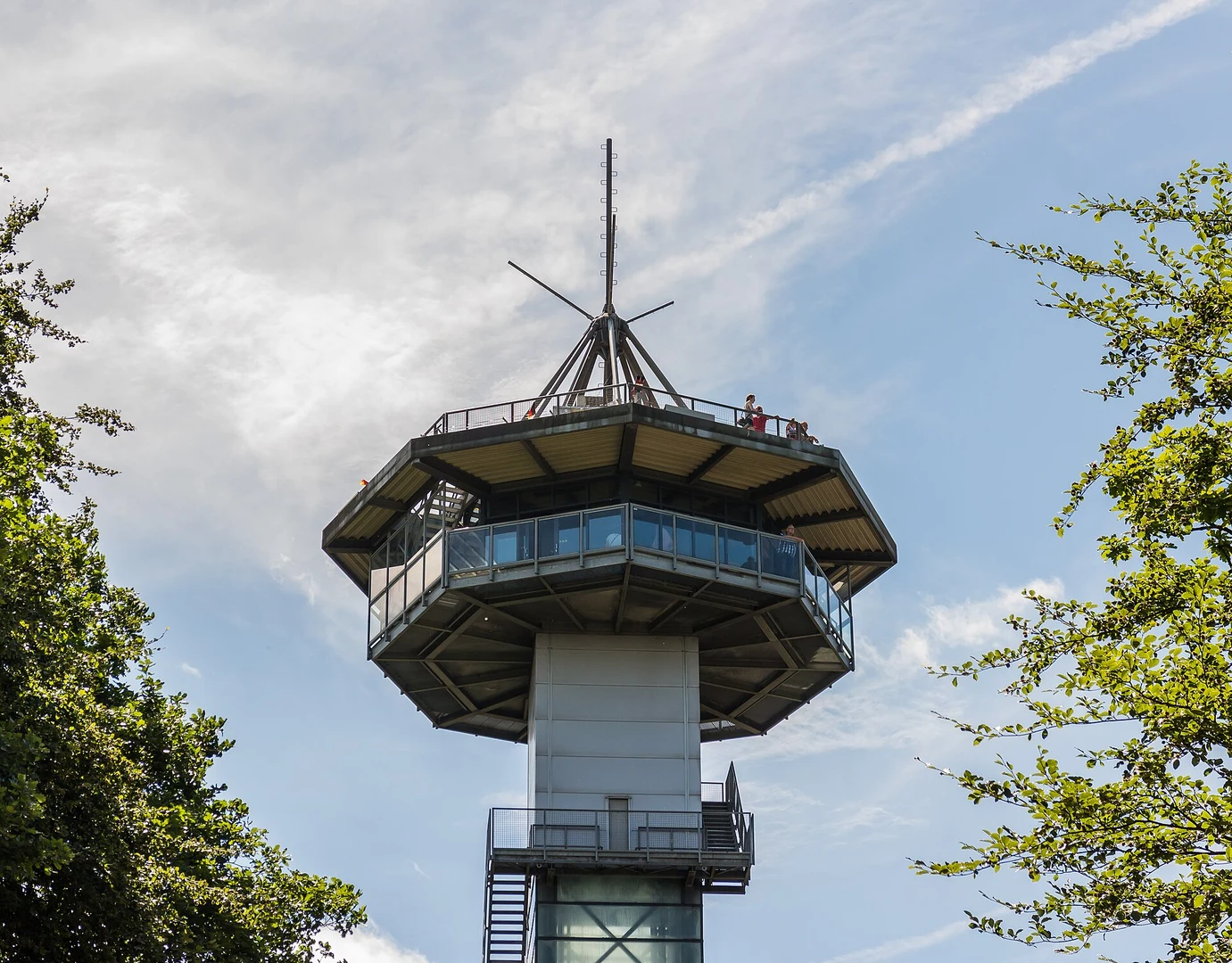
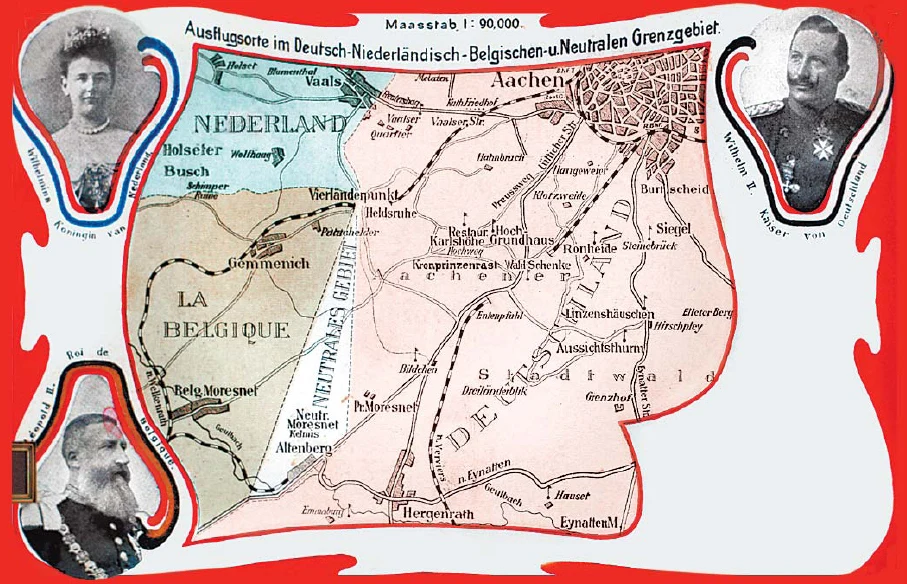
From 1816 to 1920, Neutral Moresnet was located here: a sliver of about 3.5 square kilometers that belonged to no country. The Netherlands and Prussia could not agree on the zinc mine during the border division and decided to jointly administer the small area, complete with its own flag: black, white, and blue. For over a hundred years, four borders met here. Photo: Wikimedia Commons (CC BY-SA 4.0).

Pick one
5 votes so far
From 1816, the United Kingdom of the Netherlands and Prussia shared the administration; after Belgian independence in 1830, Belgium took over the Dutch role. Two co-ruling countries, one village: officially, this is called a condominium.

Pick one
6 votes so far
In the area lay the Altenberg, one of the richest zinc mines in Europe. Zinc was worth its weight in gold around 1800 for roofs, buckets, and brass, and the mining company Vieille Montagne gained worldwide fame from it. That's why the Netherlands and Prussia both wanted the mine, and neither got it.

Pick one
5 votes so far
Germany occupied the small state during World War I. The Treaty of Versailles assigned Neutral Moresnet to Belgium in 1919, and on January 10, 1920, it ended after 104 years. Since then, the Three-Country Point near Vaals has once again become a three-country point.

Pick one
5 votes so far
Wilhelm Molly and Esperantist Gustave Roy dreamed of renaming the small state Amikejo, Esperanto for 'friendship place': the first Esperanto state in the world. There was a national anthem, a congress, and a lot of enthusiasm, but the great powers let the plan disappear into the drawer.
Pick one
5 votes so far
Residents of Neutral Moresnet did not have to serve in the Dutch, Belgian, or Prussian military. Taxes and excise duties were low, and jenever was very cheap. The territory attracted smugglers, distillers, and bon vivants; at its peak, it had more cafés per inhabitant than anywhere else in the region.
Pick one
5 votes so far
Kelmis comes from 'kelme', the regional name for galmei: the zinc ore that was mined here for centuries. The French name 'La Calamine' means exactly the same. The village is literally named after its treasure.
Pick one
5 votes so far
A sliver of about 3.5 square kilometers: about 5 kilometers long and nowhere wider than one and a half kilometers. This made it smaller than many a Dutch village, but it did have its own flag and its own border posts.
Pick one
5 votes so far
It started in 1816 with about 250 souls, but thanks to the mine and the freedoms, it grew to over 4,600 inhabitants by the First World War. For an area of three and a half square kilometers, that was a real population movement.
Pick one
5 votes so far
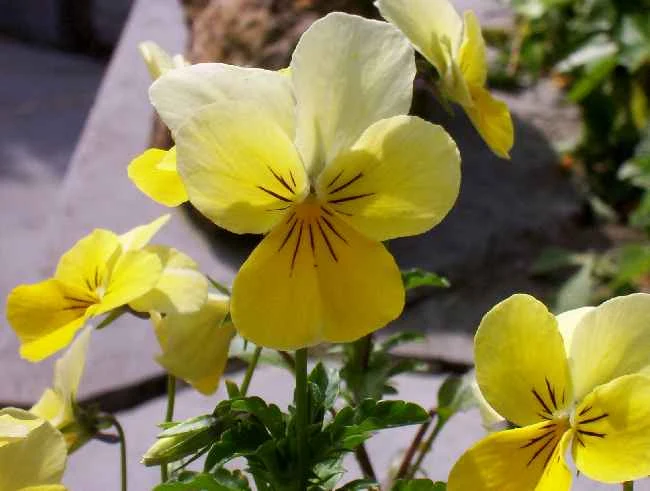
The yellow zinc violet tolerates the heavy metals in the calamine soil that kills most plants, and therefore grows almost exclusively around the old zinc mines of Kelmis and the Geuldal. It has become the symbol of the region; whoever sees it bloom is literally standing on the old Neutral Moresnet.


Paste the code into your page. The player fits itself in, and every vote counts in Votur.
On WordPress, Ghost or Squarespace? Just paste the link of this page into your post.
This is how it looks
Also fun