 Get app
Step behind the lens and explore the fascinating journey of photography! From ancient dark chambers and chemical breakthroughs to the digital revolution, test your knowledge on how we capture the world in a single frame.
Point and Shooter 0–4 · Natural Eye 5–8 · Master of Light 9–10

Tap the right answer
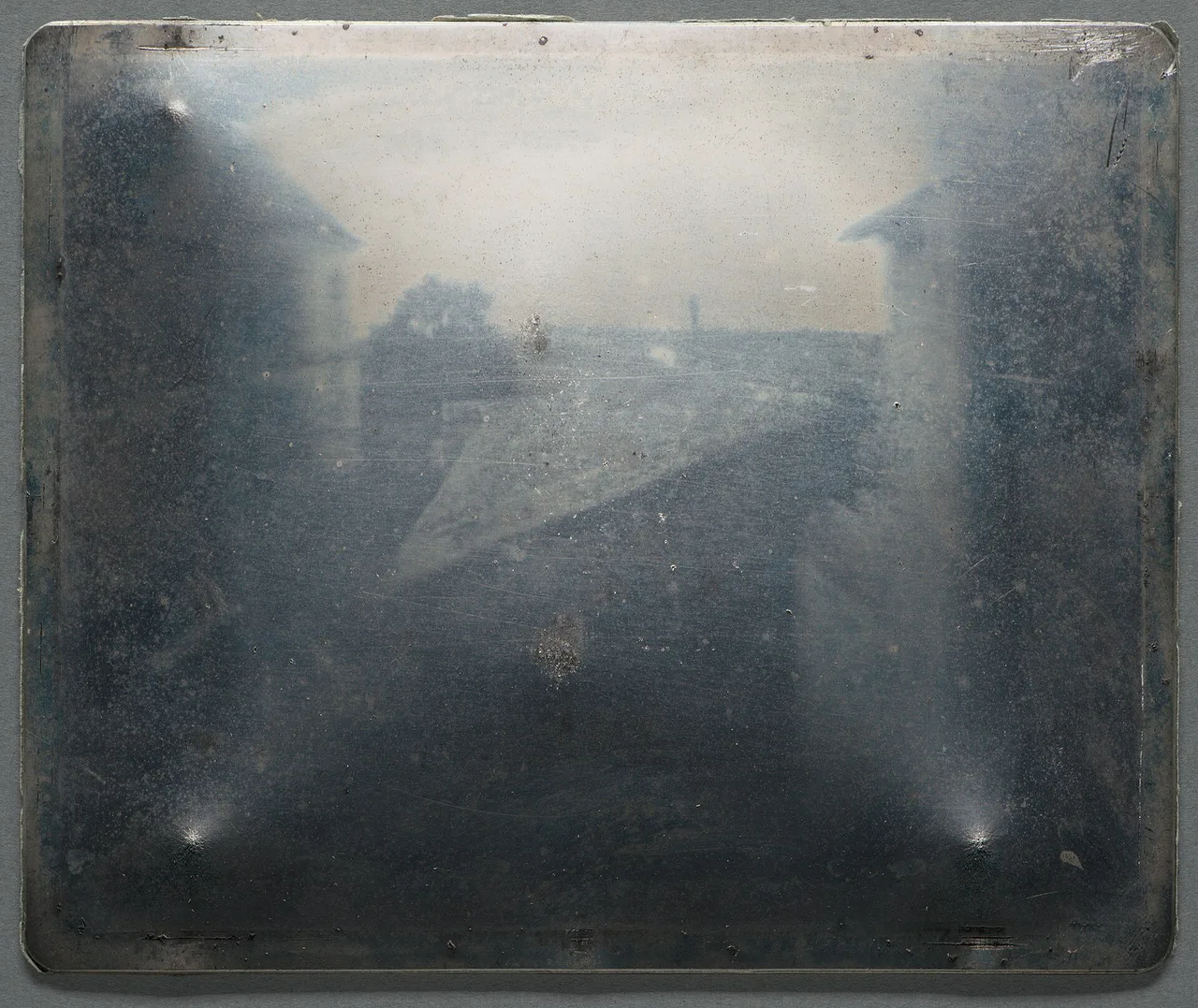
Joseph Nicéphore Niépce created "View from the Window at Le Gras" in 1826 using a pewter plate coated with Bitumen of Judea, a naturally occurring asphalt. The bitumen hardened in light-exposed areas, while the unexposed parts were washed away with lavender oil. This historic exposure took at least eight hours, and some estimate it may have lasted several days!
Photo: Nicéphore Niépce, Wikimedia Commons, Public domain.
Tap the right answer
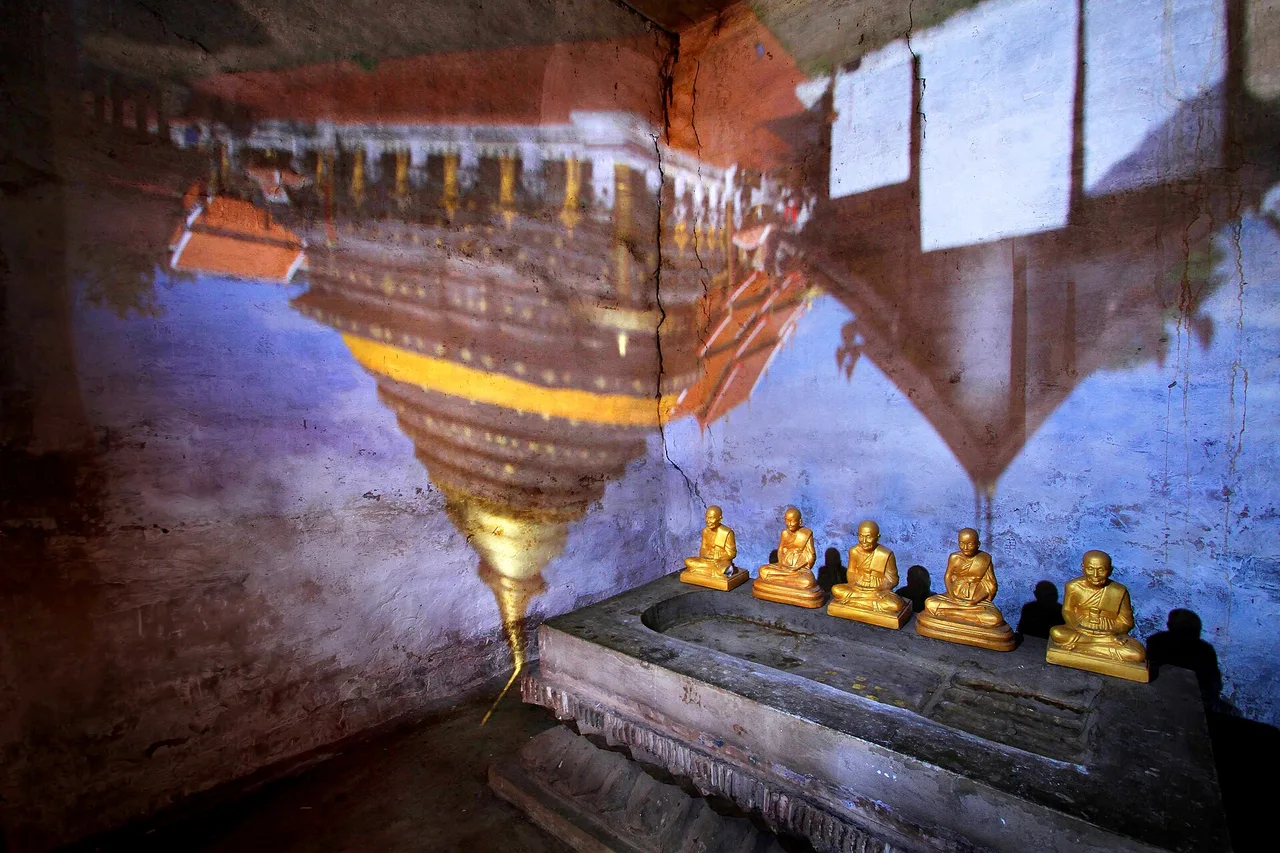
"Camera obscura" translates directly to "dark chamber." It refers to a darkened room or box with a small hole on one side, which projects an inverted image of the outside scene onto a screen opposite the hole. Renaissance masters like Vermeer are highly suspected of using this device to achieve near-perfect perspective and light in their paintings.
Photo: Pitchayawat, Wikimedia Commons, CC BY-SA 4.0.
Tap the right answer
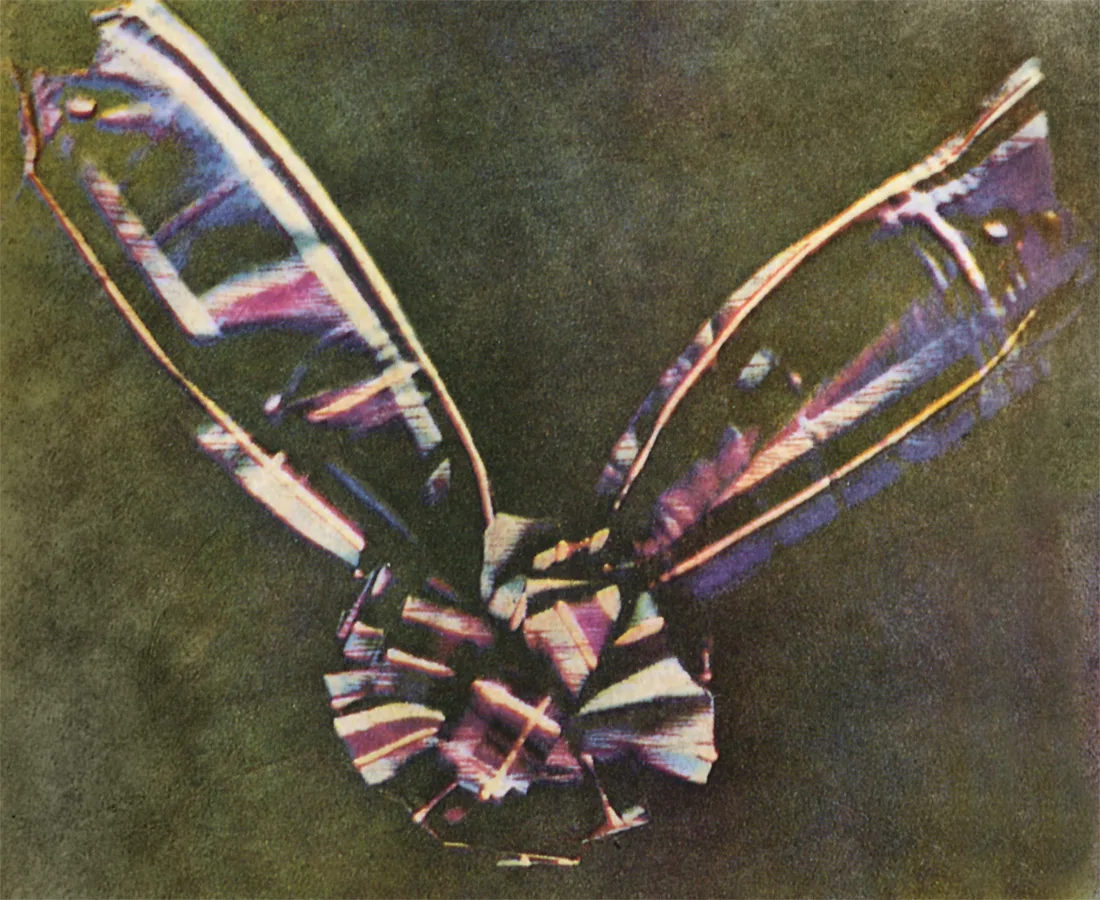
The very first durable color photograph, presented by physicist James Clerk Maxwell and taken by Thomas Sutton, depicted a striped tartan ribbon. They achieved this by photographing the ribbon three times through red, green, and blue filters, then projecting the images together. Interestingly, the plates used were actually insensitive to red light, and the image only worked because the red fabric also reflected ultraviolet light!
Photo: James Clerk Maxwell, Wikimedia Commons, Public domain.
Tap the right answer
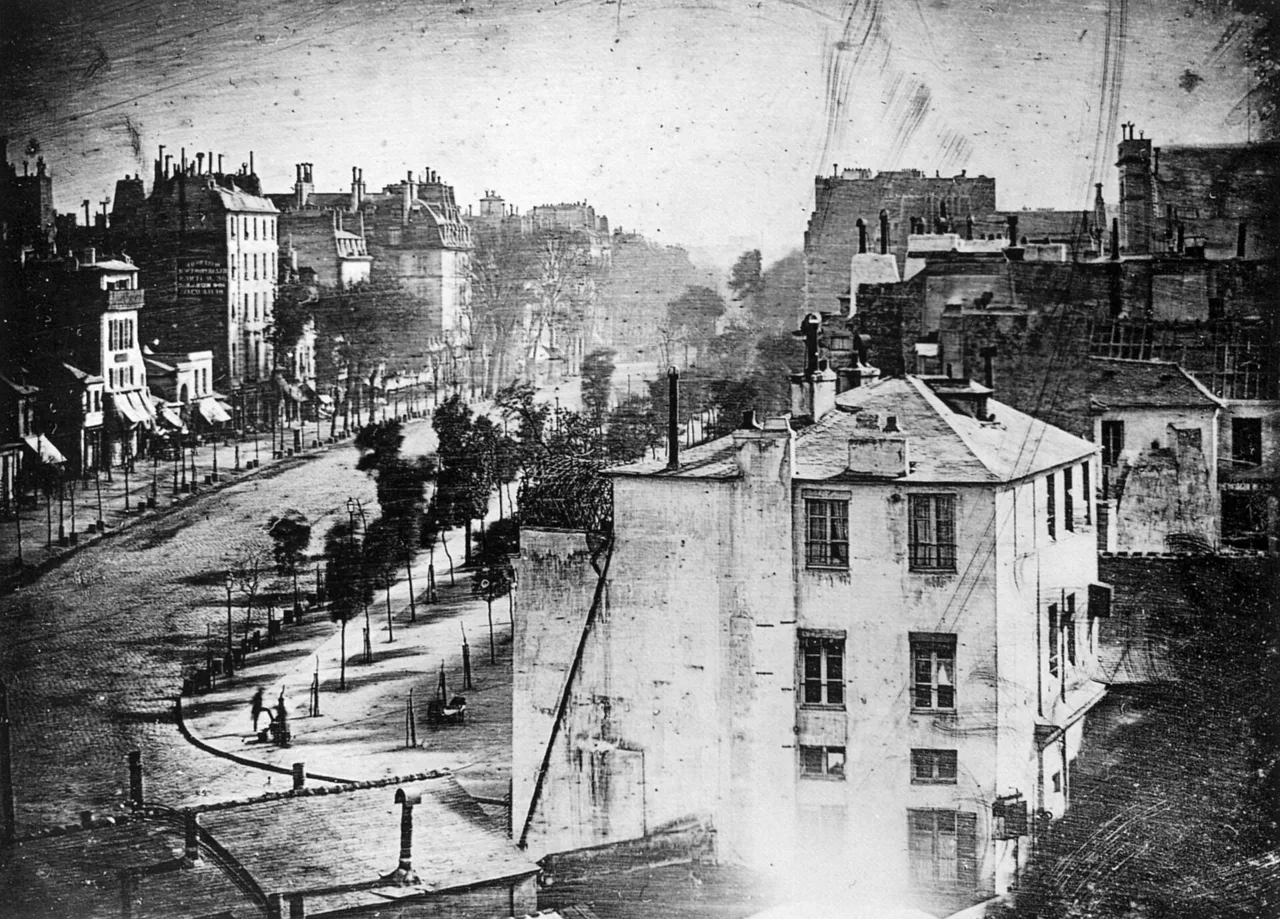
The bustling Boulevard du Temple appeared completely empty in Daguerre's photograph because the exposure time was over ten minutes long. Traffic and pedestrians moved too fast to be captured, leaving only a man who stood perfectly still while having his shoes shined. This anonymous Parisian and his shoe shiner accidentally became the first humans ever captured in a photograph!
Photo: Louis Daguerre, Wikimedia Commons, Public domain.
Tap the right answer
Cyanotypes are famous for their deep Prussian blue color, produced when iron compounds react to ultraviolet light. In the 1840s, Anna Atkins used this simple, camera-less process to create the first-ever photographically illustrated book, capturing detailed silhouettes of British algae. Today, the same chemical reaction is why architectural plans are traditionally called blueprints!
Photo: Atkins, Anna, 1799-1871, Wikimedia Commons, Public domain.

Tap the right answer
George Eastman revolutionized photography with the slogan "You press the button, we do the rest." The original Kodak camera came pre-loaded with a roll of film for 100 exposures; once finished, customers mailed the entire camera back to the factory to be developed, reloaded, and returned. This brilliant business model transformed photography from a complex chemical hobby into an accessible daily activity for everyone.
Tap the right answer
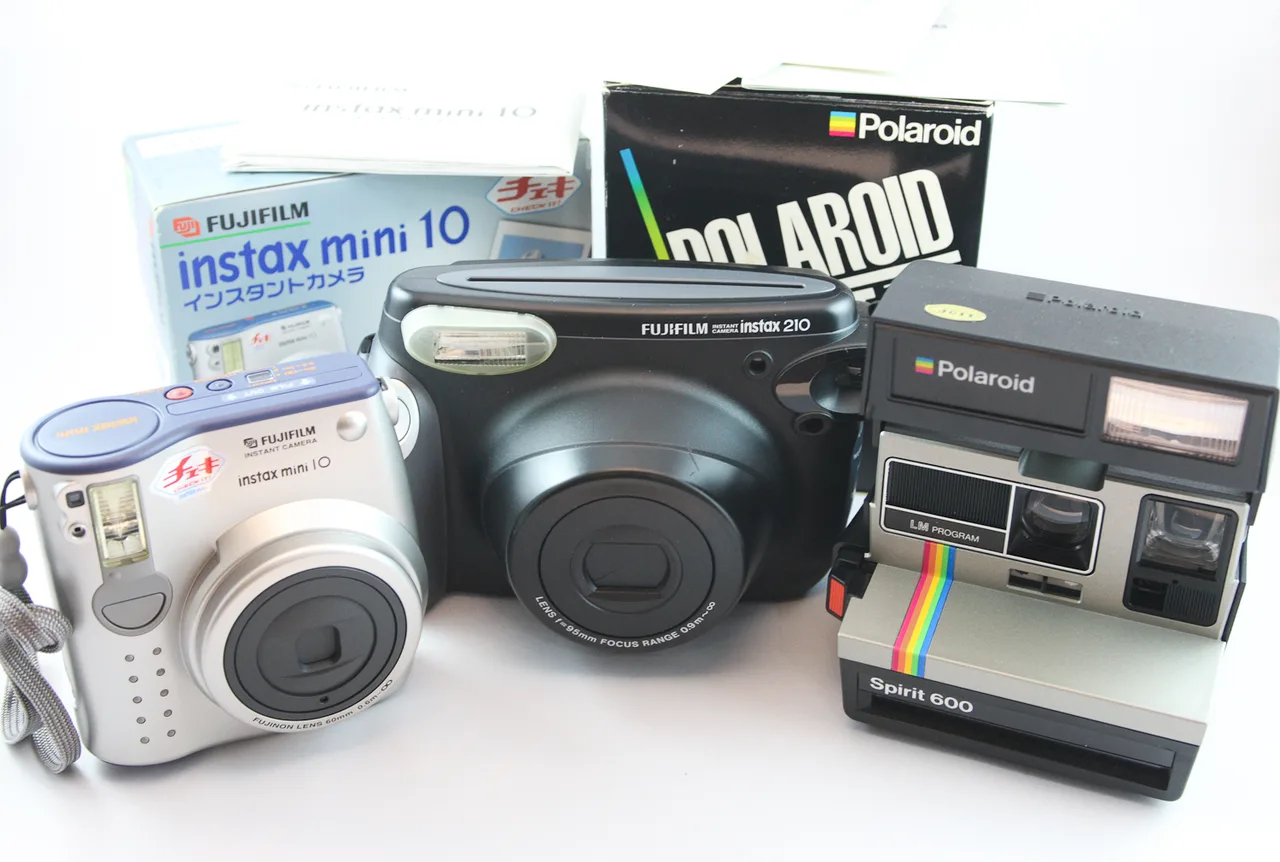
During a family vacation in 1943, Edwin Land's three-year-old daughter asked why she could not see the picture her father had just taken of her. Prompted by her curiosity, Land spent the next few hours working out the chemical and optical requirements for instant photography. Within just five years, the first commercial Polaroid Land Camera went on sale, changing snapshot culture forever.
Photo: Zebrio, Wikimedia Commons, CC BY-SA 2.0.
Tap the right answer
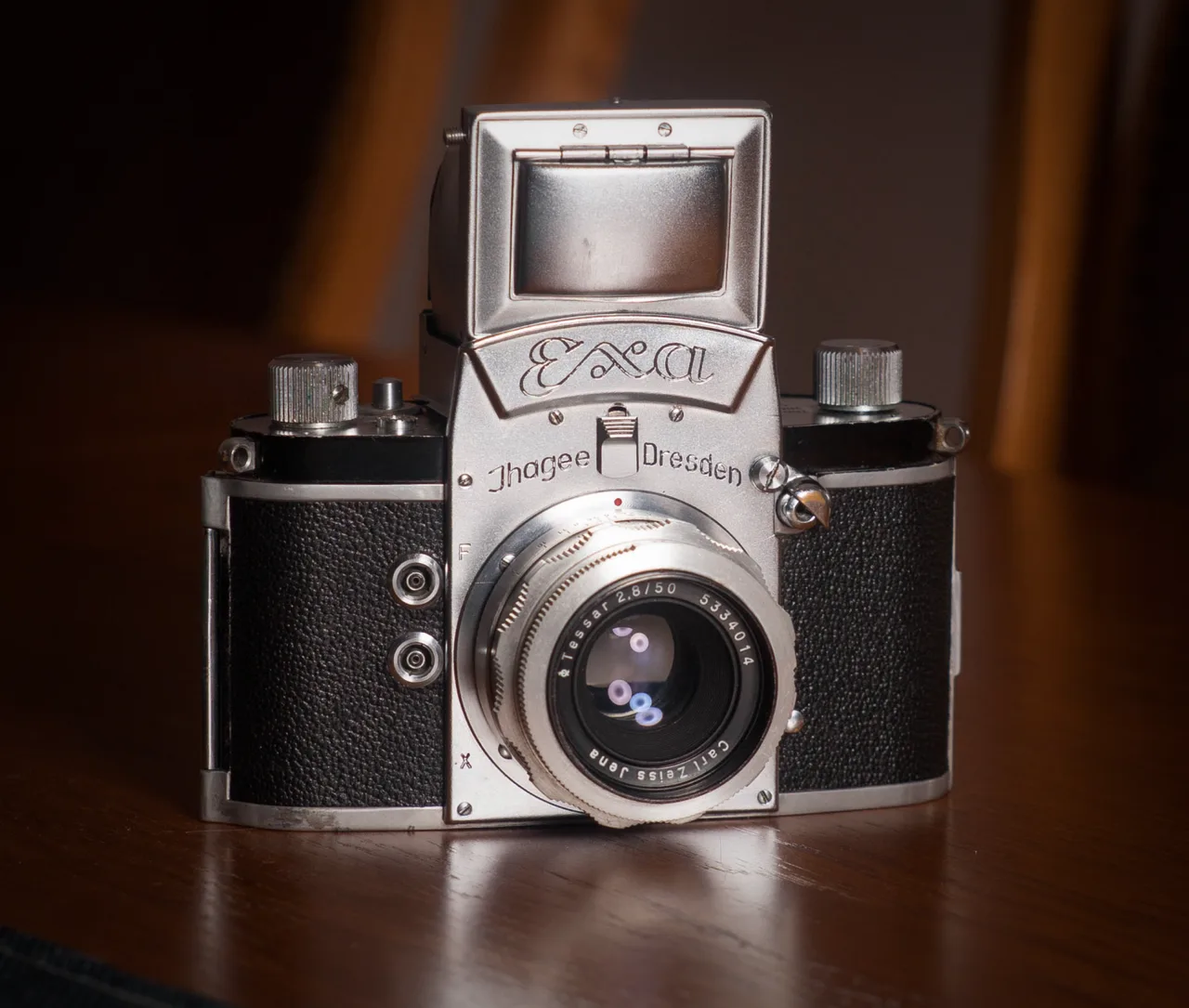
In an SLR camera, a small mirror reflects the light coming through the lens up into the viewfinder so you see exactly what the lens sees. When you press the shutter button, this mirror instantly swings upward to let the light hit the film or digital sensor instead. This rapid movement is what creates the iconic, satisfying clicking sound of traditional SLR and DSLR cameras.
Photo: Start54, Wikimedia Commons, CC BY 4.0.
Tap the right answer
The world's first digital camera, constructed by Steven Sasson at Kodak, recorded black-and-white images onto a standard cassette tape. It took 23 seconds to capture a single 0.01-megapixel image, and the cassette had to be played back through a custom playback device connected to a television screen. Despite this breakthrough, Kodak executives initially dismissed the invention, fearing it would threaten their lucrative film business.
Photo: Aljawad, Wikimedia Commons, CC BY 3.0.

Tap the right answer
The f-number represents the ratio of the lens's focal length to the diameter of its entrance pupil. Because it is a fraction, a higher f-number (like f/16) actually means a much smaller aperture opening, which lets in less light but increases the depth of field. This counterintuitive scale is one of the first hurdles for amateur photographers learning manual exposure controls!


Want to make a quiz like this yourself? Do it on Votur, it's free.
Paste the code into your page. The player fits itself in, and every vote counts in Votur.
On WordPress, Ghost or Squarespace? Just paste the link of this page into your post.
This is how it looks
Also fun
How well do you know Europe's musicians? · 8 →How well do you know the internet? · 10 →How well do you know the microchip? · 10 →How well do you know penicillin? · 10 →How well do you know vaccines? · 10 →How well do you know the light bulb? · 10 →How well do you know the telephone? · 10 →How well do you know the steam engine? · 10 →How well do you know the bicycle? · 10 →How well do you know the printing press? · 10 →How well do you know baklava? · 10 →How well do you know poutine? · 10 →How well do you know paella? · 9 →How well do you know goulash? · 10 →How well do you know phở? · 10 →How well do you know ceviche? · 10 →How well do you know the tagine? · 10 →How well do you know stamppot? · 10 →How well do you know sushi? · 10 →How well do you know pizza? · 10 →How well do you know Baku? · 10 →How well do you know Azerbaijan? · 10 →How well do you know Yerevan? · 10 →How well do you know Armenia? · 10 →How well do you know Tbilisi? · 10 →How well do you know Georgia? · 10 →How well do you know Moscow? · 10 →How well do you know Russia? · 10 →How well do you know Minsk? · 10 →How well do you know Belarus? · 10 →How well do you know Kyiv? · 10 →How well do you know Ukraine? · 10 →How well do you know Monaco? · 10 →How well do you know Chișinău? · 10 →How well do you know Moldova? · 10 →How well do you know Sofia? · 10 →How well do you know Bulgaria? · 10 →How well do you know Bucharest? · 10 →How well do you know Romania? · 10 →How well do you know Nicosia? · 10 →How well do you know Cyprus? · 10 →How well do you know Podgorica? · 10 →How well do you know Montenegro? · 10 →How well do you know Skopje? · 10 →How well do you know North Macedonia? · 10 →How well do you know Tirana? · 10 →How well do you know Albania? · 10 →How well do you know Sarajevo? · 10 →How well do you know Bosnia and Herzegovina? · 10 →How well do you know Belgrade? · 10 →How well do you know Serbia? · 10 →How well do you know Zagreb? · 10 →How well do you know Croatia? · 10 →How well do you know Valletta? · 10 →How well do you know Malta? · 10 →How well do you know Ljubljana? · 10 →How well do you know Slovenia? · 10 →How well do you know Saturn? · 10 →How well do you know Jupiter? · 10 →How well do you know Mars? · 10 →How well do you know the Solar System? · 10 →How well do you know the Sun? · 10 →How well do you know the Moon? · 10 →How well do you know Budapest? · 10 →How well do you know Hungary? · 10 →How well do you know Bratislava? · 10 →How well do you know Slovakia? · 10 →How well do you know Prague? · 10 →How well do you know Czechia? · 10 →How well do you know Warsaw? · 10 →How well do you know Poland? · 10 →How well do you know Luxembourg City? · 10 →How well do you know Luxembourg? · 10 →How well do you know Dublin? · 10 →How well do you know Ireland? · 10 →How well do you know Vilnius? · 10 →How well do you know Lithuania? · 10 →How well do you know Riga? · 10 →How well do you know Latvia? · 10 →How well do you know Reykjavík? · 10 →How well do you know Iceland? · 10 →How well do you know Helsinki? · 10 →How well do you know Finland? · 10 →How well do you know Oslo? · 10 →How well do you know Norway? · 10 →How well do you know Stockholm? · 10 →How well do you know Sweden? · 10 →How well do you know Madrid? · 10 →How well do you know Spain? · 10 →How well do you know Rome? · 10 →How well do you know Italy? · 10 →How well do you know Bern? · 10 →How well do you know Switzerland? · 10 →How well do you know Vienna? · 10 →How well do you know Austria? · 10 →How well do you know Berlin? · 10 →How well do you know London? · 10 →How well do you know the United Kingdom? · 10 →How well do you know Paris? · 10 →How well do you know France? · 10 →How well do you know Brussels? · 10 →How well do you know Amsterdam? · 10 →How well do you know the Netherlands? · 10 →How well do you know Copenhagen? · 10 →How well do you know Denmark? · 10 →How well do you know Athens? · 10 →How well do you know Greece? · 10 →How well do you know Lisbon? · 10 →How well do you know Portugal? · 10 →How well do you know Tallinn? · 10 →How well do you know Estonia? · 10 →Belgium · 8 →Universe · 10 →Which Greek hero are you? · 8 →Gulpen · 5 →How well do you know Dutch weather? · 10 →How well do you know Germany? · 10 →Who owns the Netherlands? · 10 →The little church village of Klimmen · 10 →Do you know Neutral Moresnet? · 10 →