Get app
Step into the subatomic world! Test your knowledge on the building blocks of matter, from ancient Greek philosophy to the quantum mechanics that shape our universe.
Curious Wanderer 0–4 · Molecule Matcher 5–8 · Master of Matter 9–10
Pick one

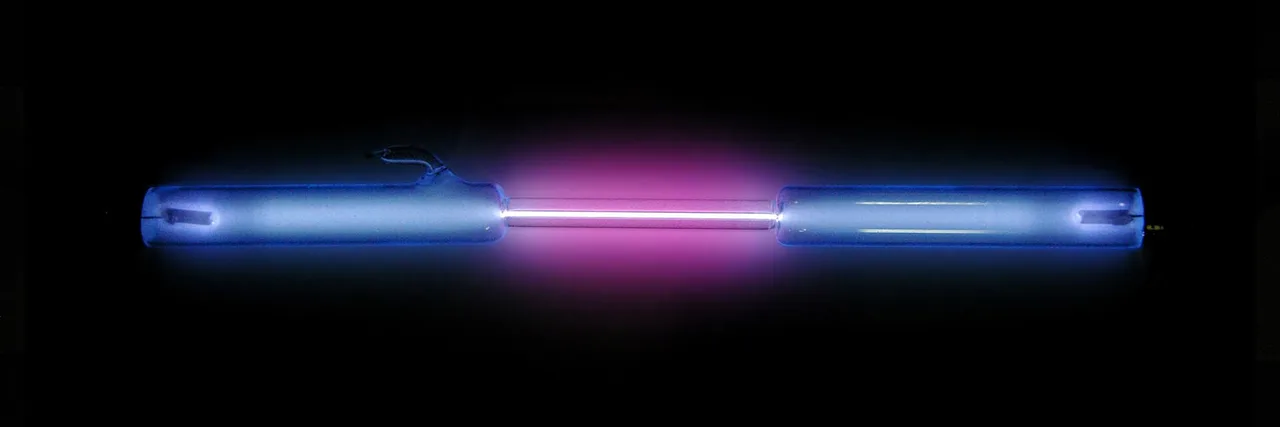
Hydrogen is the simplest and most abundant element in the cosmos, powering stars through nuclear fusion. Helium comes in second at about 24%, meaning these two light gases make up almost all of the matter we can see.
Photo: Alchemist-hp (talk) (www.pse-mendelejew.de), Wikimedia Commons, FAL.
Pick one
Rutherford shot alpha particles at a thin sheet of gold foil. While most passed straight through, a few bounced back, revealing the dense nucleus. Gold was chosen because it can be beaten into incredibly thin sheets less than a thousandth of a millimeter thick.
Pick one
J. J. Thomson discovered the electron using cathode ray tube experiments, which earned him a Nobel Prize. Funnily enough, his son George Paget Thomson later won a Nobel Prize for proving that the electron behaves like a wave!
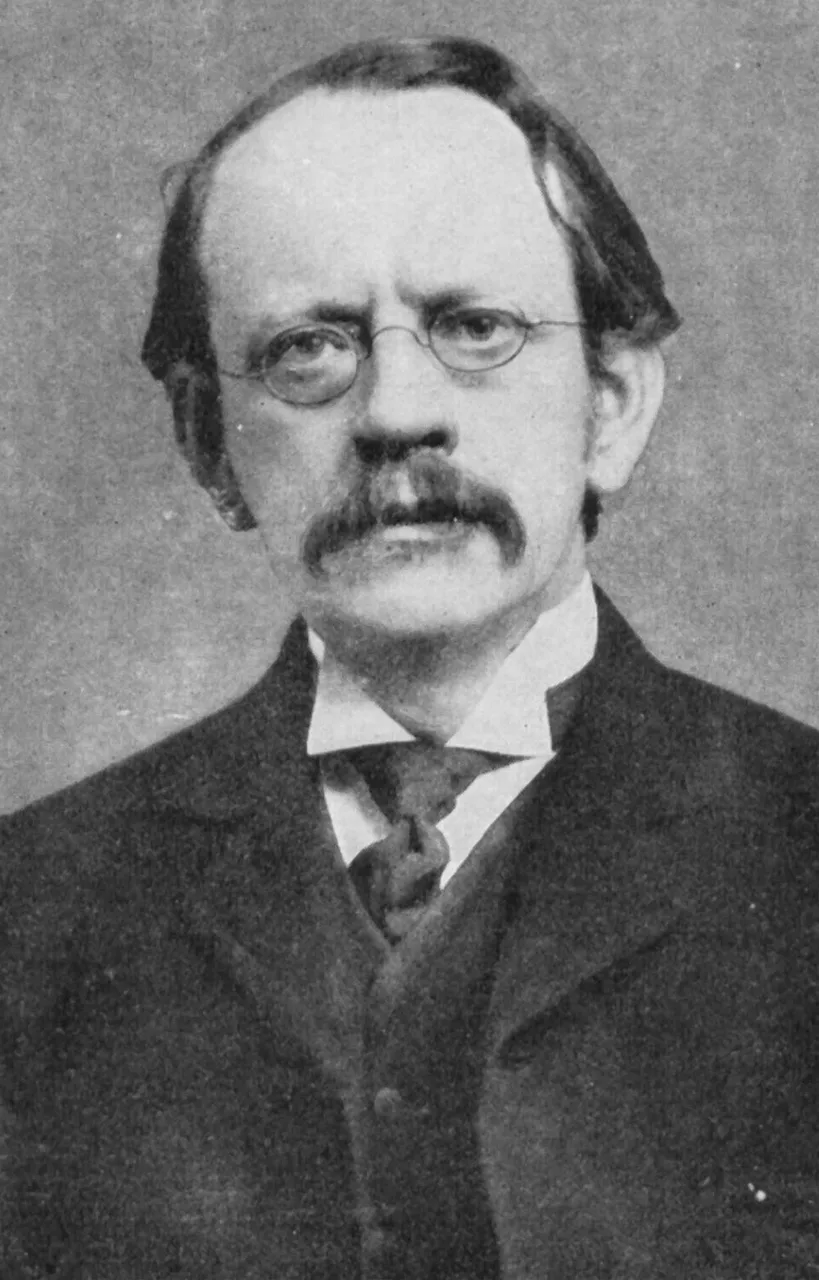
Photo: Not Mentioned, Wikimedia Commons, Public domain.
Pick one
James Chadwick discovered the neutron, which had eluded scientists because it carries no electrical charge. This breakthrough was crucial for the development of nuclear energy and atomic bombs, earning him the Nobel Prize in Physics in 1935.

Photo: Los Alamos National Laboratory, Wikimedia Commons, Attribution.
Pick one
Atoms are almost entirely empty space! If the nucleus were scaled up to the size of a marble sitting on the 50-yard line of a football stadium, the outer electrons would be whizzing around the very top row of the stands, with nothing but empty vacuum in between.
Pick one
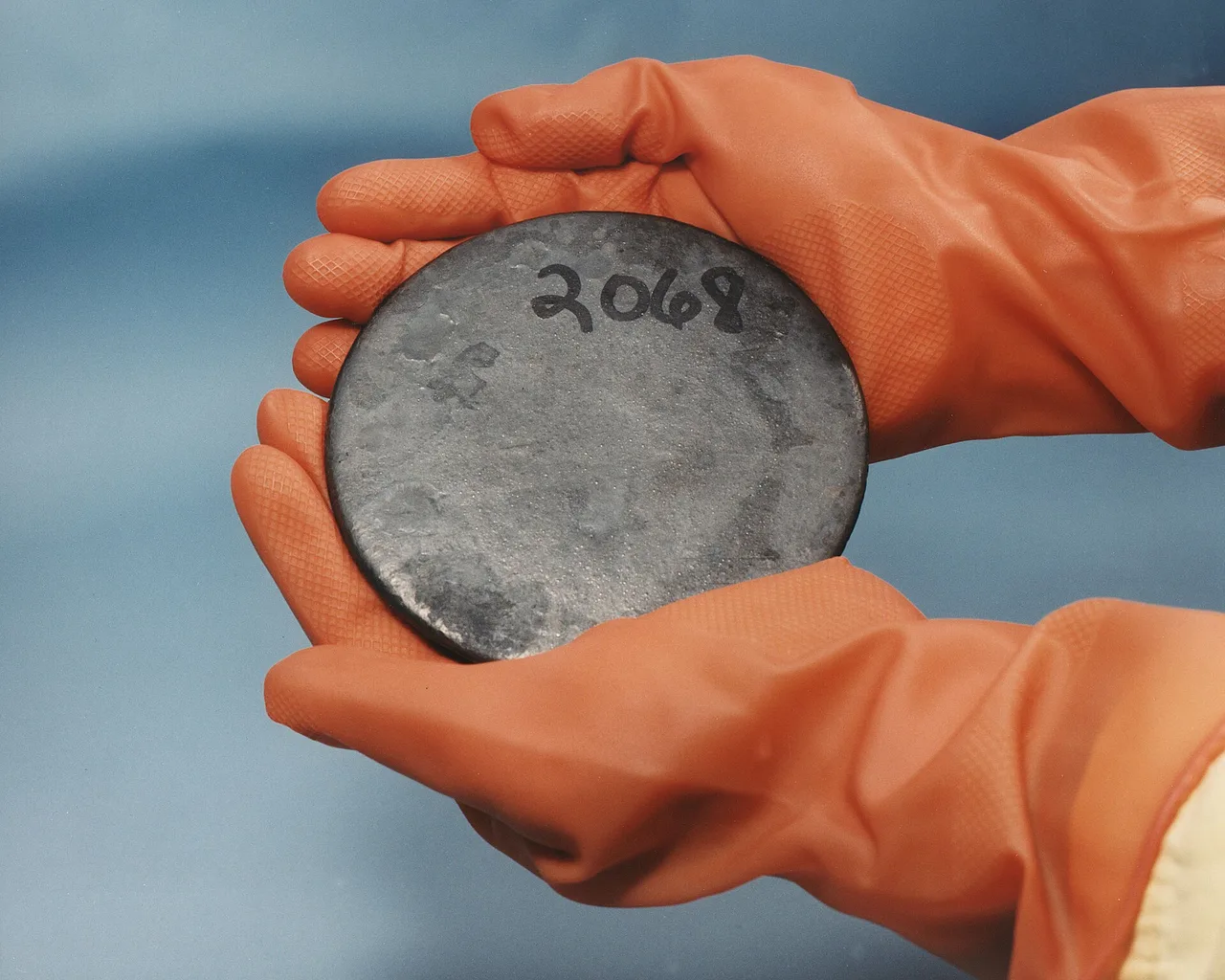
Uranium, with 92 protons, is the heaviest naturally occurring element found in significant amounts. While trace amounts of heavier elements like neptunium and plutonium exist in uranium ores, they are incredibly rare.
Photo: Unspecified, Wikimedia Commons, Public domain.
Pick one
While normal stellar fusion can only create elements up to iron, the extreme energy of exploding stars (supernovae) and colliding neutron stars is required to forge heavier atoms like gold, platinum, and uranium.
Pick one
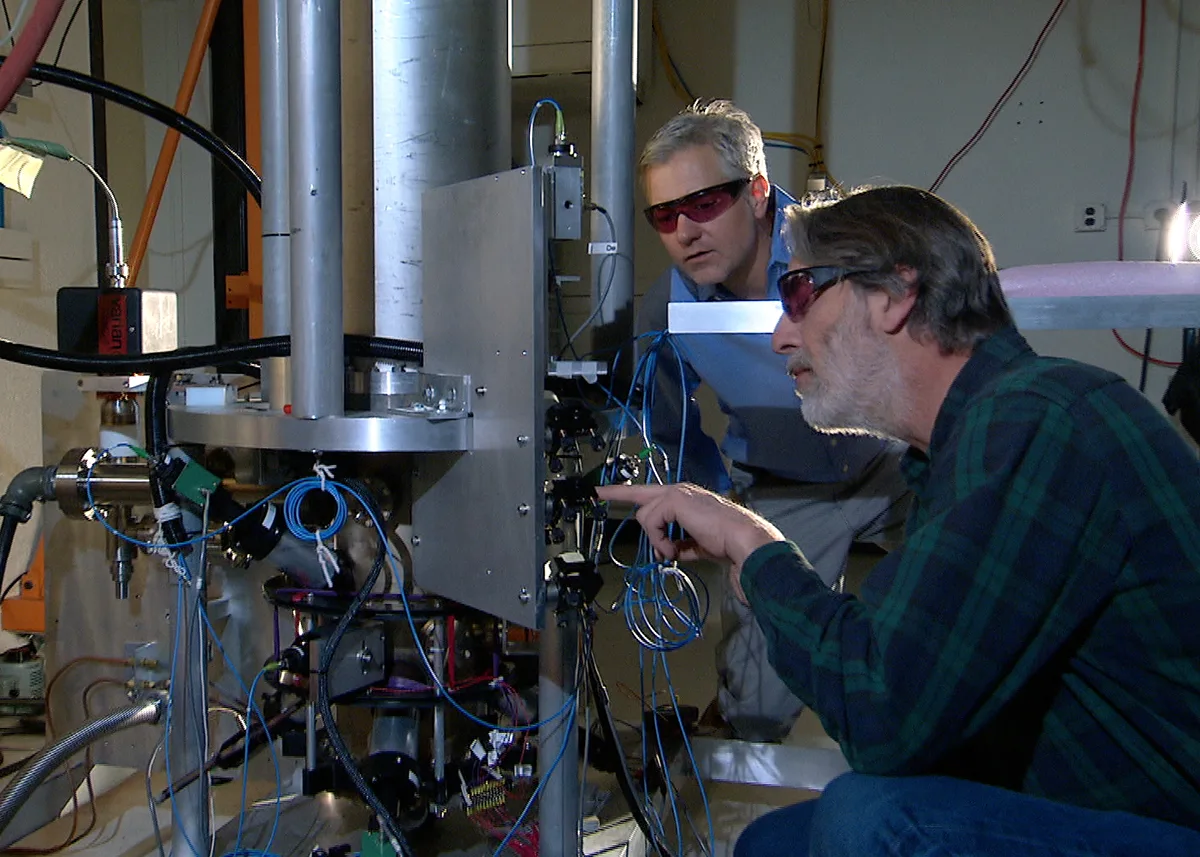
Since 1967, the official definition of a second is based on the vibrations of the caesium-133 atom. Specifically, it is the time it takes for a caesium atom to transition between two energy states exactly 9,192,631,770 times.
Photo: National Institute of Standards and Technology - Physics Laboratory: Time and Fr, Wikimedia Commons, Public domain.

Pick one
Technetium, discovered in 1937, was the first element to be synthetically produced. Its name actually comes from the Greek word for "artificial." All of its isotopes are radioactive, which is why it is so rare in nature.
Photo: Marco Cardin, Wikimedia Commons, CC BY-SA 4.0.
Pick one
Democritus proposed the "atomos" theory around 400 BC, suggesting that everything is made of tiny, indivisible pieces. Interestingly, his mentor Leucippus actually came up with the initial concept, but Democritus expanded it into a full philosophy.
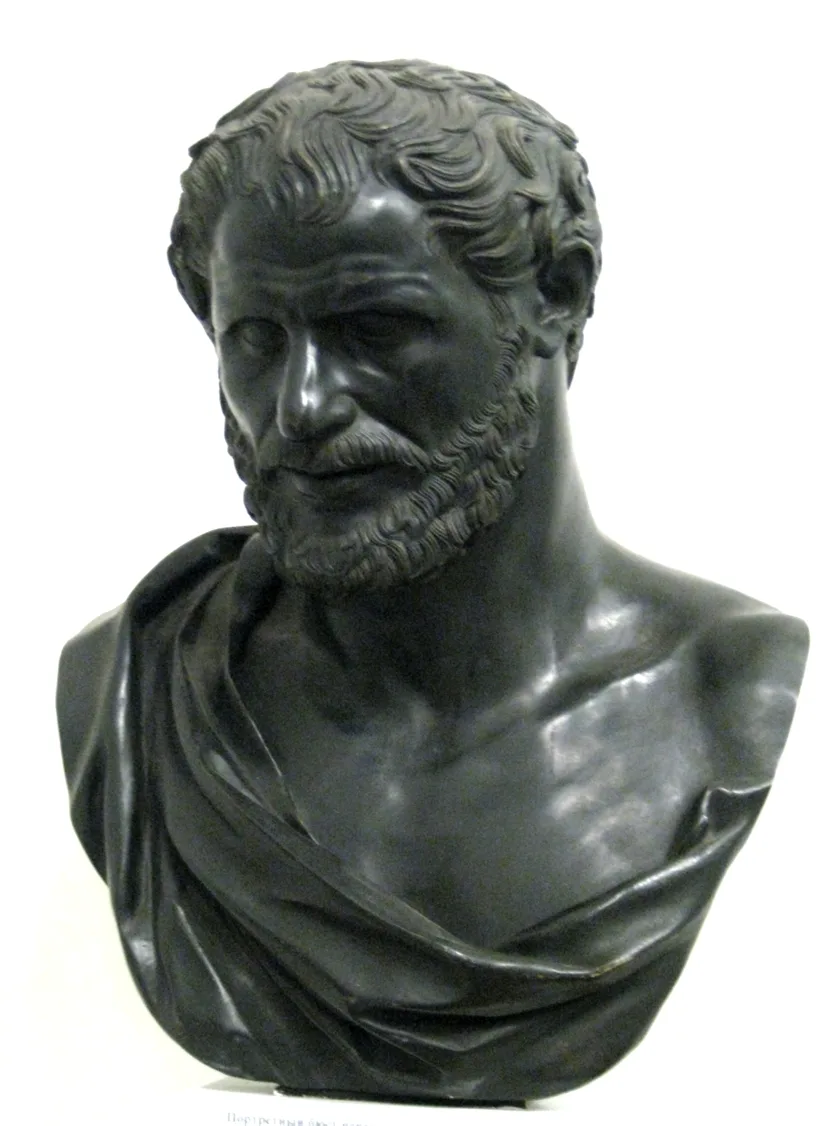
Photo: shakko, Wikimedia Commons, CC BY-SA 3.0.


Paste the code into your page. The player fits itself in, and every vote counts in Votur.
On WordPress, Ghost or Squarespace? Just paste the link of this page into your post.
This is how it looks
Also fun