Get app
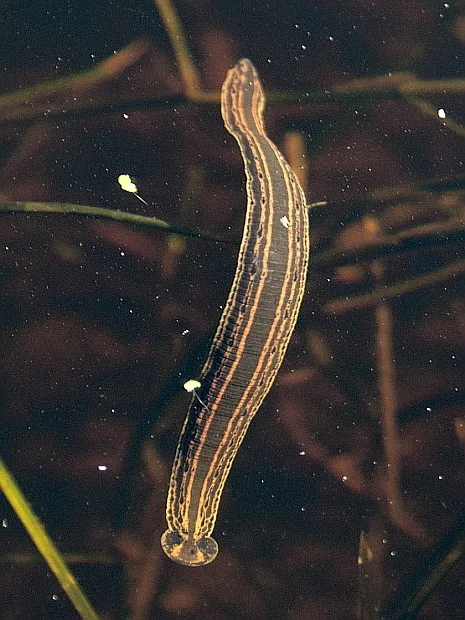
 Photo: Benjah-bmm27, Wikimedia Commons, Public domain.
Step into the story of the 'miracle drug' that changed medicine! Test your knowledge on the lucky accident, the brilliant minds who turned mould into medicine, and how penicillin changed the world.
Curious Wanderer 0–4 · Lab Explorer 5–8 · History Hero 9–10
Pick one

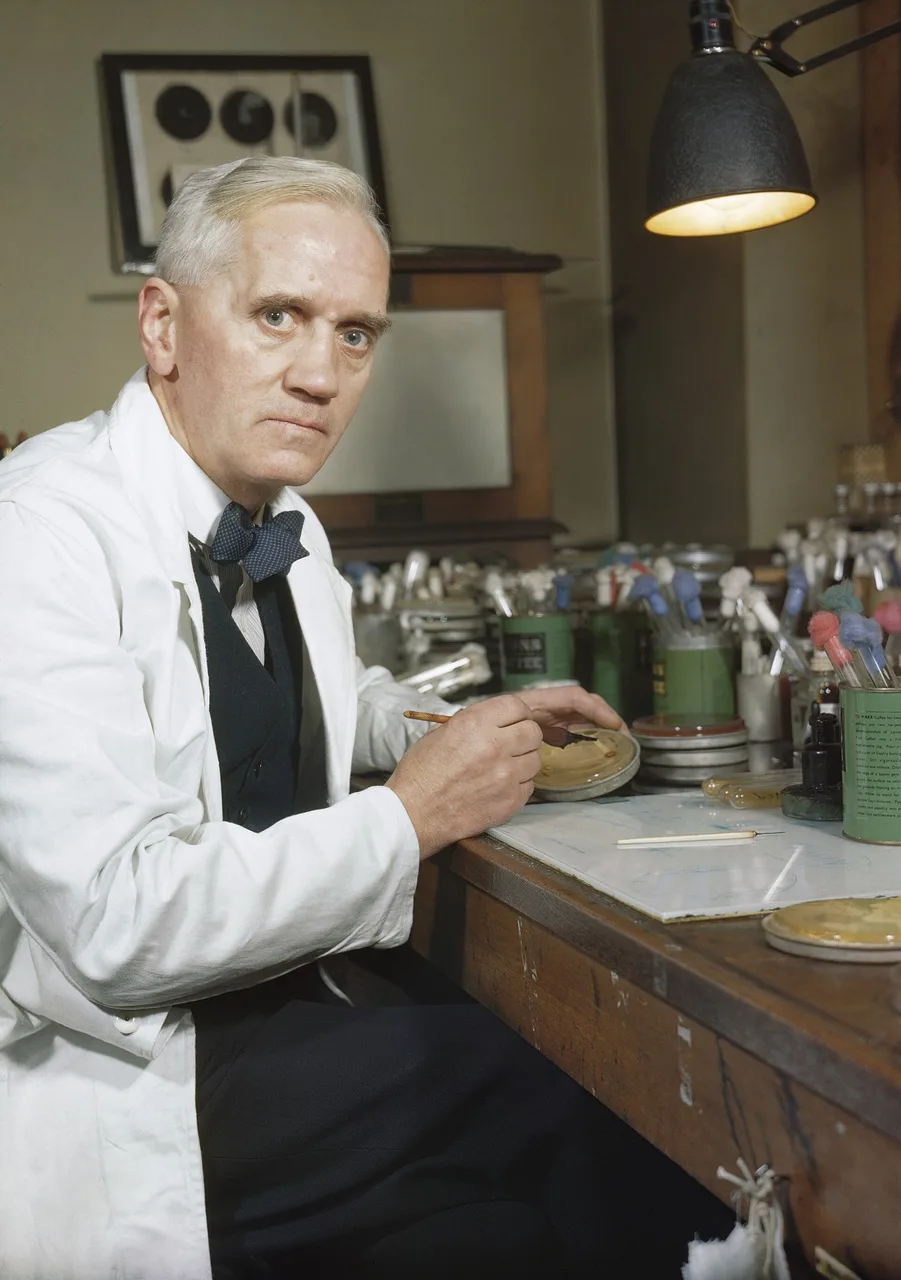
Upon returning from a summer holiday, Alexander Fleming found that a mold had contaminated his Petri dishes of Staphylococcus aureus. He noticed that the bacteria immediately surrounding the mold were dying off. This led to his realization that the mold secreted a self-defense substance, which he named penicillin.
Photo: Official photographer, Wikimedia Commons, Public domain.
Pick one
Alexander Fleming discovered penicillin at St Mary's Hospital, London, after returning from a holiday to find mold contaminating his petri dishes. Today, the very laboratory where this world-changing event occurred is preserved as a museum, allowing visitors to see the cramped space where modern medicine was born.
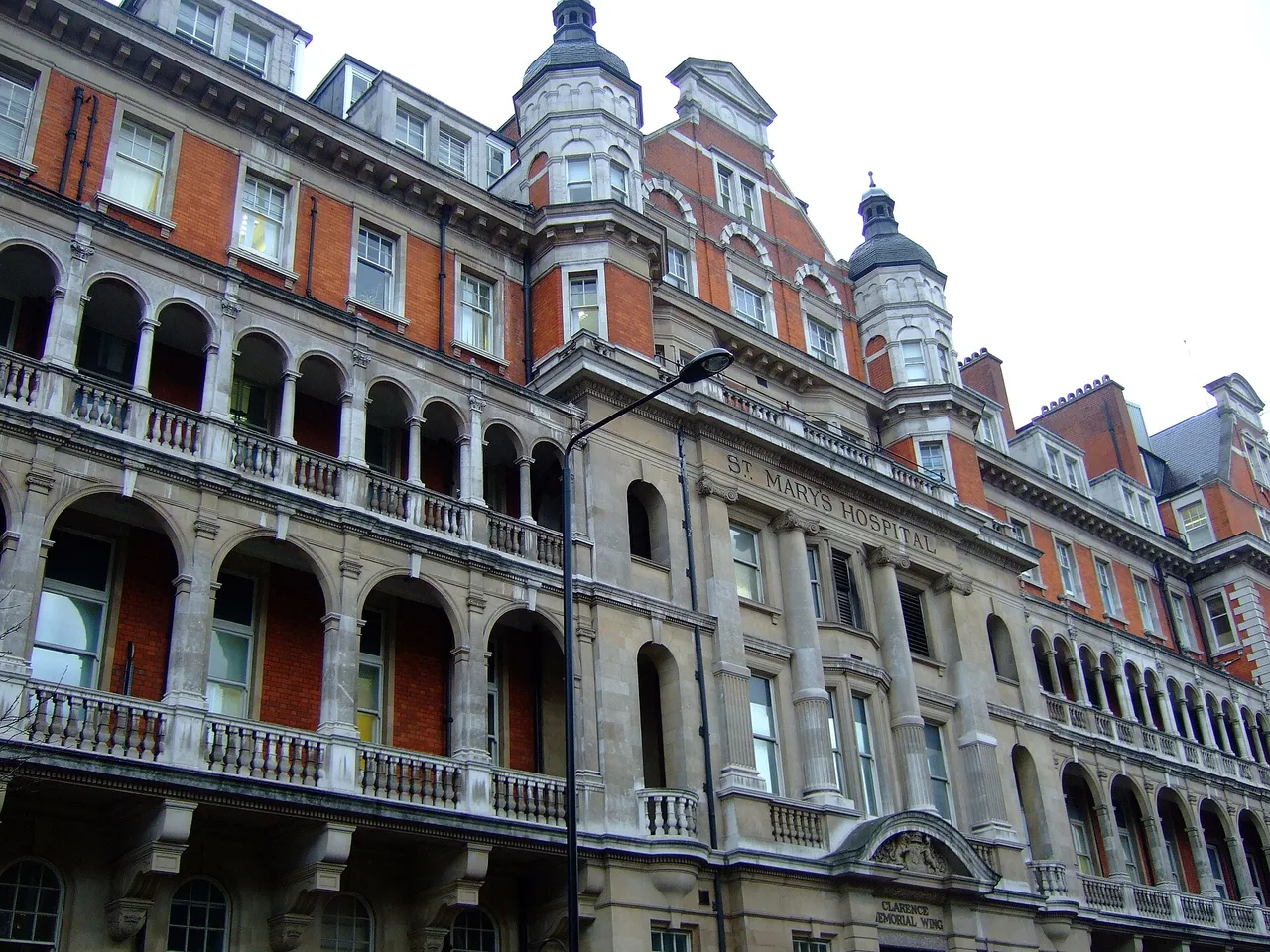
Photo: Enric likes Funk ;), Wikimedia Commons, CC BY-SA 2.0.

Pick one
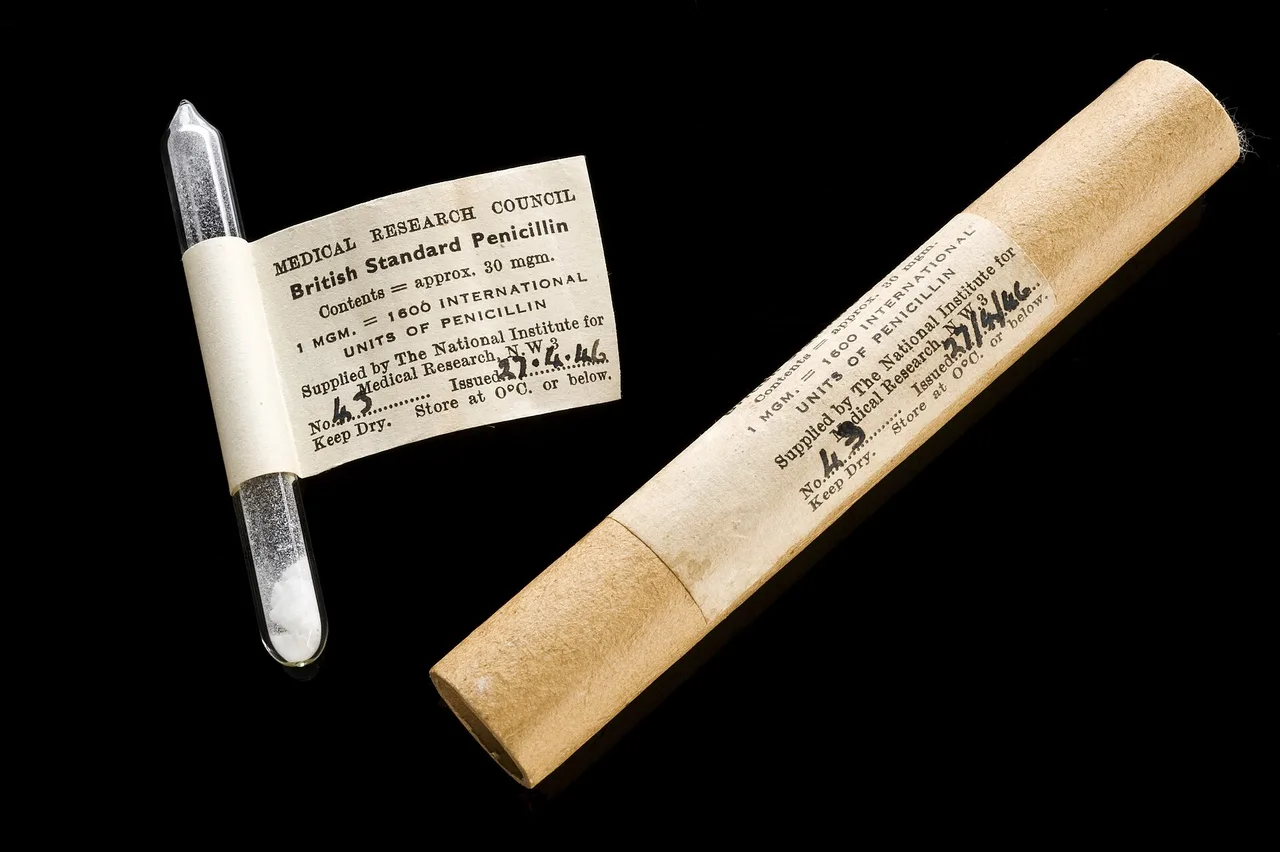
In his 1945 Nobel lecture, Alexander Fleming warned that taking too little penicillin, or taking it for too short a time, could let bacteria become resistant. He was right: antibiotic resistance is now one of the biggest health challenges of the 21st century.
Photo: Dr Graham Beards, Wikimedia Commons, CC BY-SA 4.0.
Pick one
Albert Alexander, a police constable in Oxford, was the first patient to receive purified penicillin, in February 1941. Within a day his fever dropped and his wounds began to heal. There was so little penicillin that the team even recovered it from his urine to use again, but it still ran out before he was cured.
Pick one
Scientists at a government laboratory in Peoria, Illinois, revolutionized penicillin production when they isolated a super-strain of mold from a local moldy cantaloupe. This strain produced over a hundred times more penicillin than Fleming's original mold, making mass production for World War II possible.
Photo: Wikimedia Commons, CC BY 4.0.
Pick one
Prontosil, a red dye, was the first sulfa drug and the first medicine that could fight a wide range of bacterial infections inside the body, developed by German pathologist Gerhard Domagk and his team. While penicillin eventually overshadowed it, Prontosil saved countless lives during the 1930s, including Domagk's own daughter.
Pick one
Penicillin is the classic example of a beta-lactam antibiotic. This specific chemical ring structure allows the drug to interfere with the synthesis of bacterial cell walls, causing the cells to burst. Because human cells do not have cell walls, penicillin targets the bacteria without harming our own cells.
Pick one
Penicillin works by blocking the enzymes that cross-link peptidoglycan, the mesh-like polymer that gives bacterial cell walls their strength. Without this structural support, the high internal pressure of the bacterial cell causes it to rupture and die, a process known as osmotic lysis.
Pick one
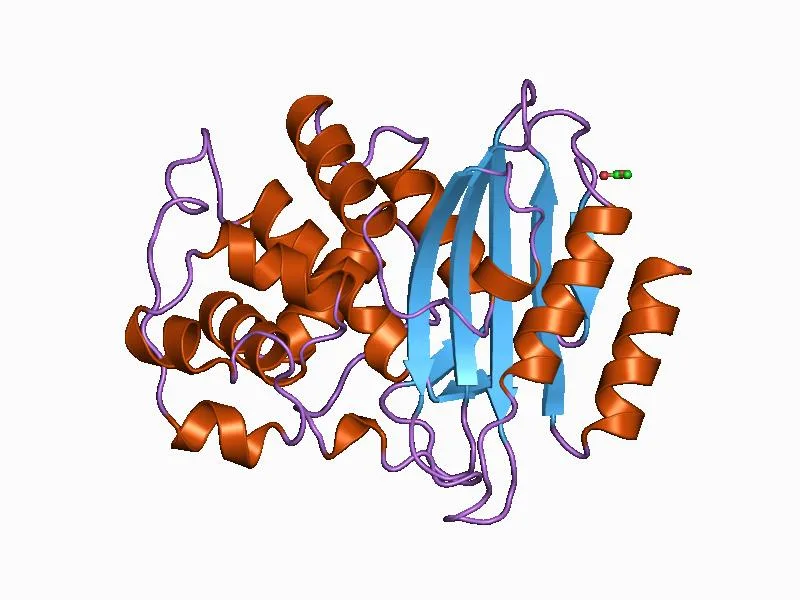
Bacteria quickly evolved defense mechanisms against penicillin by producing an enzyme called beta-lactamase. This enzyme breaks the crucial chemical ring of the antibiotic, rendering it completely useless. This battle led to the development of synthetic penicillin variants like methicillin.
Photo: Jawahar Swaminathan and MSD staff at the European Bioinformatics Institute, Wikimedia Commons, Public domain.
Pick one
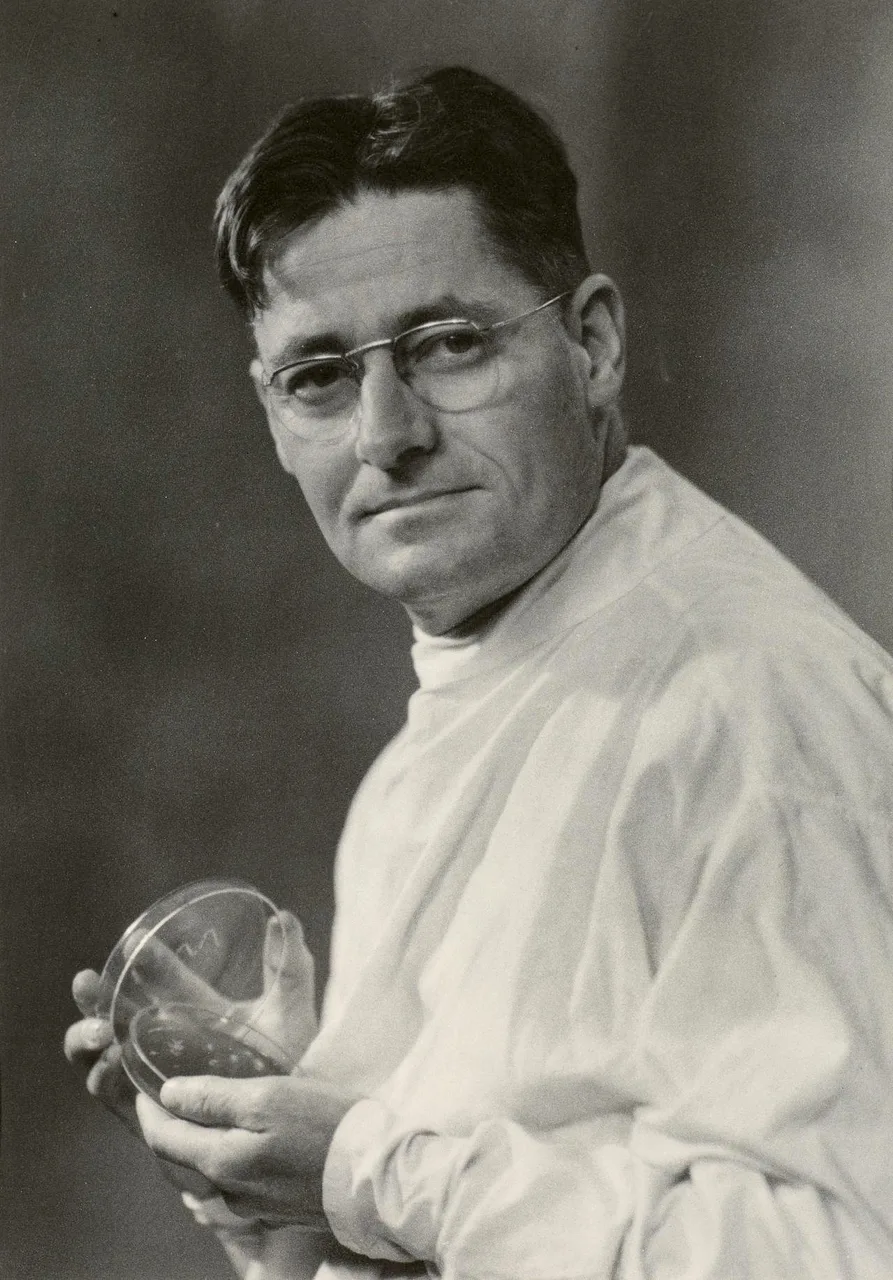
Howard Florey led the brilliant team at Oxford University that turned Fleming's chance discovery into a usable drug. While Fleming discovered the mold, it was Florey's team, including Ernst Chain, who figured out how to extract and purify it. Florey shared the 1945 Nobel Prize for this monumental achievement.
Photo: Julian Smith, Wikimedia Commons, Public domain.


Paste the code into your page. The player fits itself in, and every vote counts in Votur.
On WordPress, Ghost or Squarespace? Just paste the link of this page into your post.
This is how it looks
Also fun