 Get app
Think you know our closest celestial neighbor? From its mysterious surface to its cultural impact, the Moon holds many secrets. Challenge your knowledge with these fascinating facts!
Lunar Learner 0–4 · Moon Maven 5–8 · Selenophile 9–10

Tap the right answer

Synchronous rotation means a celestial body takes the same amount of time to complete one rotation on its axis as it does to complete one orbit around another body. This is why we always see the same face of the Moon from Earth. This phenomenon is a direct result of tidal forces over billions of years, which have slowed the Moon's rotation until it matched its orbital period.
Photo: Stigmatella aurantiaca, Wikimedia Commons, CC BY-SA 3.0.
Tap the right answer
The dark areas on the Moon's surface are called maria, Latin for "seas," because early observers believed they were bodies of water. These vast plains are actually solidified basaltic lava flows from ancient volcanic eruptions, forming smooth, relatively crater-free surfaces. The lighter, heavily cratered areas are known as terrae or highlands.
Tap the right answer
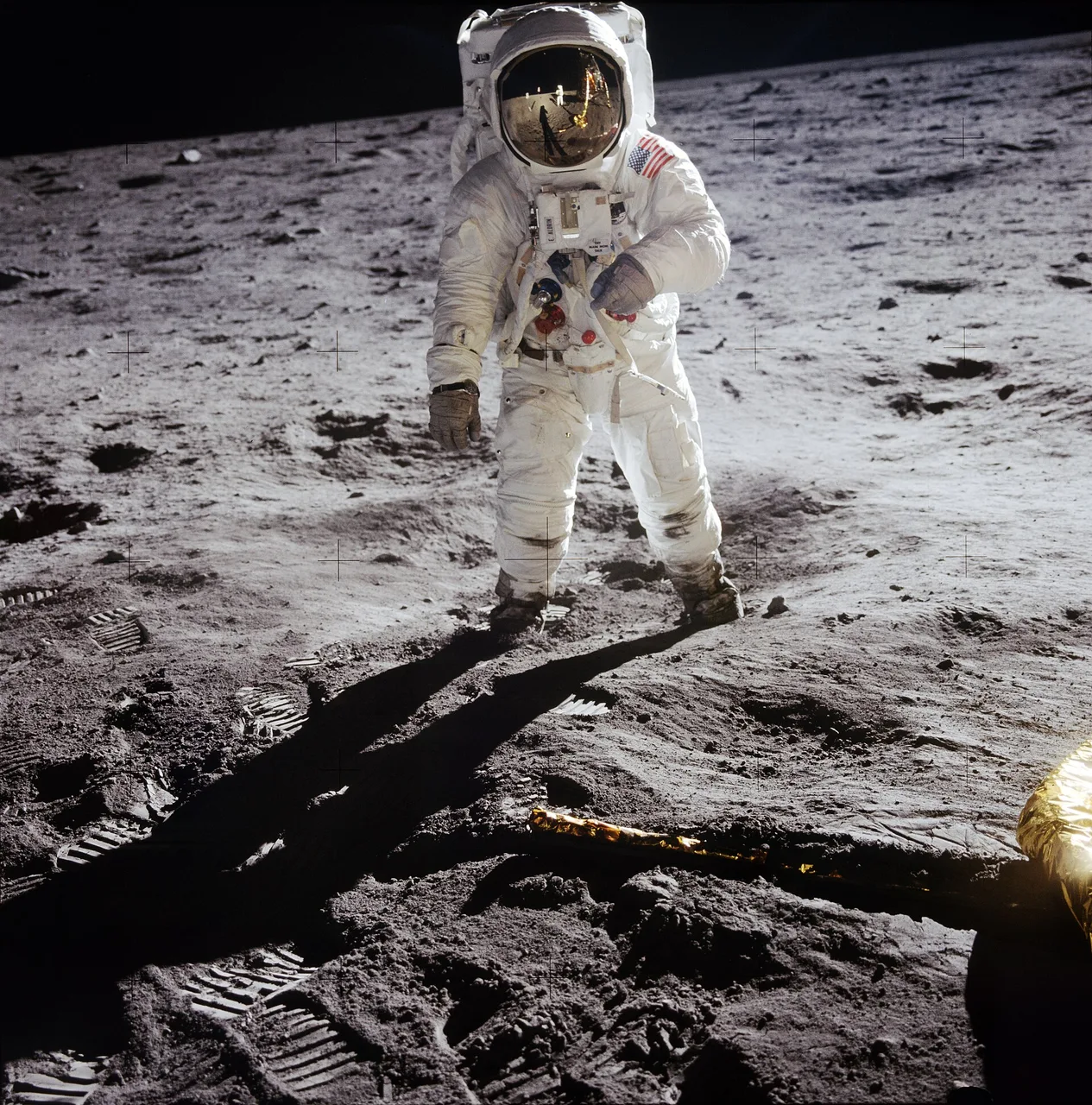
Apollo 11 made history in July 1969 when Neil Armstrong and Buzz Aldrin became the first humans to walk on the lunar surface. The mission achieved a primary goal set by President John F. Kennedy. Apollo 13, on the other hand, is famous for its dramatic in-flight emergency and the crew's successful return to Earth.
Photo: Neil A. Armstrong, Wikimedia Commons, Public domain.
Tap the right answer
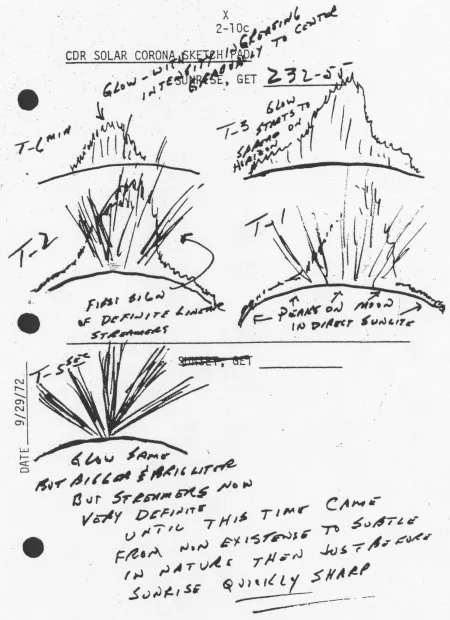
The Moon does not have a substantial atmosphere like Earth's; instead, it has an extremely tenuous layer of gas called an exosphere. This exosphere is so thin that its particles rarely collide, making it effectively a vacuum for practical purposes. It's primarily composed of gases released from the lunar surface or captured from the solar wind.
Photo: Apollo 17 astronauts, Wikimedia Commons, Public domain.
Tap the right answer
While both the Moon and the Sun exert gravitational pull on Earth's oceans, the Moon is the primary driver of tides. Its closer proximity to Earth means its gravitational force has a much stronger differential effect across our planet, creating the bulges of water we observe as high tides. The Sun's influence modifies these tides, leading to spring and neap tides.
Tap the right answer
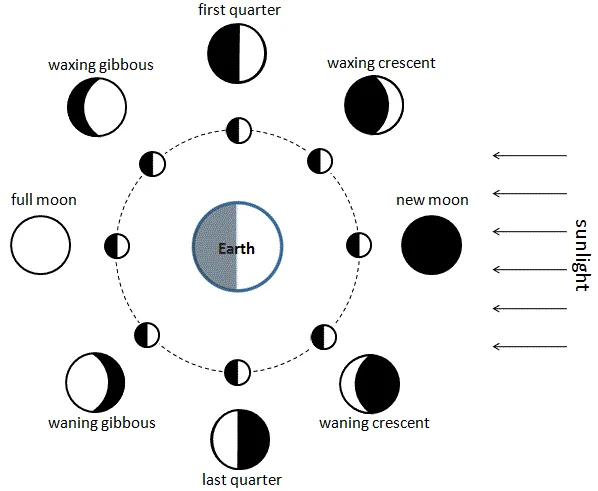
The Moon completes a full cycle of its phases, known as a synodic month, in approximately 29.5 days. This period is longer than the Moon's actual orbital period around Earth (a sidereal month, about 27.3 days) because Earth is also moving around the Sun. The extra time accounts for the Moon needing to "catch up" to its relative position for the same phase to recur.
Photo: Andonee, Wikimedia Commons, CC BY-SA 4.0.
Tap the right answer
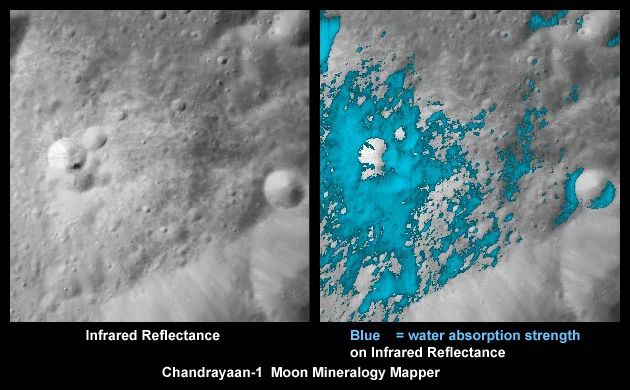
Scientists have confirmed the presence of water on the Moon, predominantly in the form of ice. This ice is mainly concentrated in the permanently shadowed regions of craters near the lunar poles, where temperatures are consistently low enough to prevent sublimation. While liquid water is essential for life, it cannot exist on the Moon's surface due to the vacuum.
Photo: Credits: ISRO/NASA/JPL-Caltech/USGS/Brown Univ., Wikimedia Commons, Public domain.
Tap the right answer
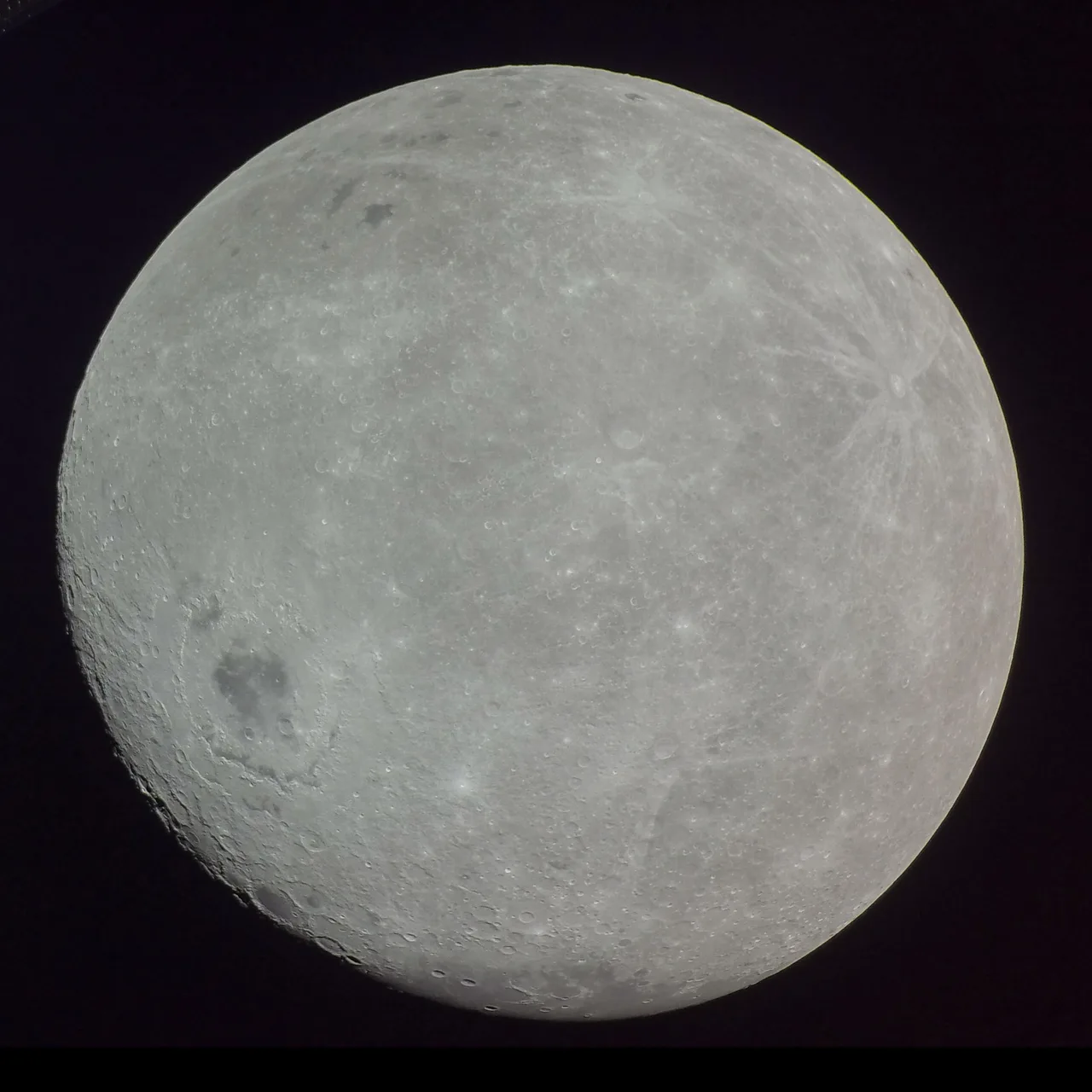
The Moon's far side, often mistakenly called the "dark side," presents a stark contrast to the near side. It is heavily cratered and has very few of the dark, smooth volcanic plains known as maria. This difference is thought to be due to variations in crustal thickness and heat distribution during the Moon's early formation.
Photo: NASA, Wikimedia Commons, Public domain.
Tap the right answer
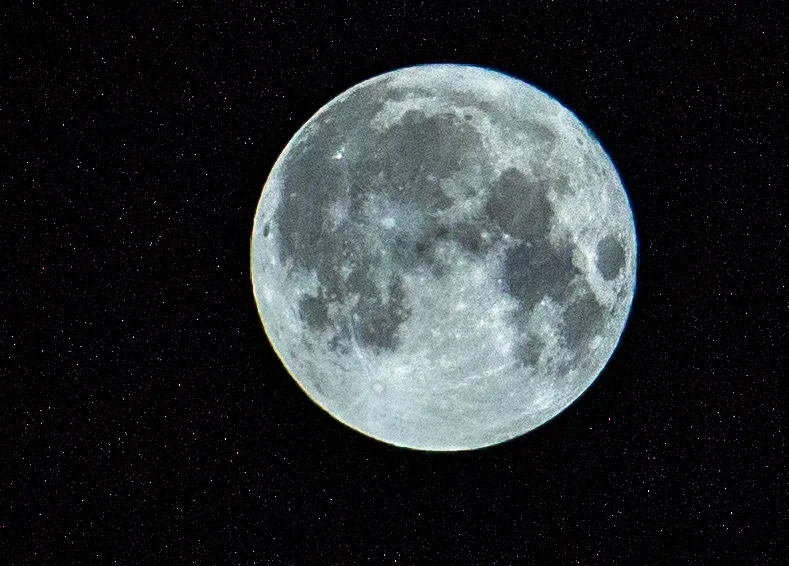
In popular usage, a "Blue Moon" most commonly refers to the second full moon occurring within a single calendar month. Another, older definition refers to the third full moon in an astronomical season that has four full moons. The term rarely means the Moon actually appears blue, which can happen under specific atmospheric conditions, such as after volcanic eruptions.
Photo: Yulia Kolosova, Wikimedia Commons, CC BY 4.0.
Tap the right answer
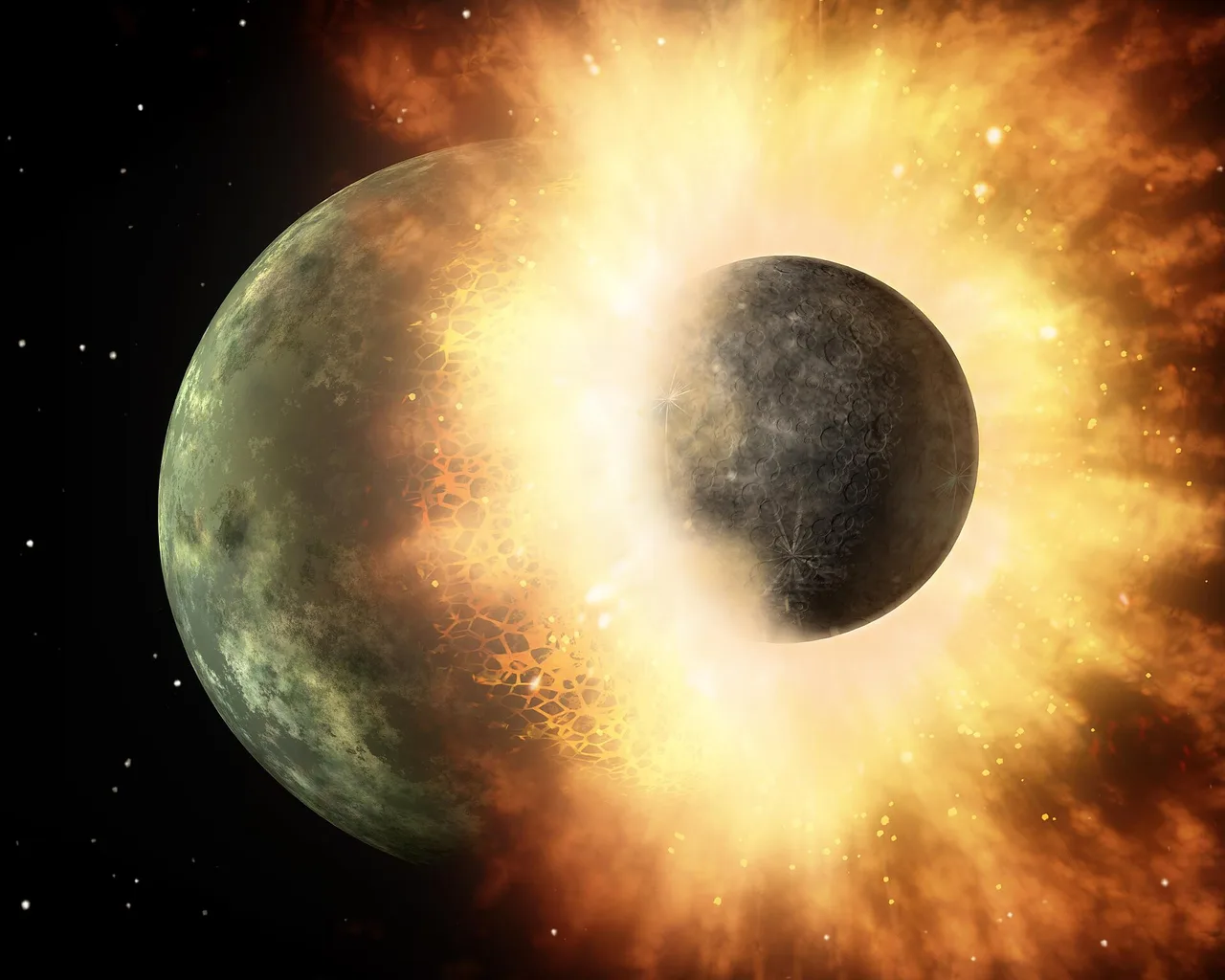
The prevailing scientific theory for the Moon's origin is the giant-impact hypothesis. This theory posits that the Moon formed from the debris ejected into orbit after a Mars-sized protoplanet, often named Theia, collided with the early Earth. This violent event accounts for the Moon's composition and the Earth-Moon system's angular momentum.
Photo: NASA/JPL-Caltech, Wikimedia Commons, Public domain.


Want to make a quiz like this yourself? Do it on Votur, it's free.
Paste the code into your page. The player fits itself in, and every vote counts in Votur.
On WordPress, Ghost or Squarespace? Just paste the link of this page into your post.
This is how it looks
Also fun
How well do you know Saturn? · 10 →How well do you know Jupiter? · 10 →How well do you know Mars? · 10 →How well do you know the Solar System? · 10 →How well do you know the Sun? · 10 →How well do you know Budapest? · 10 →How well do you know Hungary? · 10 →How well do you know Bratislava? · 10 →How well do you know Slovakia? · 10 →How well do you know Prague? · 10 →How well do you know Czechia? · 10 →How well do you know Warsaw? · 10 →How well do you know Poland? · 10 →How well do you know Luxembourg City? · 10 →How well do you know Luxembourg? · 10 →How well do you know Dublin? · 10 →How well do you know Ireland? · 10 →How well do you know Vilnius? · 10 →How well do you know Lithuania? · 10 →How well do you know Riga? · 10 →How well do you know Latvia? · 10 →How well do you know Reykjavík? · 10 →How well do you know Iceland? · 10 →How well do you know Helsinki? · 10 →How well do you know Finland? · 10 →How well do you know Oslo? · 10 →How well do you know Norway? · 10 →How well do you know Stockholm? · 10 →How well do you know Sweden? · 10 →How well do you know Madrid? · 10 →How well do you know Spain? · 10 →How well do you know Rome? · 10 →How well do you know Italy? · 10 →How well do you know Bern? · 10 →How well do you know Switzerland? · 10 →How well do you know Vienna? · 10 →How well do you know Austria? · 10 →How well do you know Berlin? · 10 →How well do you know London? · 10 →How well do you know the United Kingdom? · 10 →How well do you know Paris? · 10 →How well do you know France? · 10 →How well do you know Brussels? · 10 →How well do you know Amsterdam? · 10 →How well do you know the Netherlands? · 10 →How well do you know Copenhagen? · 10 →How well do you know Denmark? · 10 →How well do you know Athens? · 10 →How well do you know Greece? · 10 →How well do you know Lisbon? · 10 →How well do you know Portugal? · 10 →How well do you know Tallinn? · 10 →How well do you know Estonia? · 10 →Belgium · 8 →Universe · 10 →Which Greek hero are you? · 8 →Gulpen · 5 →How well do you know Dutch weather? · 10 →How well do you know Germany? · 10 →Who owns the Netherlands? · 10 →The little church village of Klimmen · 10 →Do you know Neutral Moresnet? · 10 →