Get app
 Photo: Cornelis Claesz van Wieringen / Formerly attributed to Hendrick Cornelisz Vroom, Wikimedia Commons, Public domain.
Test your knowledge on the epic eighty-year struggle for Dutch independence from the mighty Spanish Empire, filled with tactical breakthroughs, dramatic sieges, and historical milestones.
Rebel Recruit 0–4 · Geuzen Explorer 5–8 · Grand Pensionary 9–10
Pick one

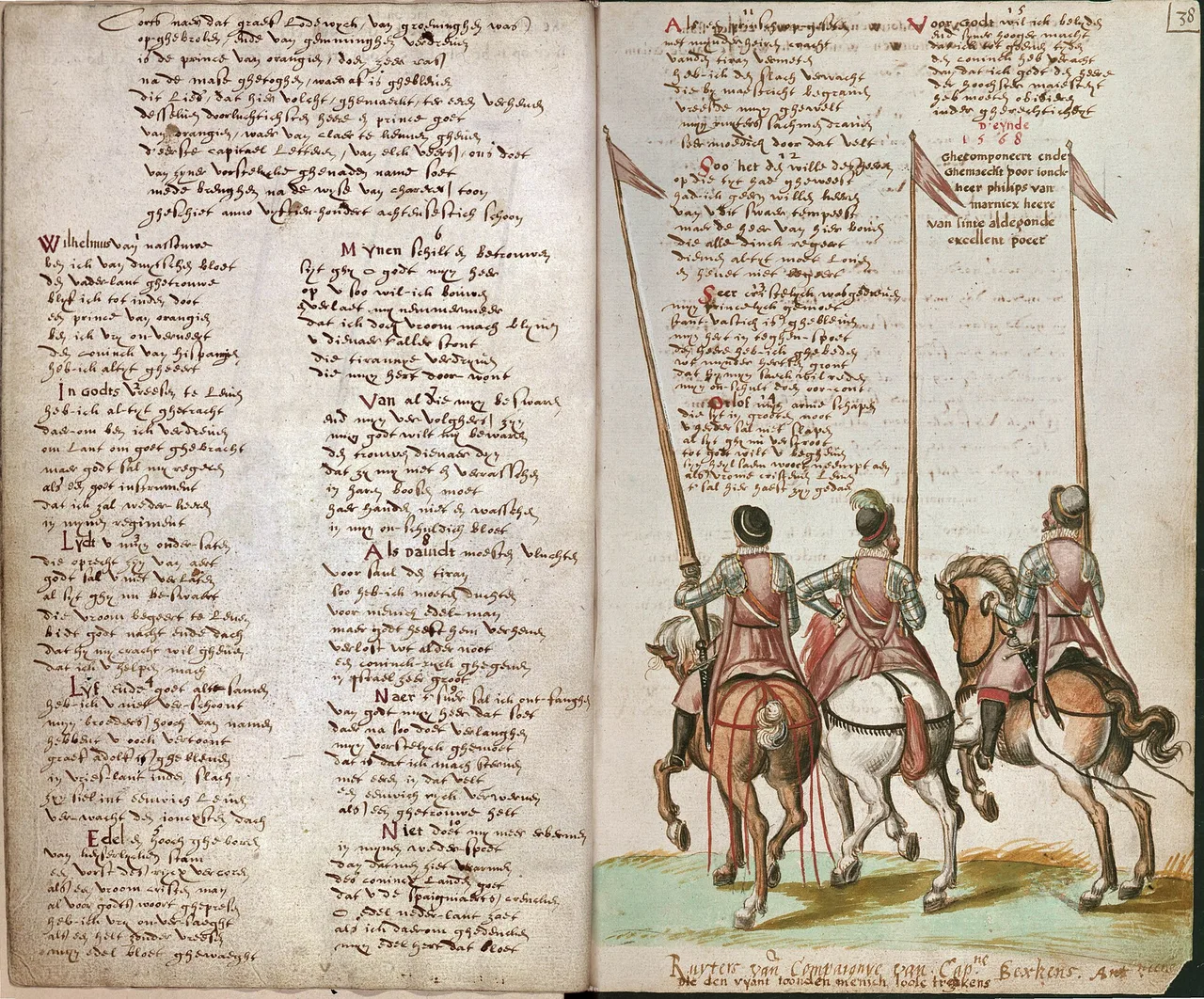
Written during the early years of the revolt, "Het Wilhelmus" is often called the oldest national anthem in the world, counting tune and words together. It is written from the point of view of William of Orange, explaining why he joined the revolt while, oddly enough, declaring that he has always honoured the Spanish king.
Photo: Wikimedia Commons, Public domain.
Pick one
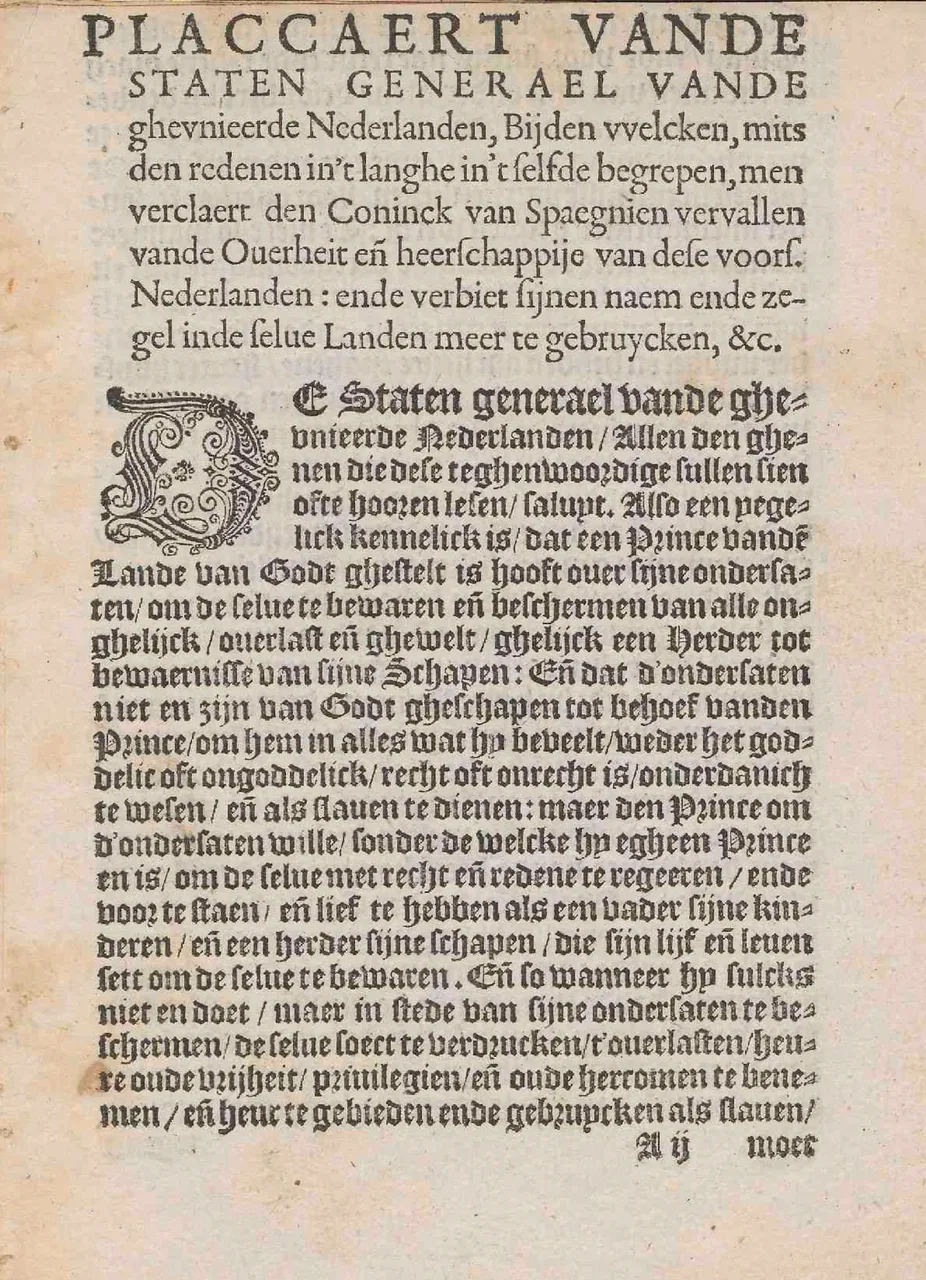
The Act of Abjuration was the formal declaration by the rebel provinces of the Low Countries, from Holland and Zeeland to Brabant and Flanders, that King Philip II was no longer their ruler. Its style is so similar to the American Declaration of Independence that some historians think Thomas Jefferson may have been partly inspired by it.
Photo: Staten-Generaal, Wikimedia Commons, Public domain.
Pick one
When the Sea Beggars broke the dikes to flood the land and sail to Leiden's rescue, they brought herring and white bread to the starving citizens. Today, locals still celebrate "Leidens Ontzet" every October 3rd by eating these traditional foods.
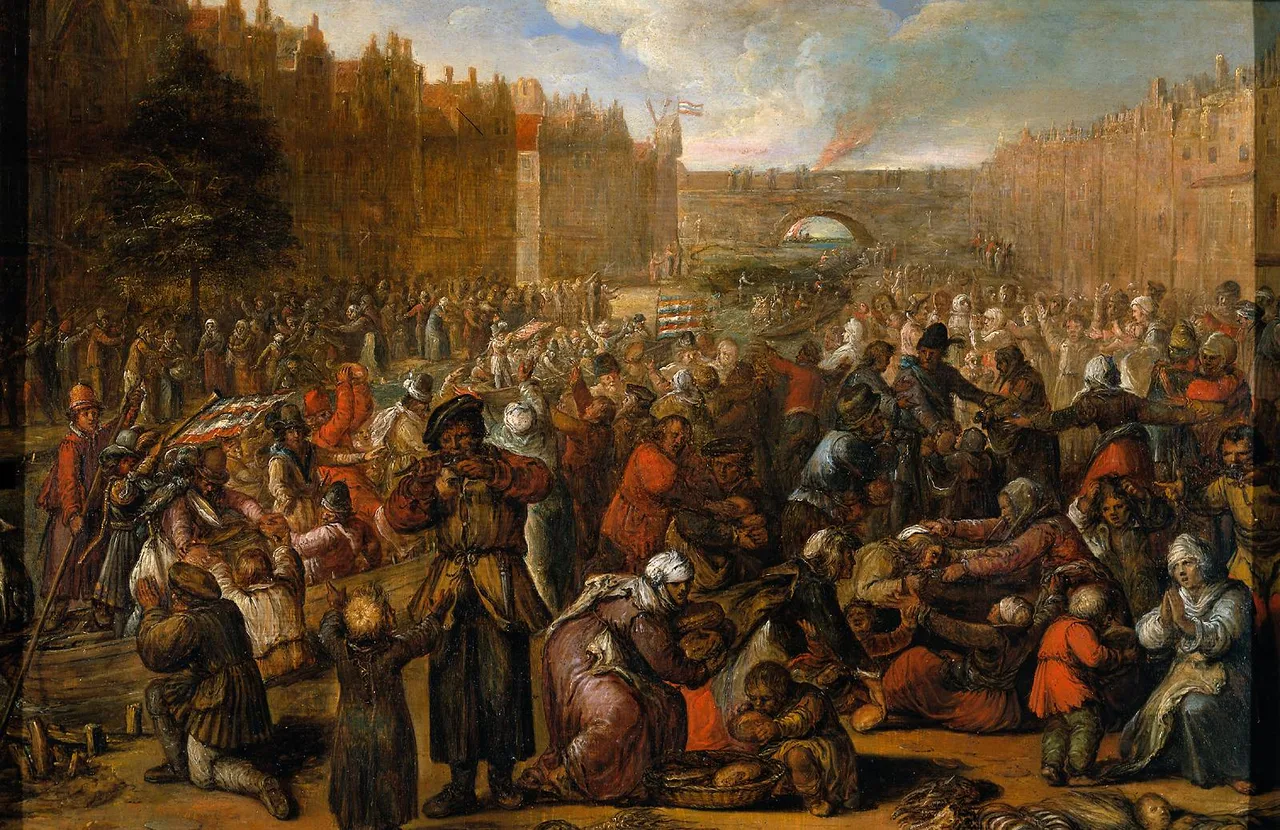
Photo: Otto van Veen, Wikimedia Commons, Public domain.
Pick one
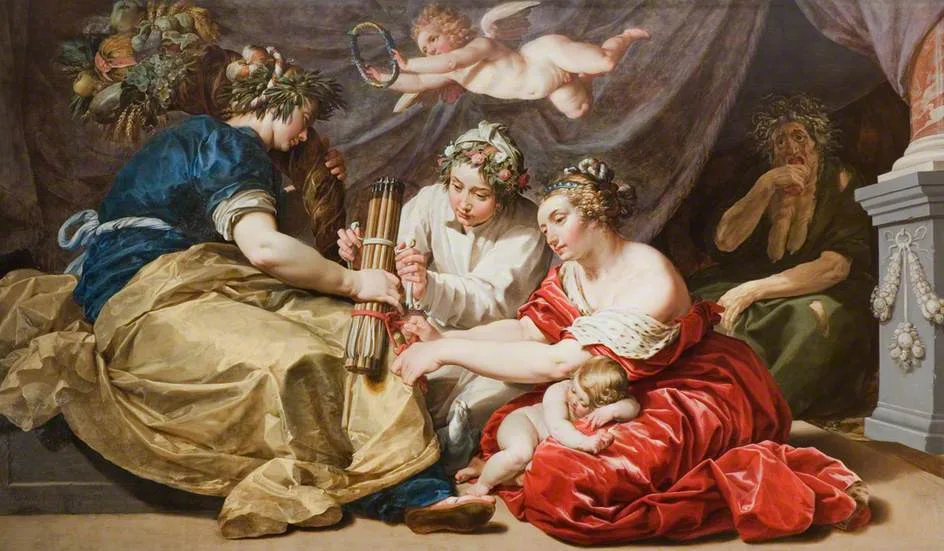
The Twelve Years' Truce lasted from 1609 to 1621. This temporary peace allowed the young Dutch Republic to consolidate its political power, expand its global trade networks, and establish the Dutch East India Company as a dominant force while Spain struggled with financial issues.
Photo: Abraham Janssens I, Wikimedia Commons, Public domain.
Pick one
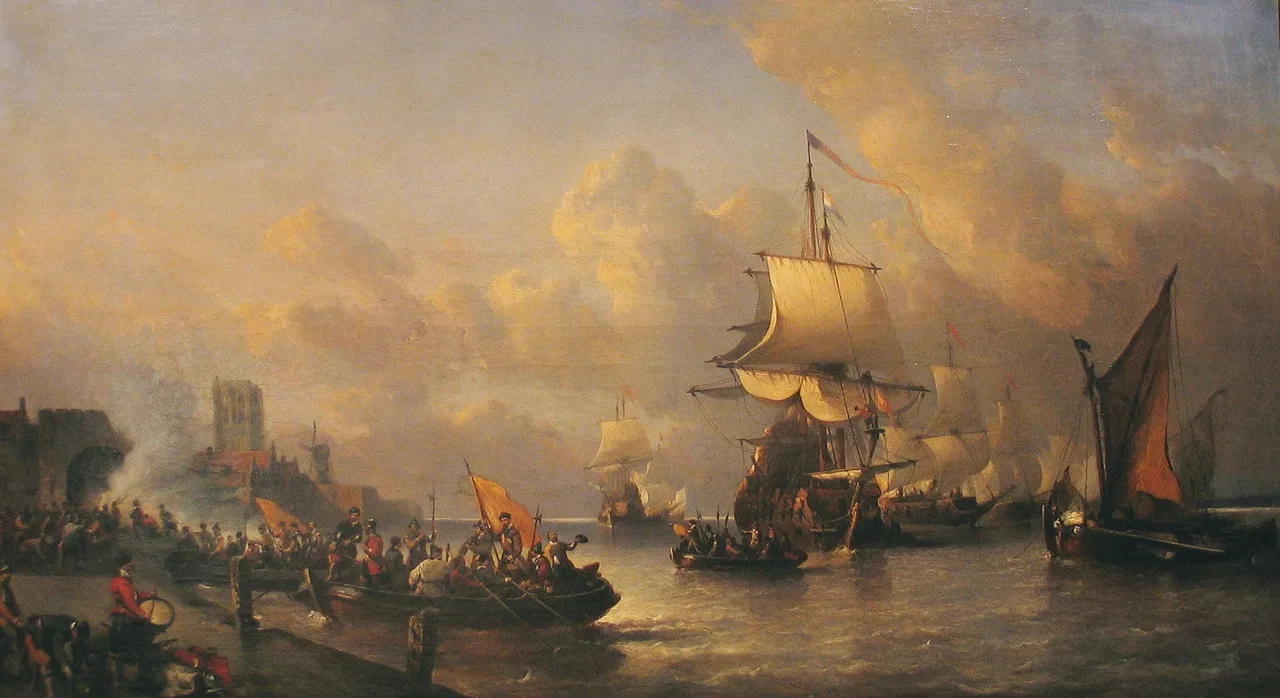
The capture of Brielle on April 1, 1572, was a major turning point. The Sea Beggars, a rebel group of privateers, seized the poorly defended port city after being expelled from England. This unexpected victory triggered a chain reaction of rebellions across Holland and Zeeland.
Photo: Anthonie Waldorp, Wikimedia Commons, Public domain.
Pick one
The Beeldenstorm, or Iconoclastic Fury, involved the widespread destruction of religious art in Catholic churches by Protestant reformers. This outburst of anger against Catholic wealth and Spanish rule prompted a harsh military crackdown by Spain, setting the stage for the war.
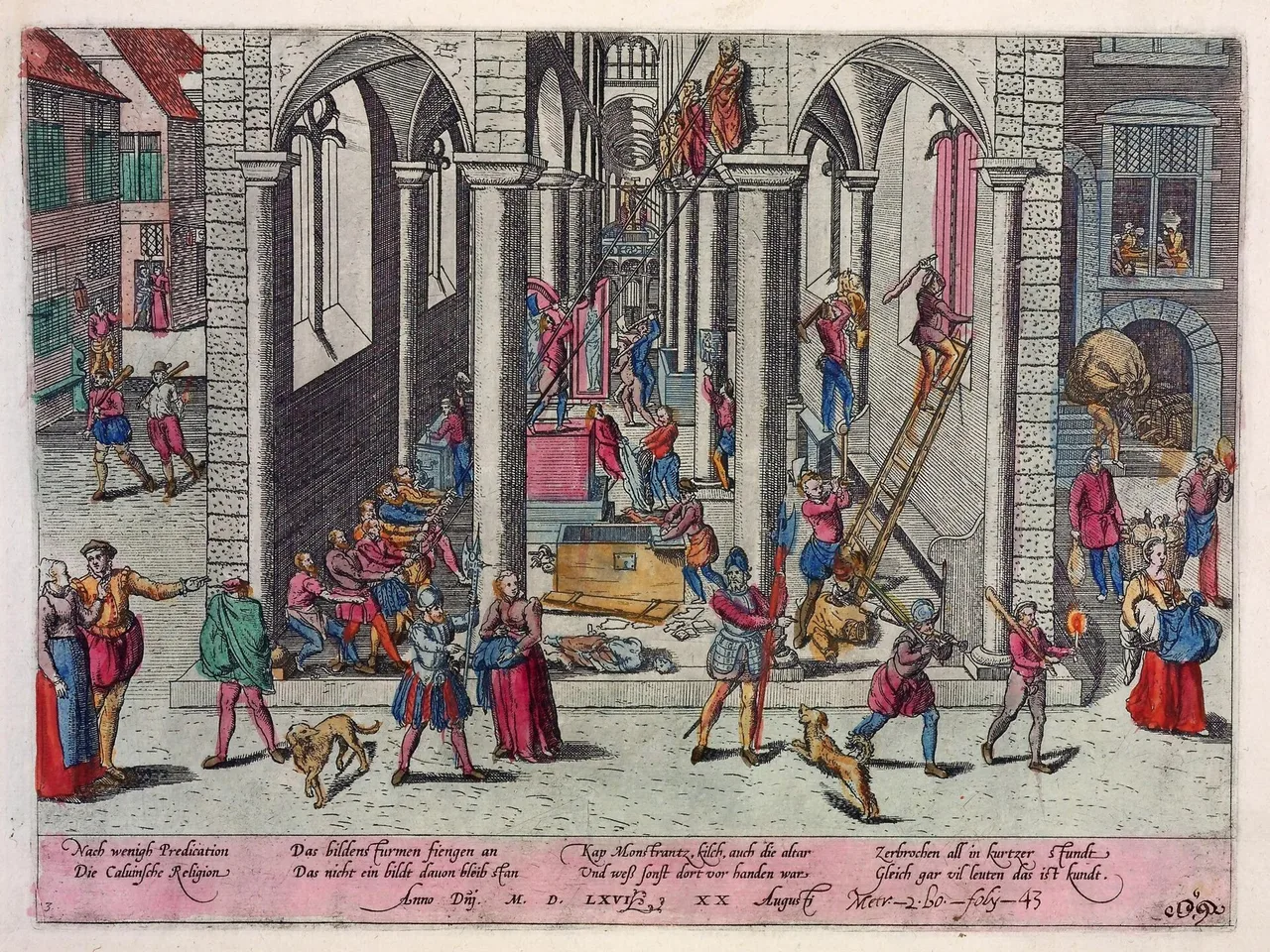
Photo: Frans Hogenberg, Wikimedia Commons, Public domain.
Pick one
William was laid to rest in the Nieuwe Kerk in Delft in 1584, and Hendrick de Keyser and his son Pieter later made him a grand marble monument there. Ever since, members of the House of Orange-Nassau have been buried in the royal crypt beneath the church.
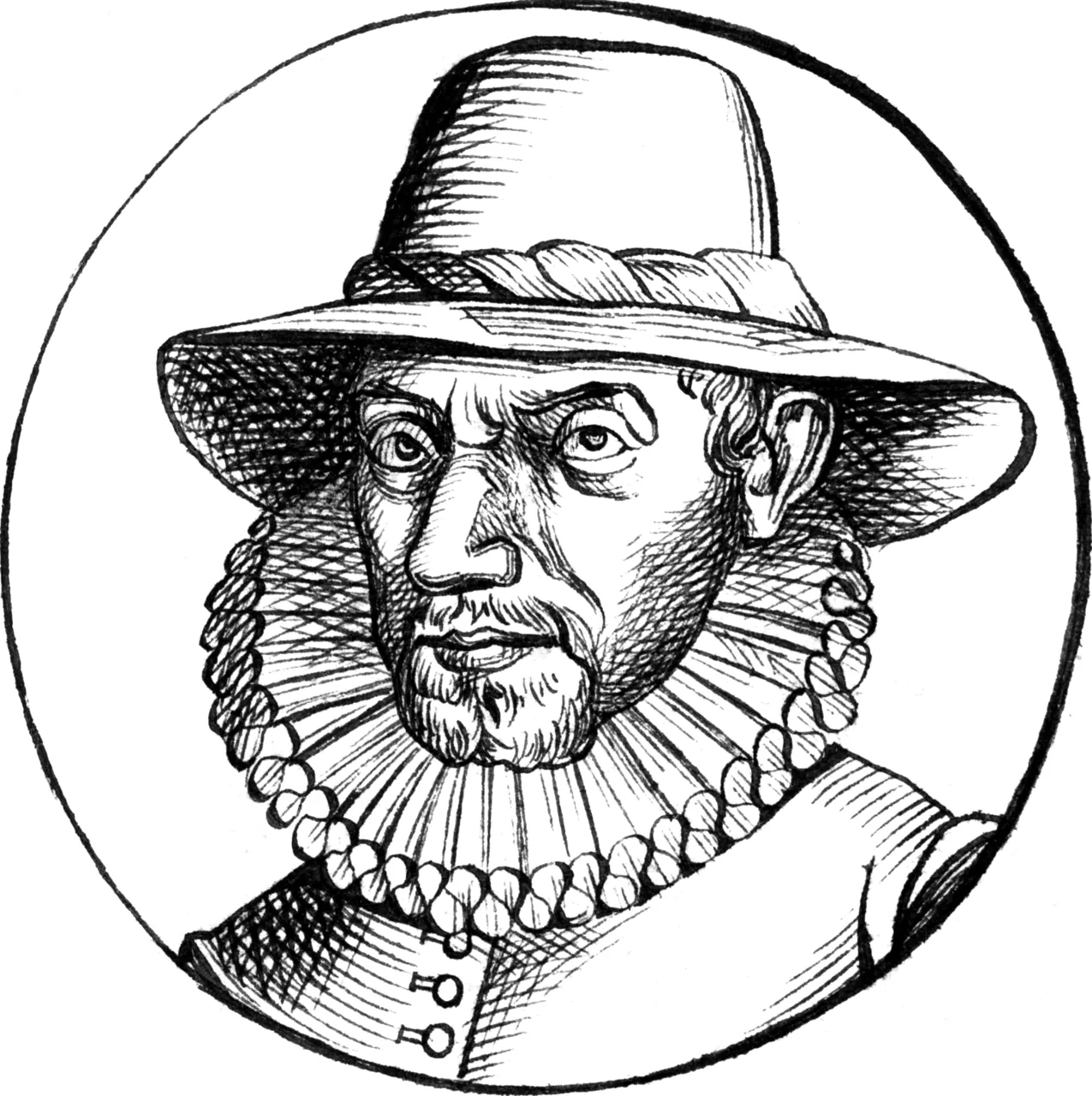
Photo: Michielverbeek, Wikimedia Commons, CC BY-SA 4.0.
Pick one
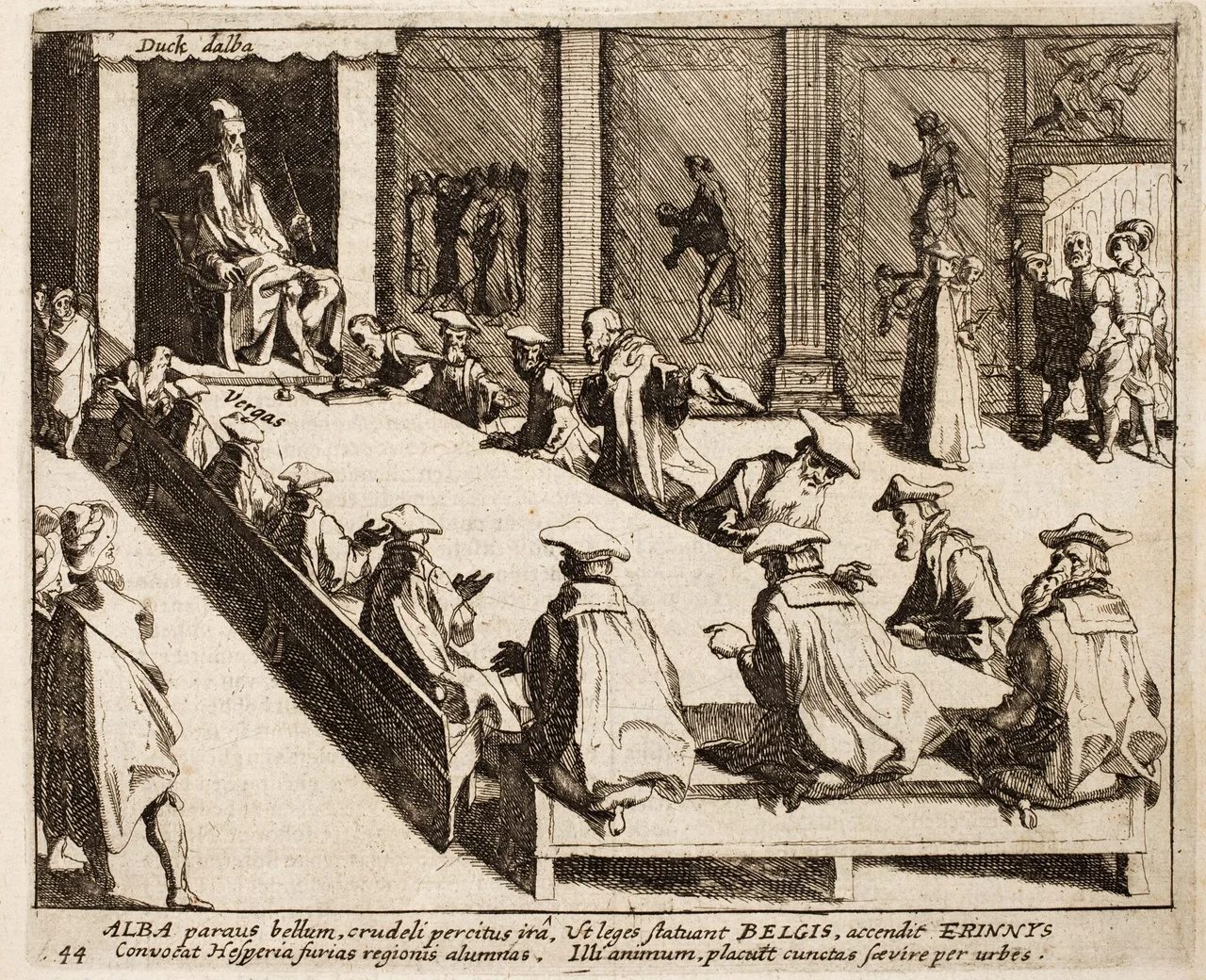
The Duke of Alba set up the Council of Troubles in 1567 on the orders of King Philip II of Spain. It ignored the old rights of the Dutch towns and provinces, and its harshness drove many moderate nobles to the side of the revolt. It was officially abolished in 1574, but kept meeting until 1576.
Photo: Simon Frisius, Wikimedia Commons, Public domain.
Pick one
The Battle of Nieuwpoort was a major tactical victory for Maurice of Nassau over the Spanish army. Fought on the sandy beach and dunes of the Flemish coast, the soft terrain made maneuvering difficult but allowed the highly disciplined Dutch troops to showcase their innovative tactical training.
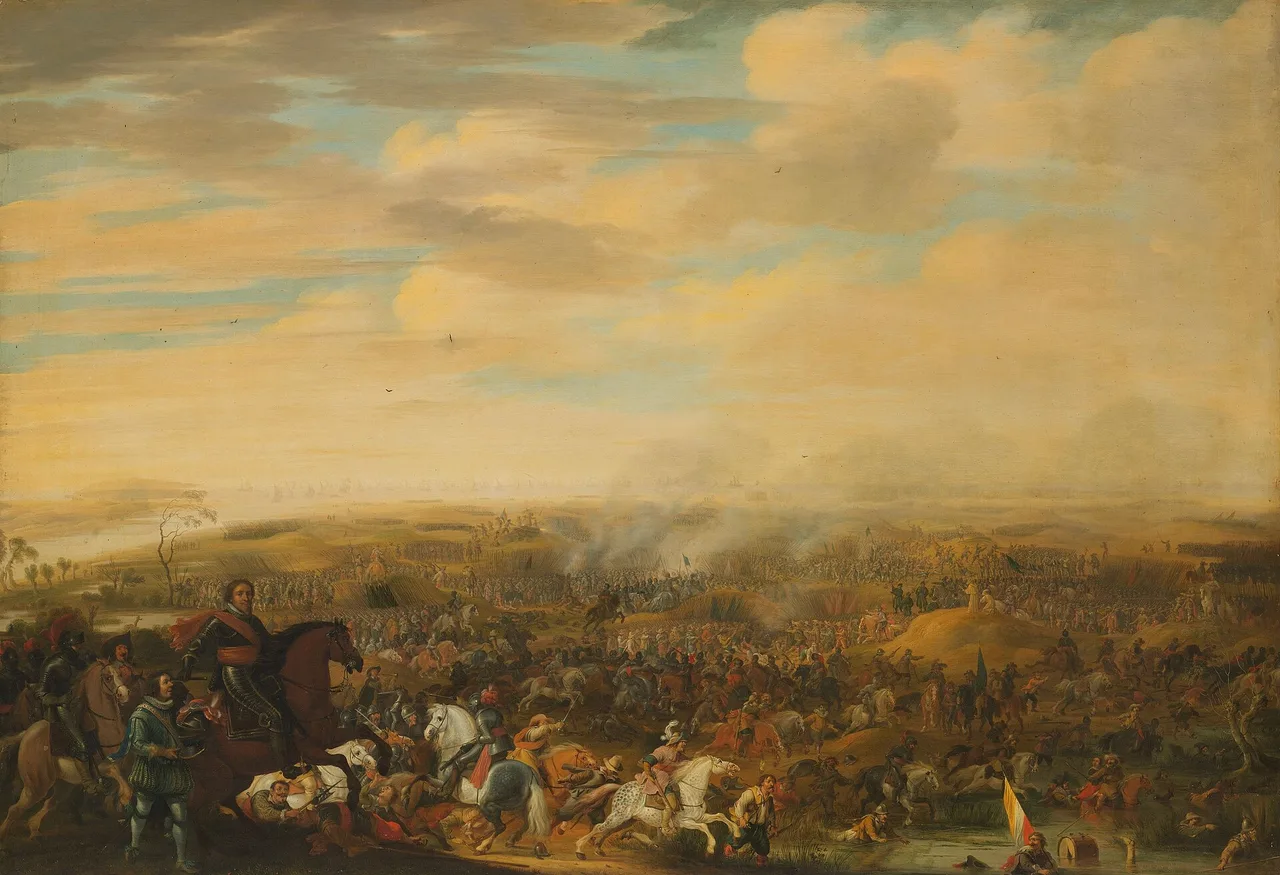
Photo: Paulus van Hillegaert (I), Wikimedia Commons, Public domain.
Pick one
The Union of Utrecht was signed in 1579 to unite the northern provinces against Spanish rule. While it was initially just a military alliance, it quickly became the de facto constitution of the new Dutch Republic. The southern provinces had signed the Union of Arras just weeks earlier to declare their loyalty to Spain.


Paste the code into your page. The player fits itself in, and every vote counts in Votur.
On WordPress, Ghost or Squarespace? Just paste the link of this page into your post.
This is how it looks
Also fun