 Get app
 Photo: JeremiahsCPs, Wikimedia Commons, CC BY-SA 3.0.
Step into the fascinating green kingdom where the tables are turned! Test your knowledge on how these incredible predatory plants hunt, survive, and capture our imagination.
Budding Botanist 0–4 · Bog Explorer 5–8 · Carnivorous Plant Whisperer 9–10
Pick one

In the 1986 musical film, the bloodthirsty plant is named Audrey II by its caretaker Seymour, who is secretly in love with his coworker Audrey. The puppet used for the largest version of the plant in the movie required up to 60 operators to animate!
Pick one
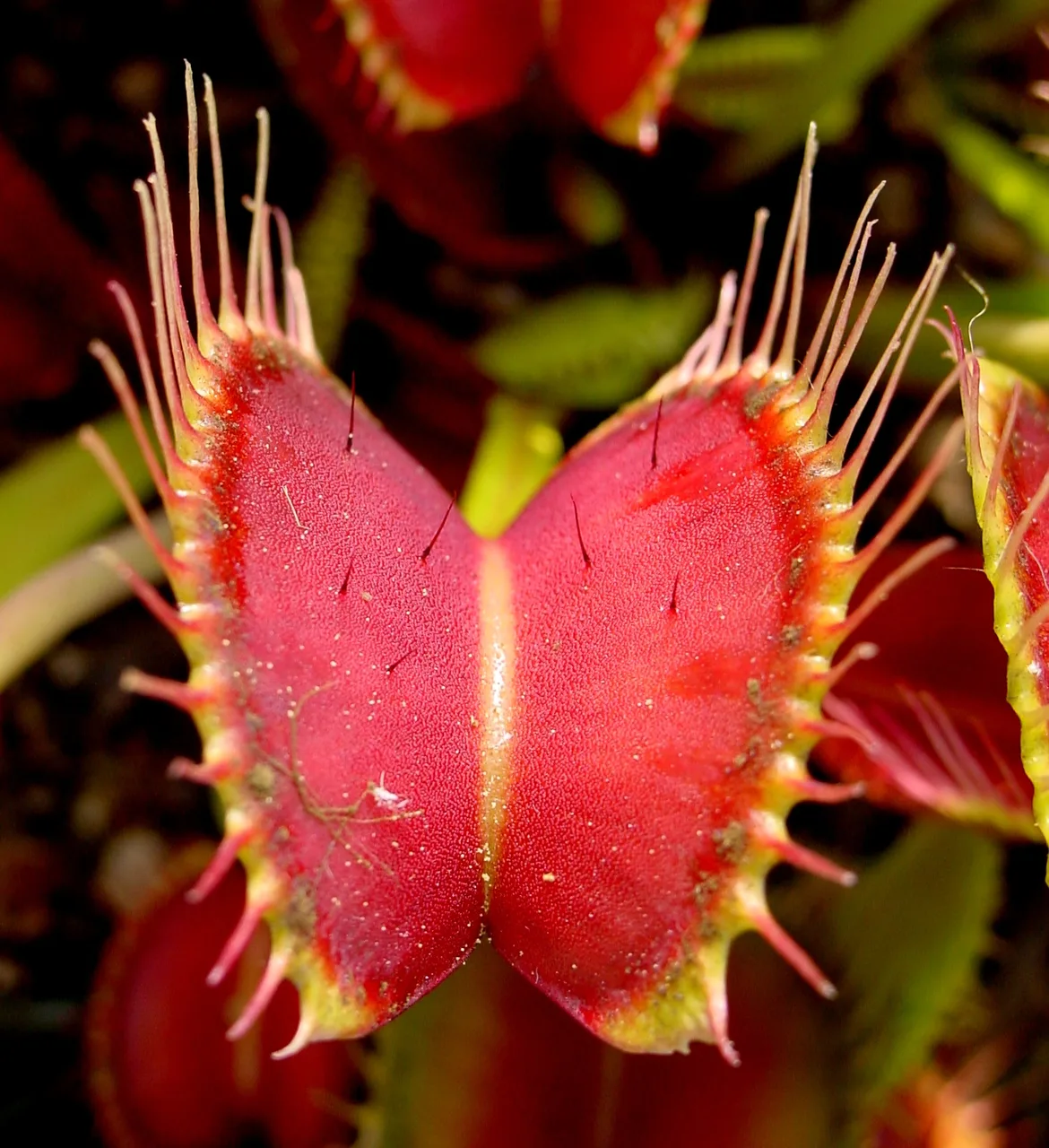
Many people assume this exotic predator comes from a tropical jungle, but it actually grows naturally only in a small coastal region of the Carolinas in the USA. They thrive in wet, nutrient-poor savannas where regular fires help clear competing trees.
Photo: Noah Elhardt, Wikimedia Commons, CC BY-SA 2.5.
Pick one
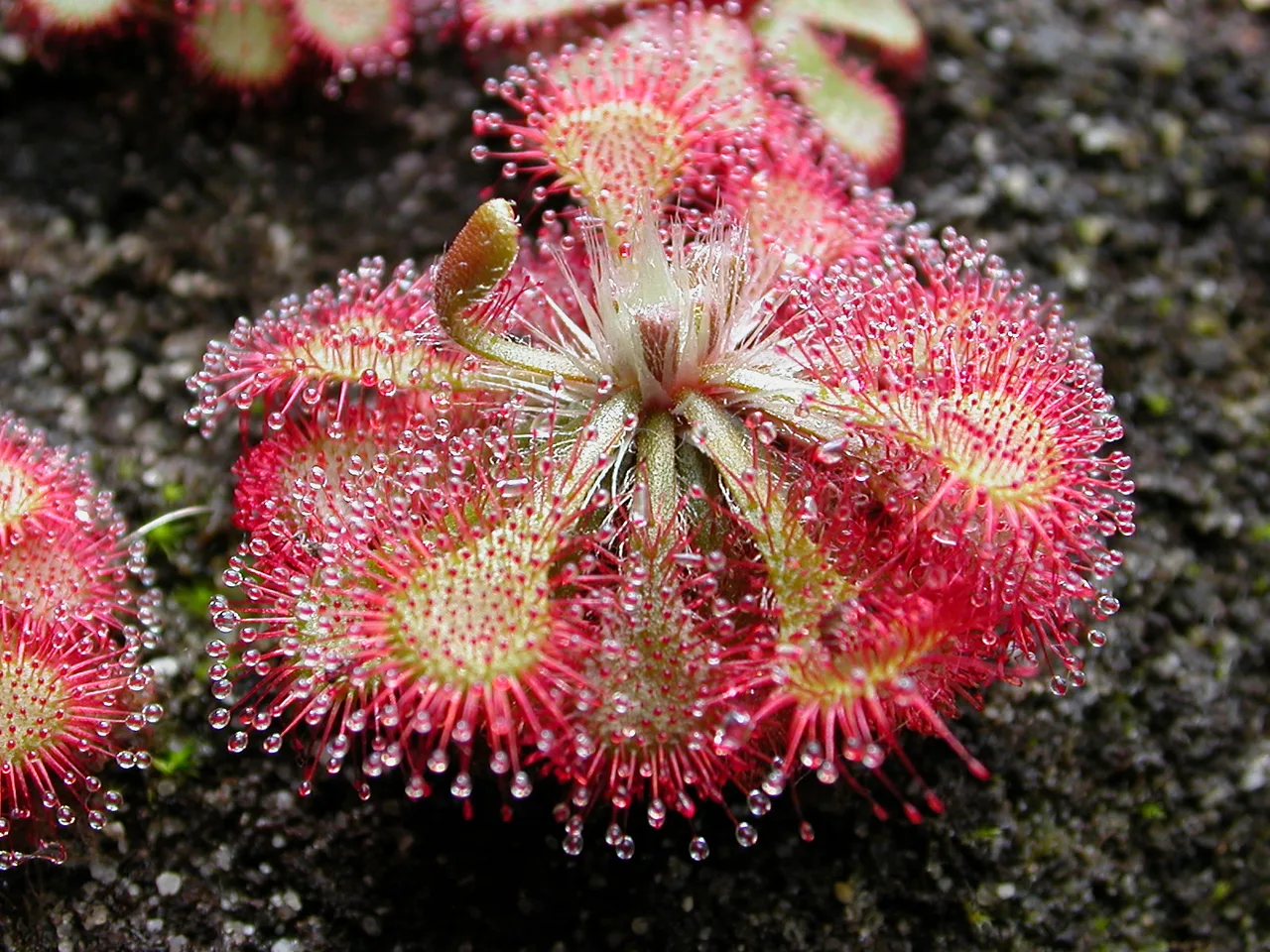
Drosera, or sundews, make up one of the largest genera of carnivorous plants. Their leaves are covered in gland-tipped tentacles that secrete a sticky, dew-like substance. Once an insect is caught, the tentacles actively bend to bring more digestive glands into contact with the prey.
Photo: Jan Wieneke, Wikimedia Commons, CC BY-SA 3.0.
Pick one
The cobra lily gets its name from its hollow, hood-like leaves that look like a cobra ready to strike, complete with a forked leaf that resembles a snake's tongue. It lures insects inside using translucent windows that confuse them when they try to find an exit.
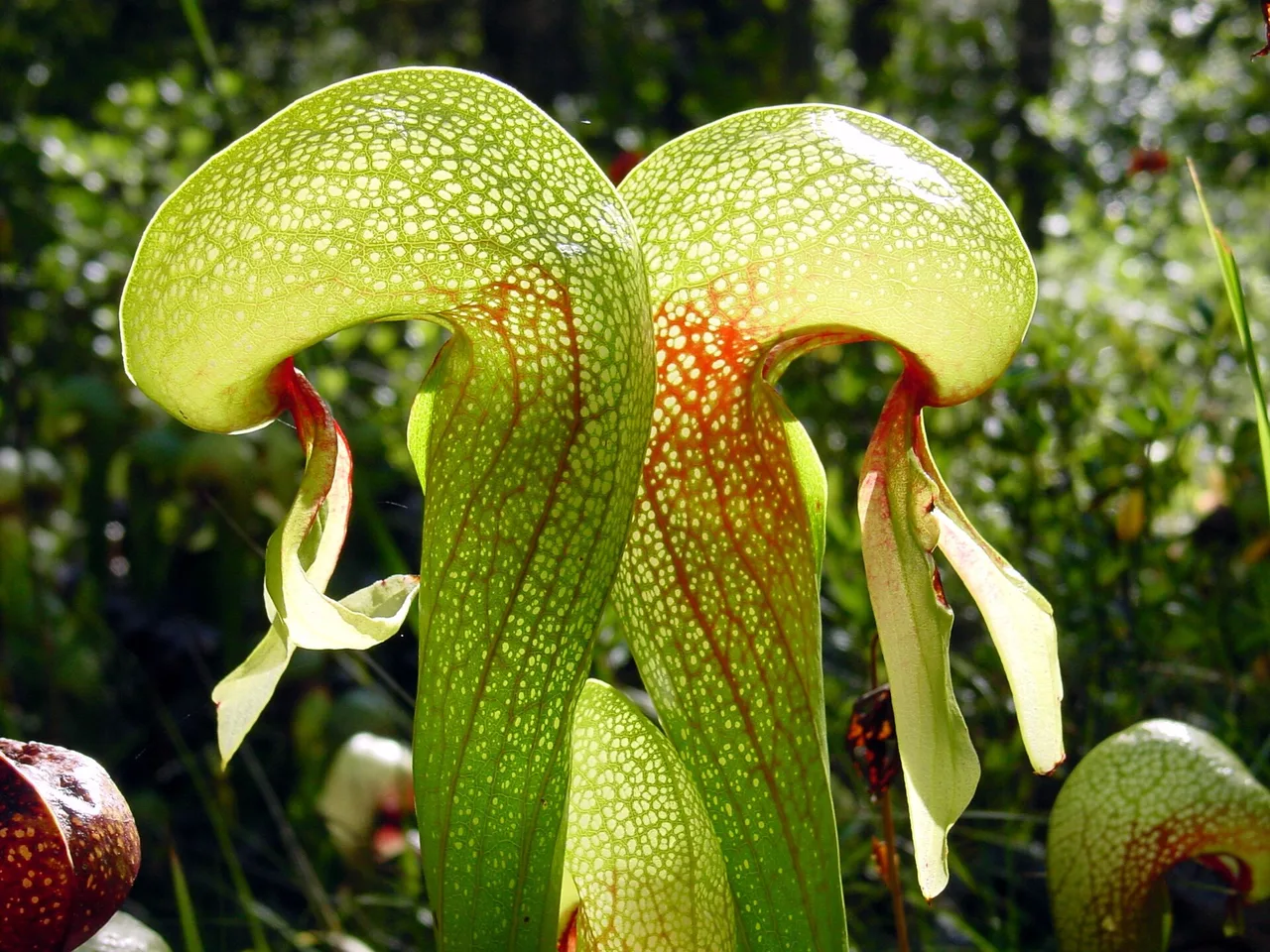
Photo: NoahElhardt (talk · contribs), Wikimedia Commons, CC BY 2.5.
Pick one
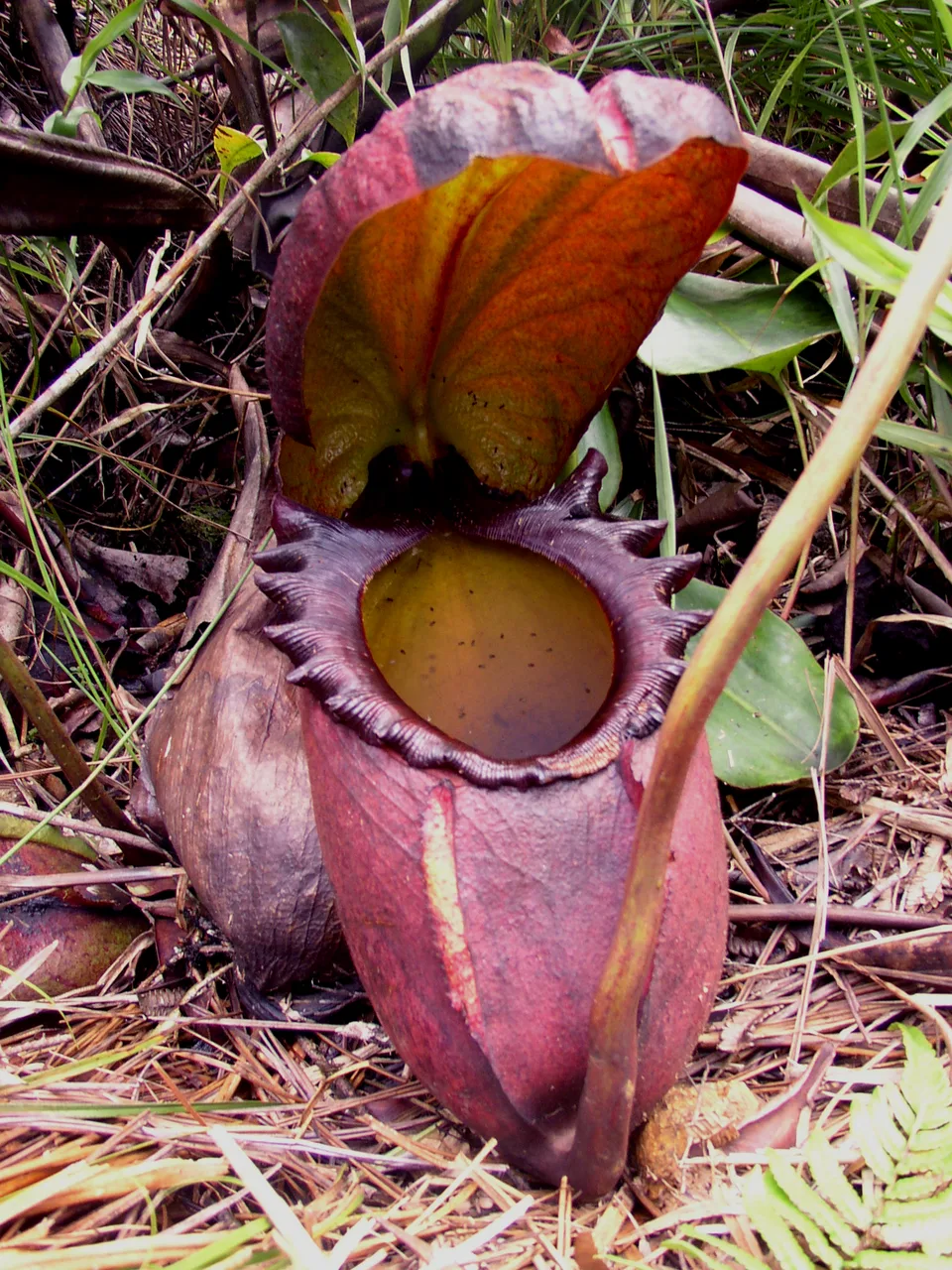
Nepenthes rajah, native to Mount Kinabalu in Borneo, produces massive urn-shaped pitchers that can hold up to 3.5 liters of water. While insects make up the bulk of its diet, vertebrates like frogs, lizards, and even small rats have occasionally been found inside them.
Photo: Wikimedia Commons, Public domain.
Pick one
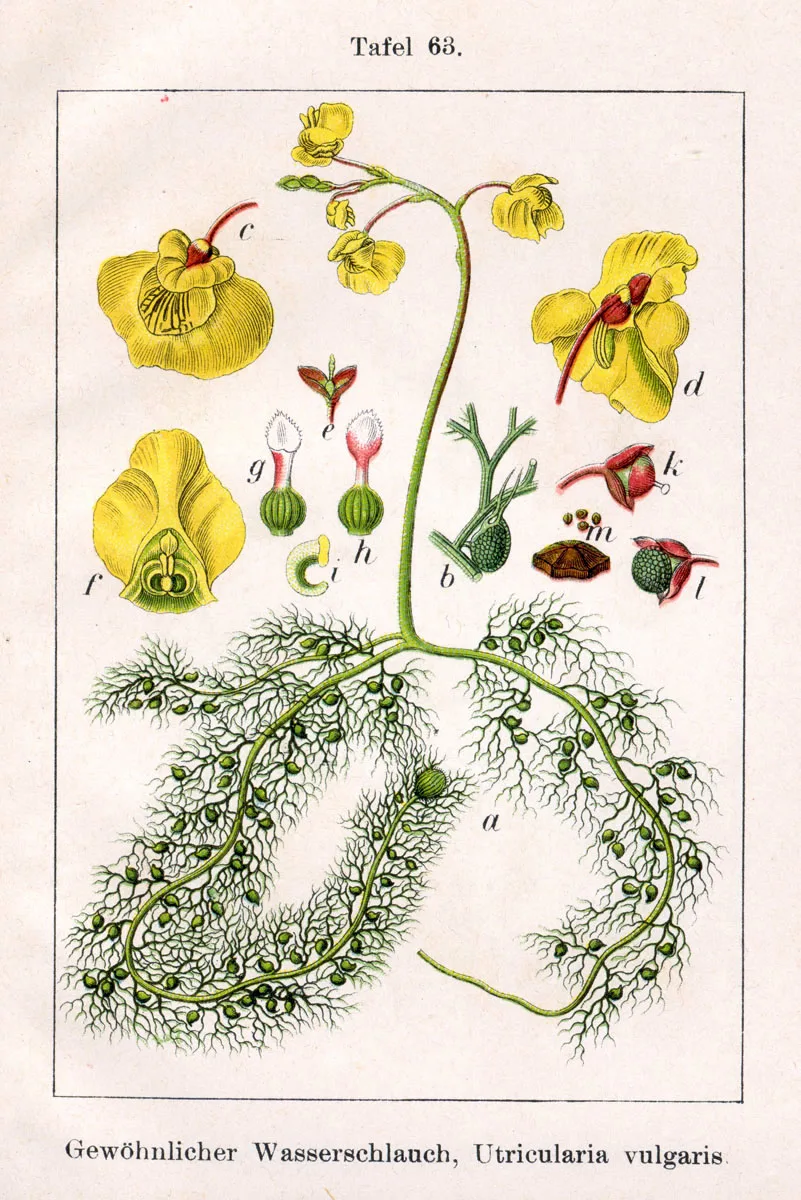
Bladderworts are among the fastest-acting predators in the plant kingdom. They pump water out of their tiny bladders to create a vacuum. When a tiny organism touches the trigger hairs, the trap door swings open and sucks the prey inside in less than a millisecond!
Photo: Johann Georg Sturm (Painter: Jacob Sturm), Wikimedia Commons, Public domain.
Pick one
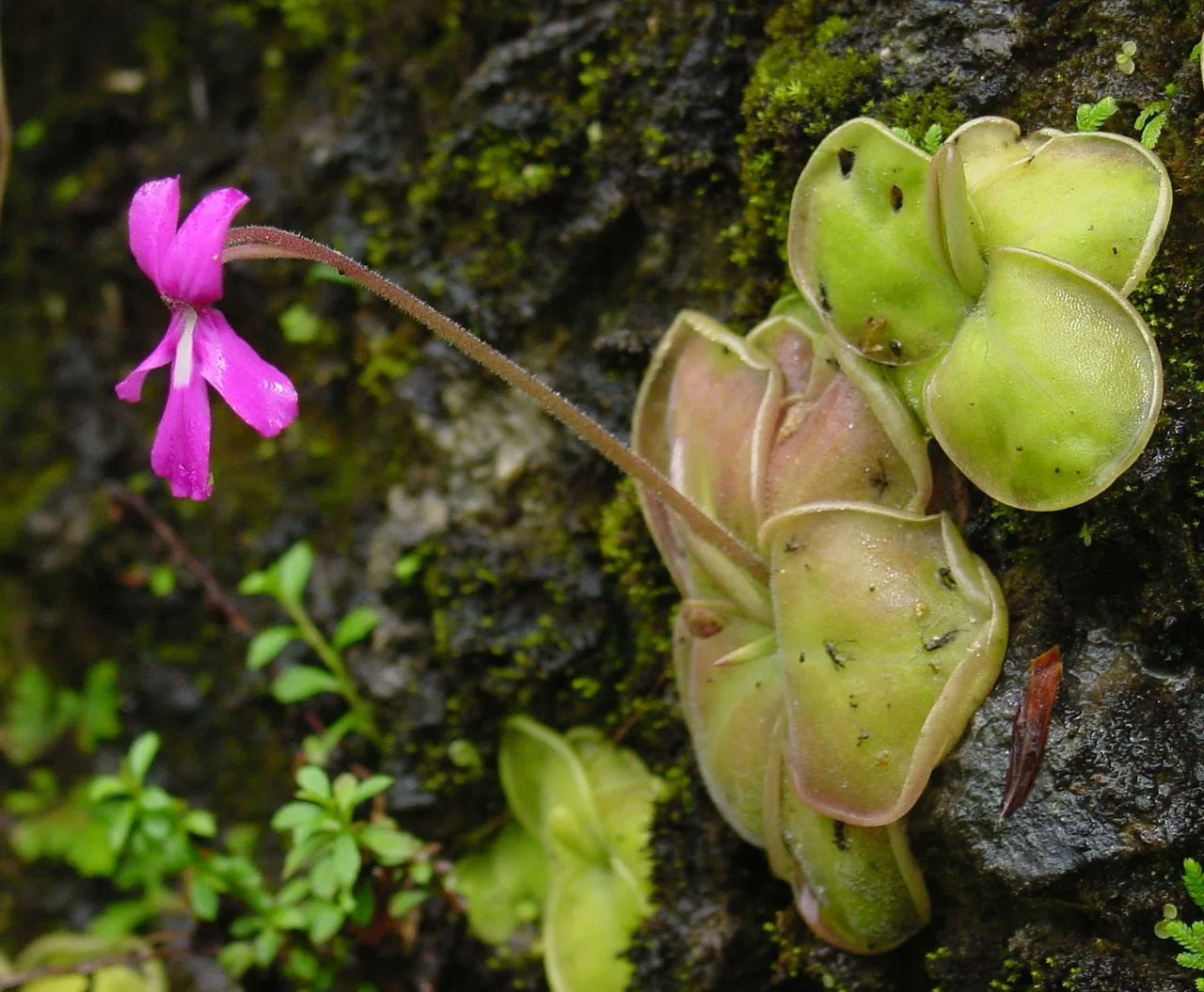
Butterwort leaves contain powerful enzymes that can break down proteins. In Scandinavia, people traditionally poured warm milk over the leaves to curdle it, producing a thick, delicious yogurt-like dairy product called tatmjolk.
Photo: Noah Elhardt, Wikimedia Commons, CC BY-SA 3.0.
Pick one
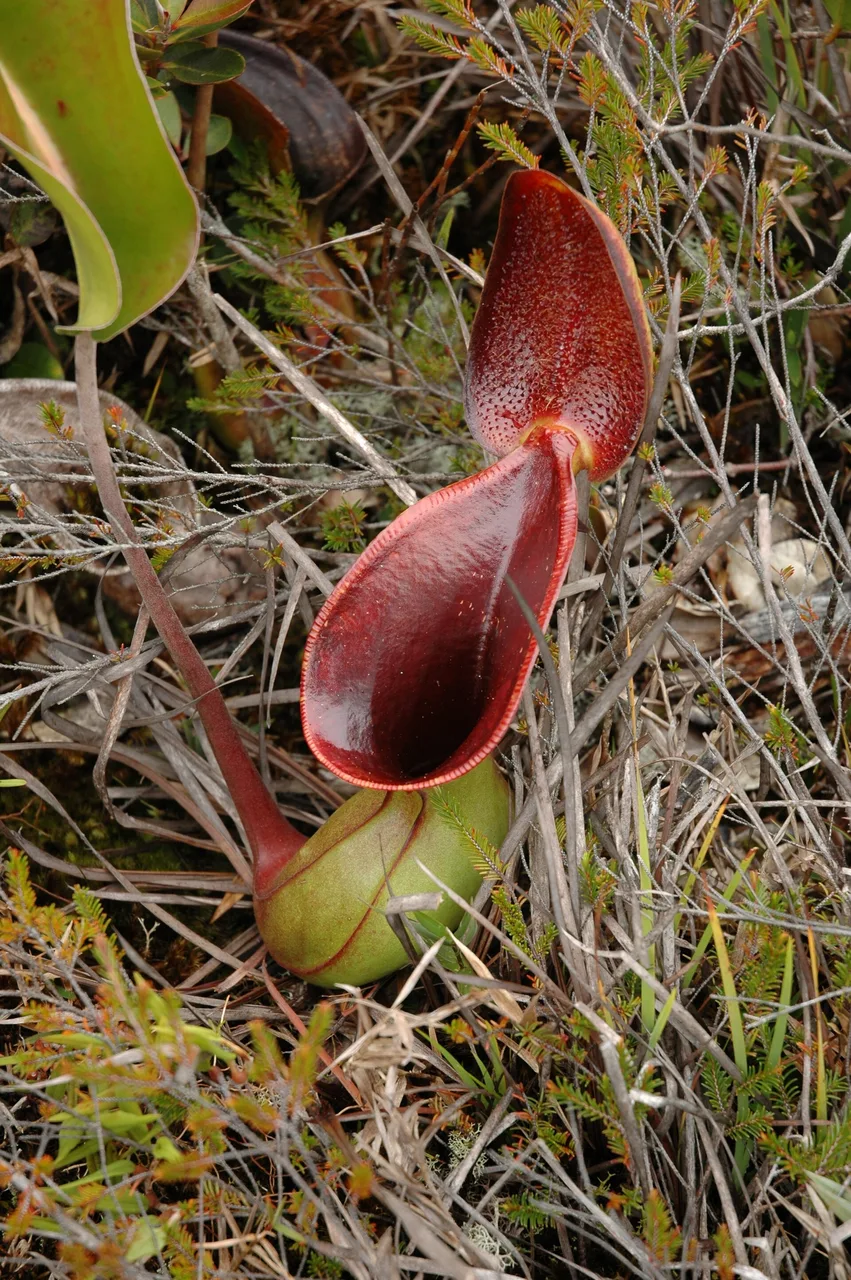
In a fascinating ecological partnership, the mountain tree shrew licks a sweet, laxative nectar from the lid of Nepenthes lowii. While feeding, the shrew sits on the pitcher rim and defecates directly into the trap, providing the plant with essential nitrogen.
Photo: JeremiahsCPs, Wikimedia Commons, CC BY-SA 3.0.
Pick one
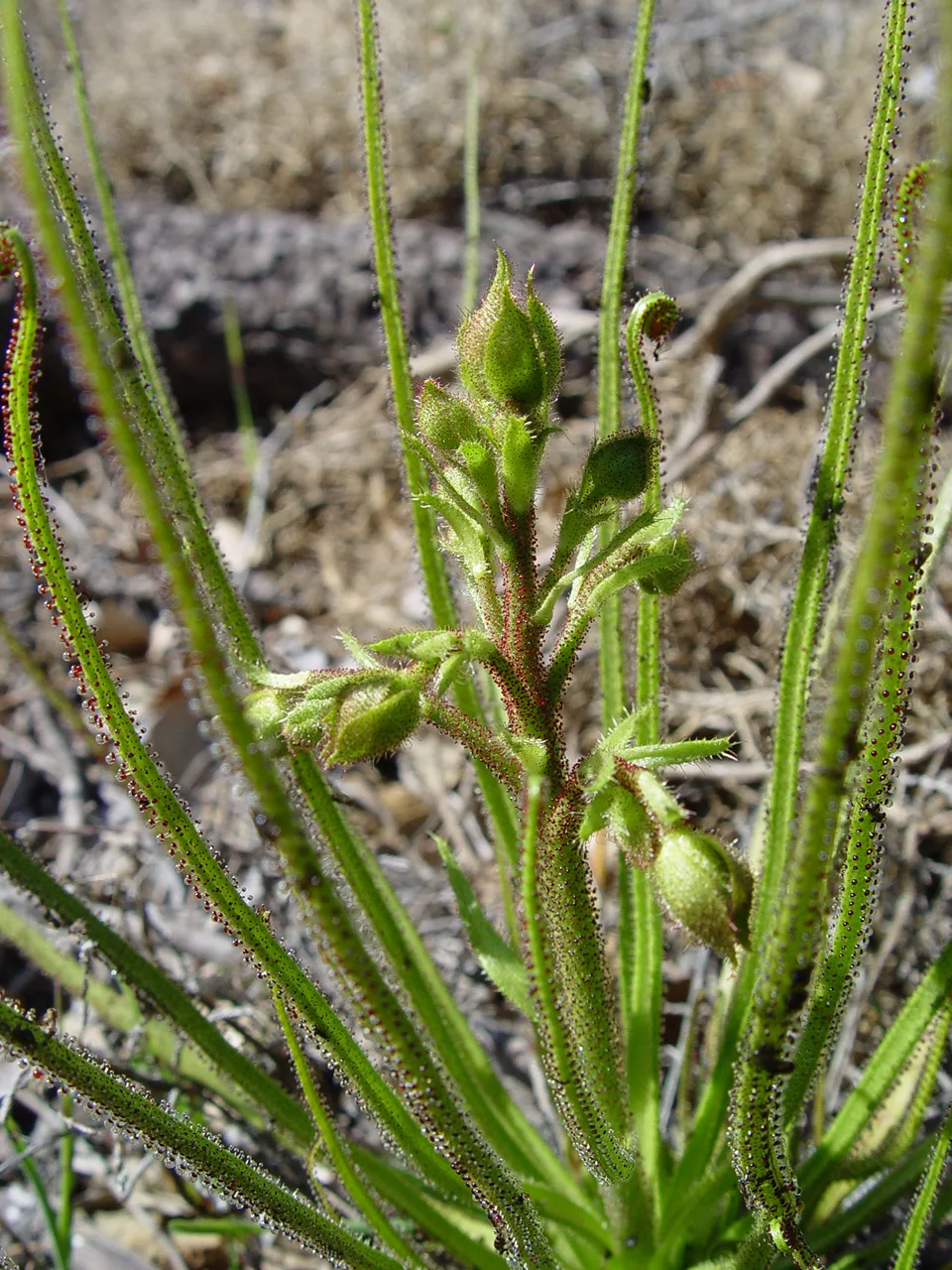
Commonly known as the dewy pine, Drosophyllum is a rare carnivorous plant native to dry, sandy, or rocky soils in Spain, Portugal, and Morocco. It is highly unusual because almost all other carnivorous plants thrive in wet, nitrogen-poor wetlands.
Photo: Taken by Carsten Niehaus (user:Lumbar)., Wikimedia Commons, CC BY-SA 3.0.
Pick one
Charles Darwin was utterly fascinated by these plants, especially sundews. He spent years studying how they react to touch and nitrogen-rich substances, eventually writing 'Insectivorous Plants'. He even wrote in a letter that he cared more about Drosera than the origin of all other species!

Photo: Charles Darwin, Victor Carus (translation), Wikimedia Commons, Public domain.


Paste the code into your page. The player fits itself in, and every vote counts in Votur.
On WordPress, Ghost or Squarespace? Just paste the link of this page into your post.
This is how it looks
Also fun


