Get app
 Photo: Gryffindor, Wikimedia Commons, CC BY-SA 3.0.
Step inside the world of the piano! Test your knowledge of this magnificent 88-key instrument, from its mechanical inner workings and historical pioneers to famous films and surprising records.
First Position 0–4 · Key Signature 5–8 · Grand Maestro 9–10
Pick one

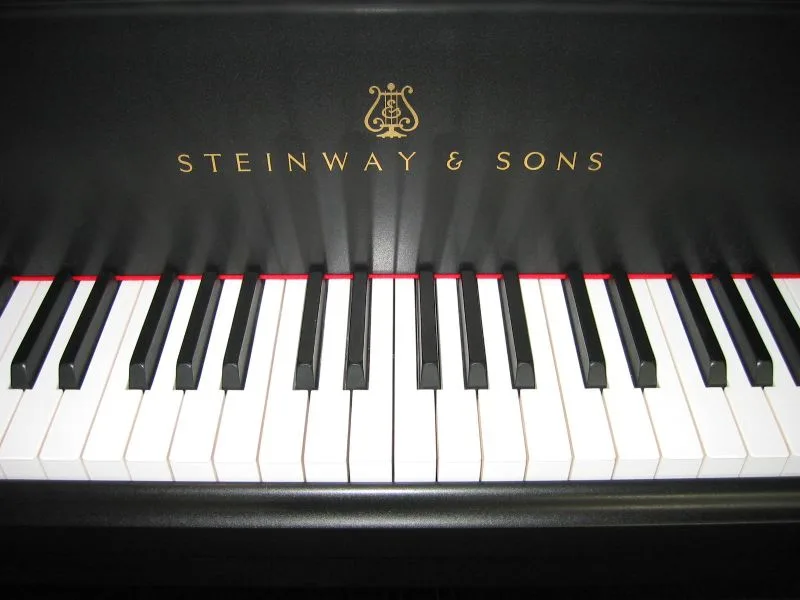
Most modern pianos have 88 keys, covering just over seven octaves. Steinway helped make 88 the standard in the late 1880s, and other makers soon followed. A few special pianos, such as some by Bösendorfer, even have extra keys in the bass.
Photo: KarlKunde, Wikimedia Commons, CC BY-SA 3.0.
Pick one
Of the 88 keys on a standard piano, 36 are black and 52 are white. The black keys come in groups of two and three, which helps pianists find their place on the keyboard at a glance.
Pick one
Yamaha is the world's largest maker of musical instruments, from drums and guitars to violins and pianos. The Japanese company began in 1887, when founder Torakusu Yamaha built reed organs, and in 1900 it made the very first piano built in Japan. Yamaha pianos are celebrated for their consistency and bright tone, making them staples in music schools and recording studios worldwide.

Photo: Akonnchiroll, Wikimedia Commons, CC BY-SA 4.0.
Pick one
Beethoven's beloved bagatelle "Für Elise" was discovered and published in 1867, four decades after the composer passed away. The original manuscript has since been lost, leaving musicologists to debate who "Elise" actually was. The leading theory suggests the title was misread from Beethoven's messy handwriting, and the piece was actually dedicated to Therese Malfatti.
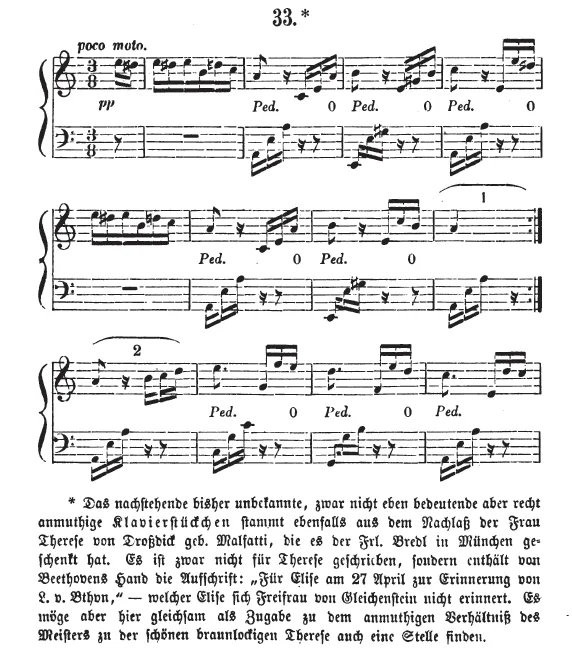
Photo: Ludwig van Beethoven/Ludwig Nohl, Wikimedia Commons, Public domain.
Pick one
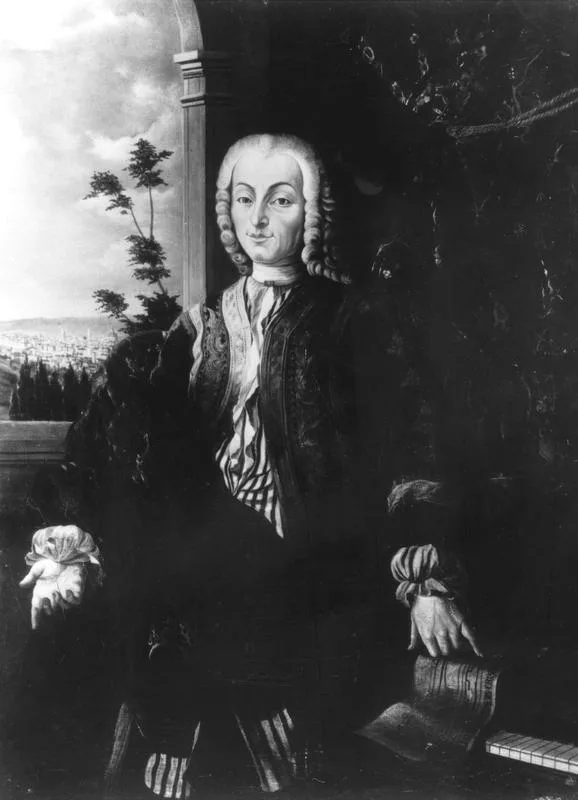
Bartolomeo Cristofori, born in Padua, built the first pianos in Florence while working for Prince Ferdinando de' Medici. He called his invention 'gravicembalo col piano e forte' (harpsichord with soft and loud), which was eventually shortened to just piano. Three of his pianos still survive, the oldest at the Metropolitan Museum of Art in New York.
Photo: Wikimedia Commons, Public domain.
Pick one
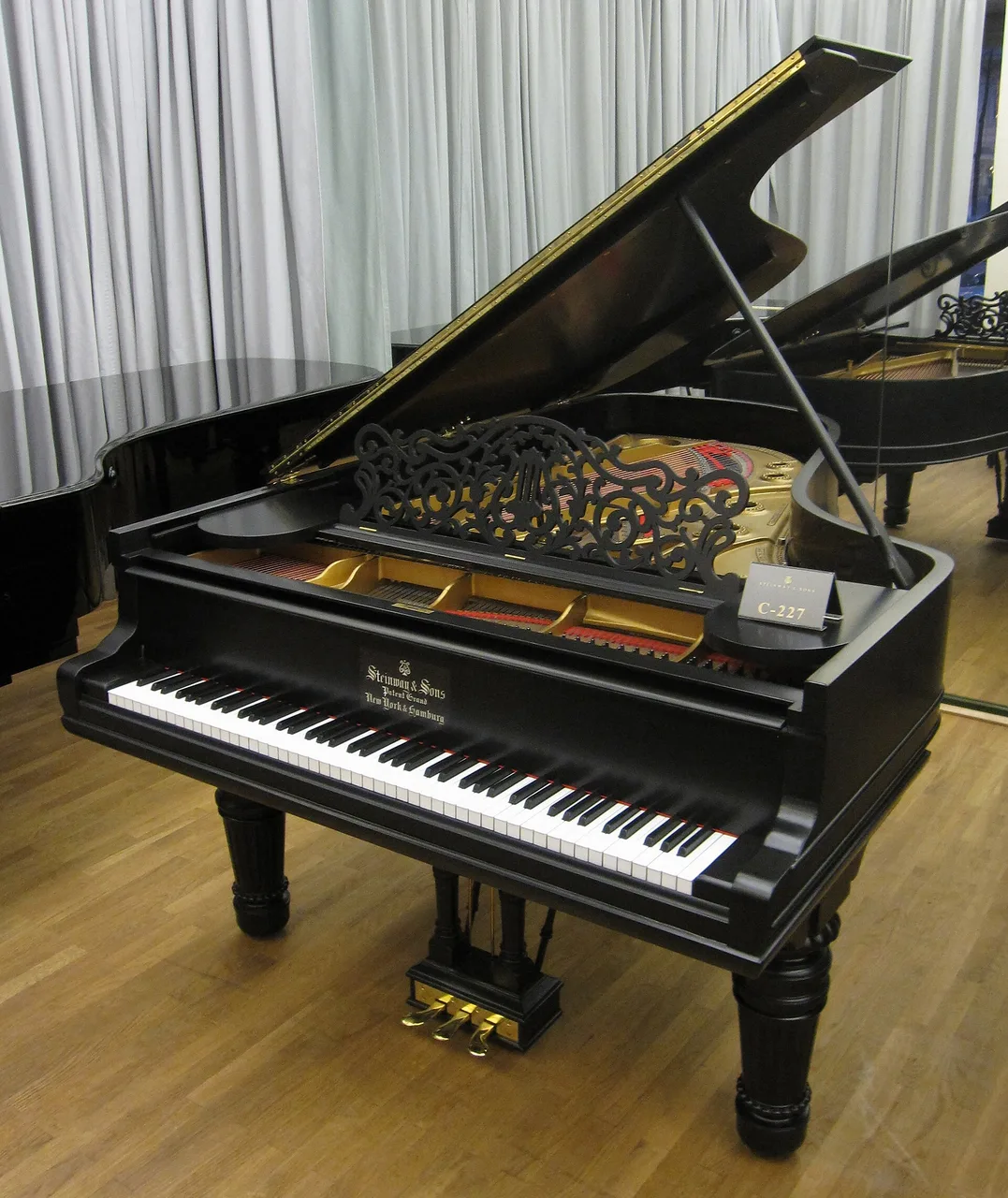
The immense tension of a piano's strings, which can exceed 20 tons in a grand piano, is supported by a heavy frame made of cast iron. Invented in the 19th century, this iron plate prevented the wooden body of the piano from warping or collapsing under pressure. This crucial innovation allowed pianos to have thicker strings and a much louder, more resonant sound.
Photo: Gryffindor, Wikimedia Commons, CC BY-SA 3.0.
Pick one
The intricate mechanism responsible for launching the hammer toward the strings when a key is pressed is called the action. A grand piano action contains thousands of tiny wood, felt, and metal parts working in perfect harmony. One of its most brilliant features is the escapement, which releases the hammer just before it hits the string, letting it rebound freely so it does not block the vibrating string.
Pick one
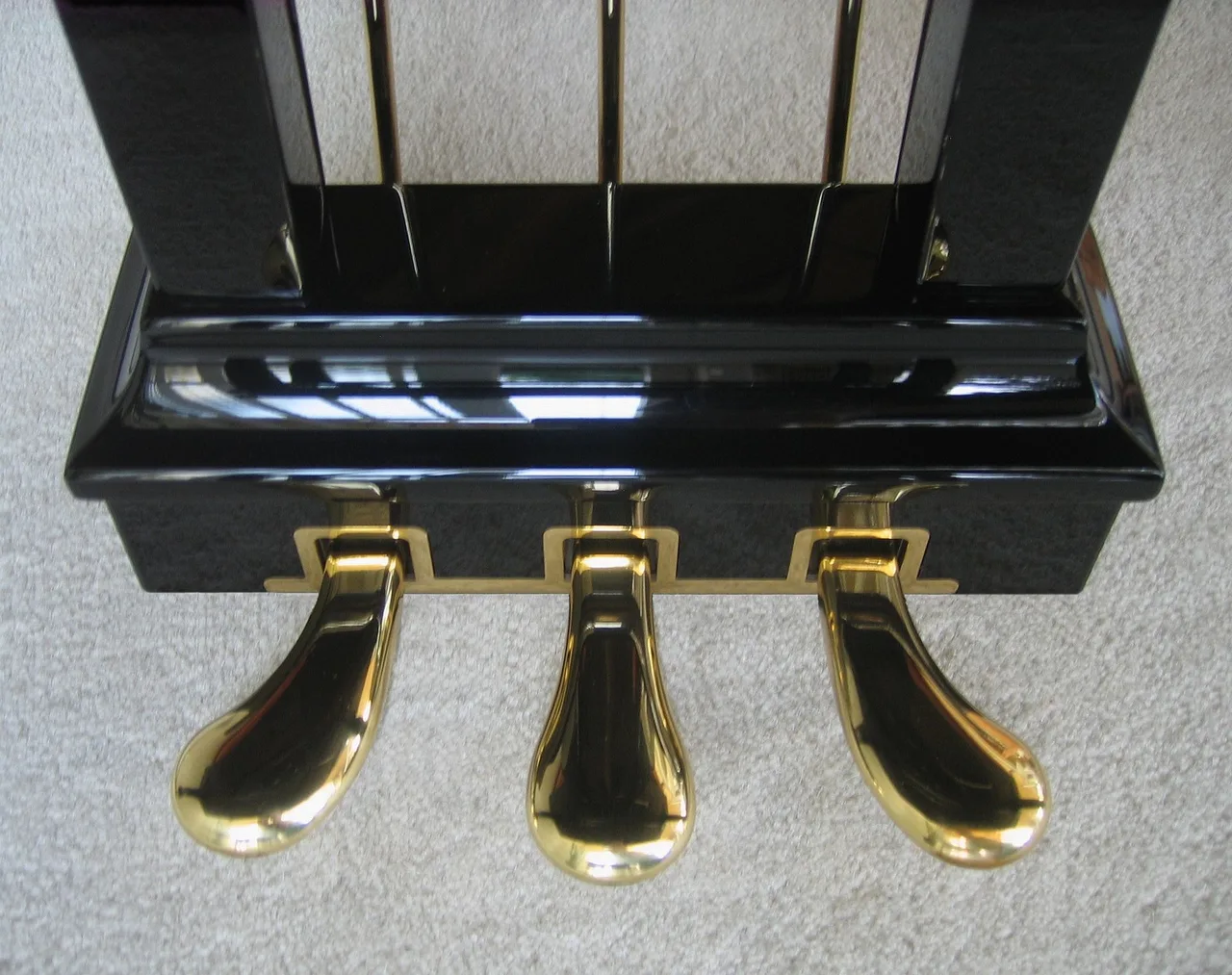
The middle pedal on most American and high-end grand pianos is the sostenuto pedal. The sustain pedal on the right lifts all the dampers, but the sostenuto only holds the notes whose keys are already down when it is pressed. That lets a pianist keep a deep bass note ringing while the notes played on top stay short and crisp.
Photo: Fanoftheworld, Wikimedia Commons, CC0.
Pick one
The Alexander Piano is one of the longest pianos in the world, at about 5.7 metres. Adrian Mann started building it in a garage when he was just 15 and finished it about four years later. Its extra-long bass strings give it an unusually clear, deep sound.
Pick one
For centuries, the white keys of premium pianos were topped with thin strips of real elephant ivory, valued for its smooth texture and ability to absorb sweat. Due to conservation efforts and international bans on the ivory trade, manufacturers transitioned entirely to high-tech plastics in the late 20th century. Modern synthetic materials are designed to mimic the tactile feel of traditional ivory.

Photo: Jastrow, Wikimedia Commons, Public domain.


Paste the code into your page. The player fits itself in, and every vote counts in Votur.
On WordPress, Ghost or Squarespace? Just paste the link of this page into your post.
This is how it looks
Also fun