Get app

Nigeria in a nutshell: eight friendly questions about the things it is best known for. No expert knowledge needed: everyone can join in, whatever their age.
Market-day visitor 0–3 · Friend of the family 4–6 · Practically Nigerian 7–8
Pick one

Green stands for the country's farmland, and white for peace and unity. The flag was chosen in 1959 from almost 3,000 entries in a national contest, and it was designed by Taiwo Akinkunmi, a young Nigerian student in London who spotted the contest in a library.
Pick one
Lagos is one of the biggest cities in all of Africa, and it spreads over the mainland and several islands in a lagoon. Its name means 'lakes' in Portuguese: it was probably named after the town of Lagos in Portugal, whose sailors explored the African coast in the 1400s.
Photo: FrankvEck, Wikimedia Commons, CC BY-SA 4.0.
Pick one
The name blends 'Nigeria' and 'Hollywood', in the same playful way as India's Bollywood. Nollywood boomed in the 1990s, when film-makers began shooting films quickly and cheaply straight onto video, and the 1992 hit 'Living in Bondage' is often named as the film that started the boom.
Pick one
Jollof is cooked in a single pot, with the rice simmered in a sauce of tomatoes, onions and chillies. The dish probably first came from Senegal, further west, but today Nigerians and Ghanaians love to argue, all in good fun, about whose jollof is best.
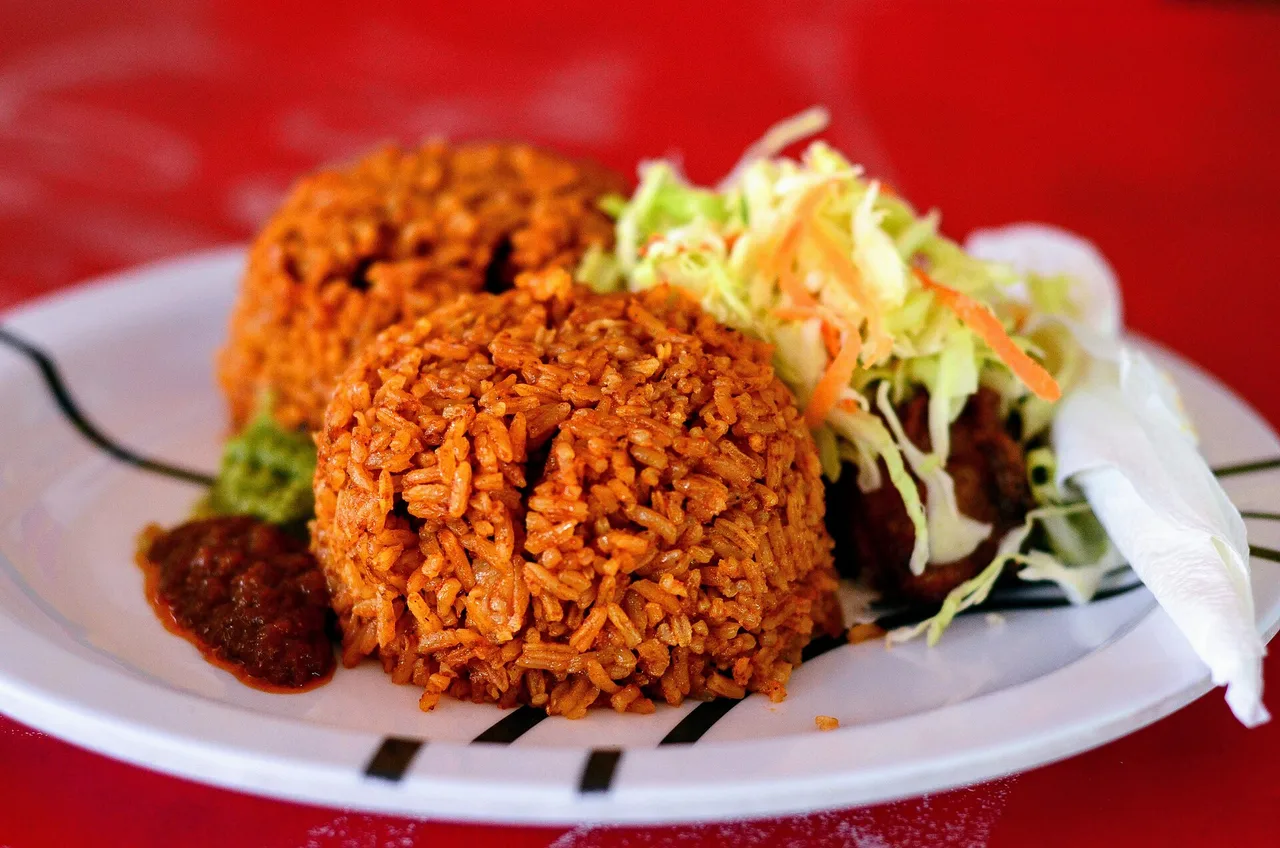
Photo: Noahalorwu, Wikimedia Commons, CC BY-SA 4.0.
Pick one
Nigeria has more people than any other country in Africa, and only a handful of countries in the whole world have more. The biggest African country by area is Algeria, in the north of the continent, which is more than twice the size of Nigeria.
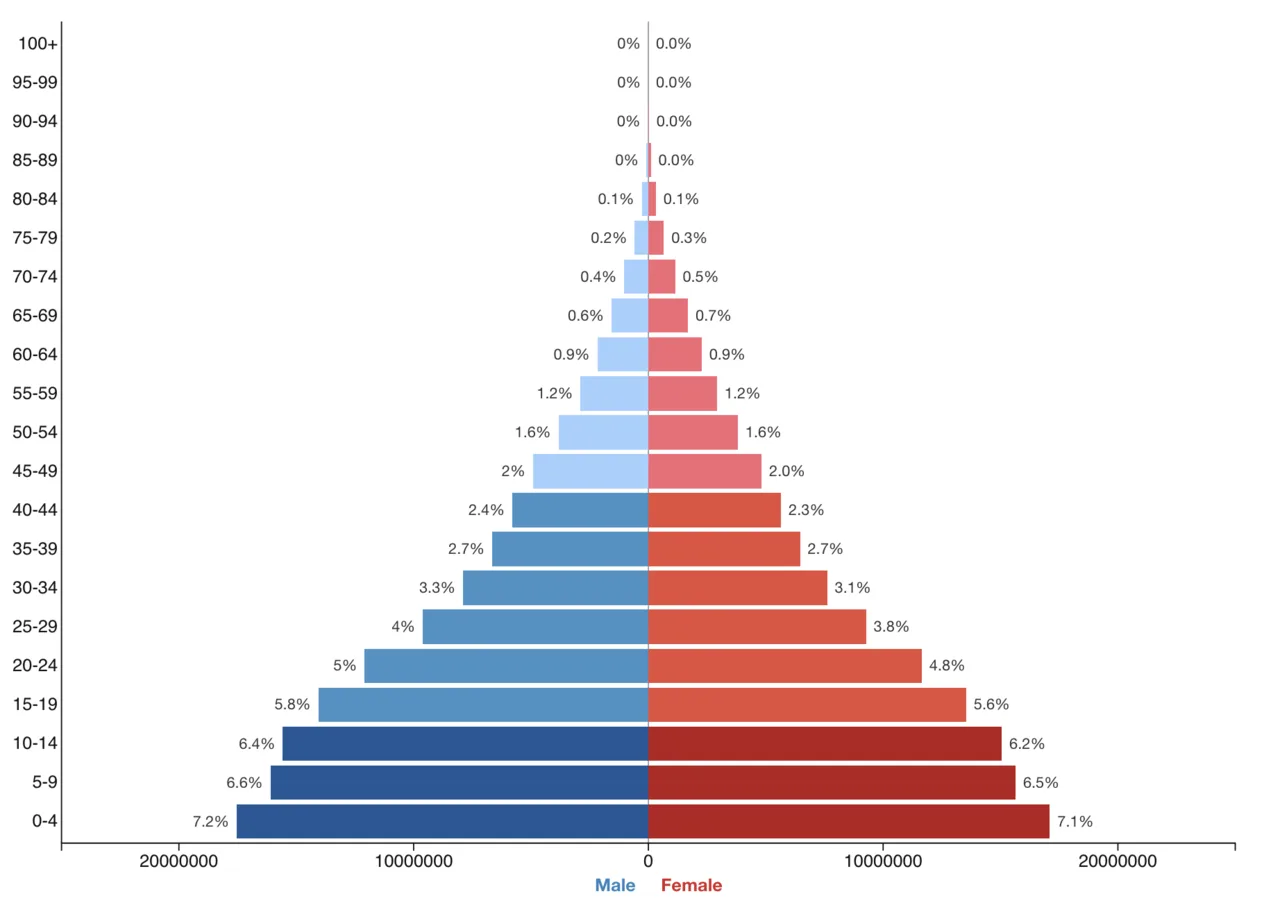
Photo: Mishomp, Wikimedia Commons, CC0.
Pick one
Yams are big, starchy roots that are boiled, fried or pounded into a thick, smooth dough called pounded yam. Every August the Igbo people of south-eastern Nigeria hold joyful yam festivals, and by custom nobody eats the new yams until the festival has begun.

Photo: Dorcas Atule, Wikimedia Commons, CC BY-SA 4.0.
Pick one
A gele is folded and pleated from a large piece of cloth, and some tower high above the head of the woman wearing it. In the 1960s, some styles were even modelled on tall buildings and nicknamed 'skyscrapers'.

Photo: Kdavidsonxx, Wikimedia Commons, CC BY-SA 3.0.
Pick one
The player squeezes the drum's cords between arm and body to make its notes higher or lower, copying the tones of languages such as Yoruba. Long ago, drummers used it to send news and messages to villages several kilometres away.
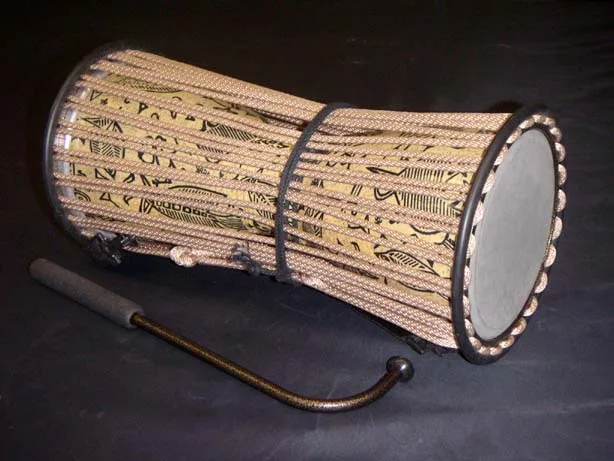
Photo: Wikimedia Commons, CC BY-SA 3.0.


Paste the code into your page. The player fits itself in, and every vote counts in Votur.
On WordPress, Ghost or Squarespace? Just paste the link of this page into your post.
This is how it looks
Also fun